MagicHour AI Alternative: The File or the Entry
Two kinds of tool answer a search like this, and they hand back different objects: one a rendered file, the other a documented entry. Which shape you want depends on what happens to that output next.
What the search is really replacing
The query names one product and asks what to use instead, which makes it sound as though the unit being swapped were a website. In practice it is usually a step. Two shapes of tool answer to the same phrase: a general media suite with a face-reading tool somewhere in its menu, and a single-purpose catalogue that does nothing except describe documented types. The choice between them turns on what you intend to do with the output, not on which product is stronger, which is why a comparison written as a scoreboard tends to be useless.
magichour.ai belongs to the first shape. Its main business is generating and editing images and video, and the ethnicity analysis sits as one entry in a longer tool list aimed at people who are producing assets. Stating that design assumption plainly is more useful than any accuracy claim, because it explains both what the product is good at and where its answers stop.
The real case for one suite
If you are assembling a video, the ethnicity label is step four of nine rather than the product itself. Keeping that step inside the same account means the crop, the resolution and the colour handling stay put: no re-upload, no second login, no re-encoding a clip that has already been graded. That is a logistics advantage rather than a scientific one, and it is why suites of this kind keep winning work they were not designed for.
The suite also handles motion, which a still-image catalogue does not attempt. Reading a face across frames is harder than reading one photograph, since pose and light change between them, and a product that offers both is doing more than one that offers neither. Anyone comparing the two should count that as a genuine capability rather than a marketing line.
The other shape returns a different object
A catalogue hands back an entry. It has a name, a region, a description of traits, and a line of literature with an author and a year attached, which is why Aisto Nordid can be traced to Lundman in 1943 and Andronovo-Turanid to Henkey and Horvath in 1998. What leaves the tab is a page you can quote, link or argue with, rather than a file you carry to another site.
That difference settles most of the decision. If the question is what a pattern is called and who described it, a rendered file with a label baked into the pixels cannot answer, because the label has nothing behind it to read. If the question is which image goes into a thumbnail by Friday, a citation cannot answer either. Neither limitation is a defect in the other product.
Four checks before switching
Switching tools is cheap and a subscription can be cancelled in a minute. Switching the kind of answer you get back is not, and that is the part worth checking before a workflow moves across. Four questions separate the two shapes quickly, and none of them requires running a single face through either product. They also happen to be the questions a vendor cannot answer for you, since they depend on what you plan to do with the result rather than on what the tool can do.
- What comes out: a rendered still or clip, or a text entry with a region and a reference
- How large the label set is, and whether you can read the whole list before trusting it
- Whether the claim carries a source with a name and a year, or only a percentage
- What the file is for: a feed, a thumbnail, a timeline, or a sentence you have to defend
The label set is most of the product
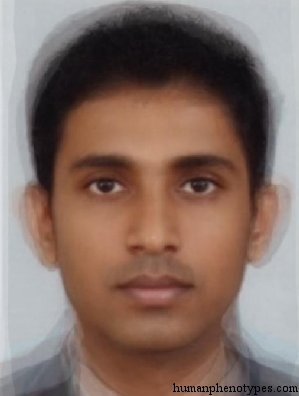
Resolution is the thing a general suite cannot offer, and it shows best in the entries themselves. Sinhalesid was separated by Eickstedt in 1934 and 1937 after three years of fieldwork in India and Sri Lanka, and it is described for the south-western and central parts of the island, with a note that its main Indid component was later modified by Arab, European and Malay trade. Proto Malayid, defined by Glinka between 1978 and 1987, is placed in the Lesser Sunda islands from Sumba and Flores to Kisar. West Congolesid comes from Vallois's 1950 examination of Dwe'e material and is anchored to southern Cameroon and Gabon.
Names at that resolution exist because somebody spent field seasons producing them. A general tool's label list is built short enough to render and stable enough to run on a video timeline, which is a different engineering goal, and objecting that it returns a dozen categories instead of 209 objects to the wrong trade. The trade is legibility for resolution, and both ends of it are reasonable.
Where the errors land differently
A closed-set classifier has to return one of its own labels for every face it is handed, because there is no slot for declining. A catalogue entry is not a prediction at all: it describes a distribution that an observer recorded and says nothing about the person in front of you. The two mistakes therefore differ in kind. One puts a wrong label on a perfectly good file. The other is a reader treating a distribution as a personal verdict.
Video adds a problem worth naming without blaming any particular vendor. Running the same closed set on consecutive frames can produce labels that flicker between adjacent classes as pose and light shift, which follows from per-frame classification rather than from one product's weakness. A still catalogue sidesteps that by not attempting video, and gives up everything video is good for in exchange.
Who each one suits
Three questions sort it out. Are you producing an asset or answering a question? Do you need to cite the claim, or only to show the image? Does the work have to sit inside a video timeline? An asset that ends up on a timeline is a strong case for the suite, and the case does not weaken because the suite is general-purpose. A claim that has to survive a reader clicking through is a strong case for the catalogue.
Past that, both products inherit the same ceiling. A photograph shows a face, and the catalogue's 209 entries describe distributions recorded roughly fifteen hundred years ago. Neither can say what a living person is. A label, whichever tab it opens in, names a pattern somebody else was already able to describe; it does not name the person holding the phone, and an interface implying otherwise is overstating what a single word can carry.
Frequently Asked Questions
- Is MagicHour AI a good alternative if I want an ethnicity reading?
- It depends on what you are making. MagicHour is a general media suite built around generating and editing images and video, with ethnicity analysis as one tool among many, so it fits when the reading is a step inside media production you are already doing there. If you want a named type with a region, a description and a literature line you can cite, a single-purpose catalogue is the better shape. Both are reasonable; they answer different questions.
- What should I compare first between two ethnicity tools?
- The label set, before anything else. Count how many categories a tool can return, check whether the full list is published where you can read it, and look at whether each name carries a source such as an author, a year and a named region. Then check the output format, since a rendered image and a text entry with references serve different purposes. Accuracy figures are worth reading last, because they usually describe one narrow test rather than the task you have.
- Can either tool tell me my own ethnicity from a photo?
- No. A face photograph carries visible traits, and a label describes a documented appearance pattern with a historical distribution, not a person's ancestry, nationality or identity. Those are separate kinds of information, and one does not convert into the other. The catalogue this site publishes records distributions observed roughly 1,500 years ago, so reading an entry back onto someone alive today reverses the direction the evidence runs in, whichever tool produced the label.
Related Phenotypes
Faces from the encyclopedia that appear in this article. Open any entry for its full description, distribution, and references.
Sinhalesid
South Asia
Indid subtype, similar to Gracile Indid, mainly found in South-West and Central Sri Lanka. Typical for Sinhalese and related people. This ty...
Proto Malayid
Southeast Asia
Proto Malayid proper type. Relatively old element that probably arrived in the Sunda Archipelago during the period of land bridges in the la...
West Congolesid
West Africa
African forest type, intermediate between Congolesid, Guinesid, and Sudanid, but with a variety of unique features. Common in Southern Camer...
Test what you learned
Put your eye for regional faces to work in the daily quiz — a composite face, a world map, and your best guess.