An African Ethnic Groups Quiz Has to Pick a Unit First
An African ethnic groups quiz cannot mark an answer until it decides what a group is: a language, a state, or a name people use for themselves. The catalogue's own entries name the groups their measurements came from.
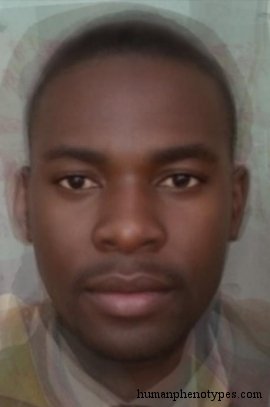
Fifty-four states, two thousand languages
A quiz on African ethnic groups has to decide what counts as a group before it can mark anything. The continent holds 54 states, and Ethnologue counts more than two thousand living languages inside them. The number of ethnic groups is quoted anywhere from several hundred to three thousand, depending on who is counting and what they are counting: a language, a kingdom, a colonial administrative unit, or a name people use for themselves. None of those lists agree, because they are not lists of the same thing.
The disagreement is not a gap that better fieldwork will close. It is a fork in the definition. If a group is a language, the answer key follows the linguists and their family trees. If a group is a unit recognised in a constitution, the key follows ministries. If a group is a self-description, the key changes between neighbouring villages and between generations of the same family. A quiz that does not say which fork it took is not markable, only guessable.
Bantu names a language family
The commonest error in these answer keys is treating Bantu as an ethnic group. It names a branch of the Niger-Congo family: some five hundred languages spoken from Cameroon across to Kenya and down to the Cape. A speaker of Chichewa and a speaker of Zulu share a distant ancestor language and very little that a quiz can use. The catalogue's Central Bantuid entry dates the arrival to the Bantu expansion, a demographic and linguistic process that ran for more than a thousand years.
That expansion is why the map is a gradient rather than a set of islands. Farming populations moving south and east through forest absorbed and displaced earlier occupants, and the entries record the contact rather than erasing it. Chopi-Tswana is described as a Bantuid variety with weak Khoisan influence, formed when Bantu-speaking groups assimilated older Khoisanid elements in what is now Botswana and southern Mozambique. An answer key that sorts Bantu against Khoisan into two boxes is naming the two ends of a long contact zone.
Entries named after the groups that typified them
The catalogue does something a quiz rarely does: it names the reference groups. Central Bantuid is typified by Tsonga and Tonga, with Kunda, Mbundu, Vili, Venda and Nyungwe also listed, and it corresponds to the Tsong-Tonga type that Dart described in 1962. South Nilotid runs from Lake Albert to Lake Victoria and is common among Acholi, Alur, Bari, Luo and Lotuko. Sudano Guinesid was named and defined as Soudano-Guinéen by Pales in 1953 after comparing metrics from hundreds of West African series.
Naming the reference groups is a methodological admission, not a compliment or an insult. It says where the measurements came from, and it lets a reader check the claim against the collection. A type defined from Tsonga and Tonga material is a statement about those series, and the entry says so in the same sentence. A quiz that asks which group a face belongs to is running that procedure backwards, from a photograph toward a sample it was never designed to recover.
- Central Bantuid: typified by Tsonga and Tonga, Dart's Tsong-Tonga type (1962)
- Chopi-Tswana: Dart's Group C, with recorded Khoisanid admixture
- South Nilotid: Acholi, Alur, Bari, Luo and Lotuko, Lake Albert to Lake Victoria
- Sudano Guinesid: defined by Pales (1953) from hundreds of West African series
The smallest entry in the catalogue
East Bambutid is the shortest type recorded anywhere in the catalogue, with adult males given at 140 to 145 centimetres. It is tied to the Ituri forest of the Democratic Republic of the Congo and to Mbuti, Efe, Asua and Kango communities. Eickstedt coined the term Bambutid in 1934, Gusinde measured more than nine hundred individuals and classified the material as Twid, and Schebesta's fieldwork in the 1930s and 1940s supplied much of the rest.
The entry also carries a date for the split, and it comes from a different instrument. Patin and colleagues in 2009 put the divergence of the eastern forest groups at roughly twenty thousand years ago, a genetic estimate that sits on a separate clock from the anthropometric one. Two clocks, one entry. A quiz demanding a single label for that population is folding a forest adaptation, a language shift and a deep divergence into one word. The entry adds its own warning, that forest loss and the erosion of the groups' own records leave the series with very little left to re-measure.
Borders were drawn before the answer key
The units a quiz can offer were shaped by events that had little to do with the groups themselves. The Berlin Conference of 1884 and 1885 set rules for claiming territory in the interior, and the boundaries that followed were drawn on maps at scales where a river bend stood for a hundred kilometres. A large share of the continent's borders are straight lines or arcs, and many of them cut through language areas rather than following them. The line between Kenya and Tanzania runs in long straight sections across Maasai pasture, dividing one pastoral group between two states and two school systems.
Several states then rebuilt their internal map along ethnic lines. Ethiopia's 1995 constitution organised regional states around nations, nationalities and peoples, a principle that has since produced new regions, with Sidama in 2020 and South West Ethiopia Peoples in 2021. Kenya counts 42 ethnic groups officially. Tanzania moved the other way after 1967, promoting Swahili and discouraging ethnic registers. Four states, four different answers to the question of what a group is for.
What the quiz is asking about now
Cities have moved the answer key faster than any catalogue can follow. Lagos, Nairobi, Johannesburg and Kinshasa hold populations that have married across the old categories for three generations, and a face from a Nairobi housing estate may combine Luo, Kikuyu and Gujarati ancestry in proportions no entry anticipates. The 209 entries describe samples collected mostly before 1960, from rural and small-town populations, in the places where somebody could reach them with callipers.
That limit is the interesting part of the game rather than its defect. A regional quiz is a test of whether you know how a category was built, which means knowing which federation, which language family and which colonial boundary produced the options on the screen. Once an answer key pretends the categories are natural, the quiz stops teaching how the map was made and starts assigning identities to strangers.
Frequently Asked Questions
- How many ethnic groups are there in Africa?
- There is no agreed total, and the widely repeated figure of three thousand is an estimate without a register behind it. The counts diverge because the unit diverges: Ethnologue lists more than two thousand living languages, states recognise far fewer official groups, and self-descriptions multiply again at village level. Any quiz that quotes a precise number is quoting one author's definition rather than a census. The honest answer is a range and a note on which unit produced it.
- Is Bantu an ethnic group or a language family?
- A language family, or more precisely a branch of Niger-Congo, containing roughly five hundred languages from Cameroon to South Africa. It is not a people, a tribe or a genotype, and no one is a member of Bantu in the way they are a member of a clan. The confusion is common because colonial administrators used language labels as administrative ones, and the labels then hardened into categories that outlived the administration. The catalogue keeps the linguistic sense and dates the expansion.
- Why do African ethnic group quizzes disagree with each other?
- Because they choose different units and different dates. One quiz draws on language families, another on modern state borders, another on the reference groups named in nineteenth and twentieth century anthropometric work. Each set is internally consistent and none matches the others, since a language boundary, a border drawn in 1885 and a measurement series from 1953 are three different objects. Reading the unit before playing is the only way to know what a correct answer means.
Related Phenotypes
Faces from the encyclopedia that appear in this article. Open any entry for its full description, distribution, and references.
Central Bantuid
Sub-Saharan Africa
Bantuid variety, characterised by elongated features and strong dolichocephaly. Found especially in Mozambique and Zimbabwe, also Malawi, Na...
East Bambutid
Sub-Saharan Africa
Bambutid proper: shortest pygmy type in the world with an extreme rainforest adaption that has evolved since the Middle Paleolithic. Histori...
South Nilotid
East Africa
Type common to the southern branch of Nilotic people of Lake Albert south to Lake Victoria, in South Sudan, Uganda, and Western Kenya. In so...
Sudano Guinesid
West Africa
Transitional type between Sudanid and Guinesid, common in West Africa. Although it is just a contact type, it is sometimes separated from th...
Test what you learned
Put your eye for regional faces to work in the daily quiz — a composite face, a world map, and your best guess.