Can You Really Guess Ethnicity From a Face? What the Research Says
Humans beat chance at coarse region-guessing from faces - but fall apart at anything finer. The other-race effect, confusable neighbors like Anatolid and Armenid, and why 'I can always tell' is a cognitive illusion.
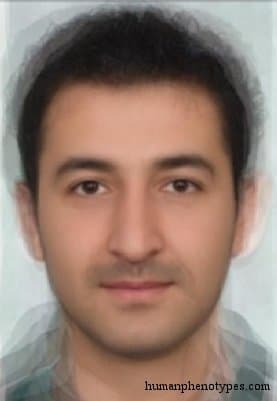
The Honest Answer First
Can you guess where a person's ancestors came from by looking at their face? The honest answer, supported by decades of research, is: above chance at coarse scales, collapsing toward coin-flip at fine ones. Given a face and a handful of broad options — East Asia, Northern Europe, West Africa, the Andes — most people perform well above random guessing. Asked to separate neighboring populations, the same people fall apart.
This is not a personal failing; it is arithmetic. Visible traits vary along geographic gradients, and neighboring populations share nearly all of their history — therefore nearly all of their faces. The signal a face carries thins out exactly as the map's resolution rises. Any honest game built on face-guessing has to accept that ceiling, and score accordingly.
The Other-Race Effect
One of the most replicated findings in face perception is that people recognize faces from their own group more accurately than faces from groups they rarely encounter. Studies going back to the late 1960s — Malpass and Kravitz's classic experiments among them — documented what is now called the other-race effect, or cross-race bias. It has since been measured in many populations, in both directions: the deficit follows experience, not essence.
The effect matters for guessing, not just recognition. Years of exposure build fine-grained internal templates: someone raised among East Asian faces holds sharper tools for distinguishing them than someone who was not. And the effect weakens with immersion — the strongest evidence that it is learned. Practically, it means no player is equally skilled across the whole map. Each of us is worst precisely where we have lived least.
The Confusable Neighbors
The old typologists knew this best: the borders between neighboring phenotypes were always the softest part of their maps. The Anatolid and Armenid types — centered on Anatolia and the Armenian highlands — share cranial and facial proportions to the point that almost everyone, expert or not, hesitates between them. The same blurring repeats wherever two distributions meet, because the underlying traits blend into each other the way colors in a gradient do.
This is why a fair quiz scores by distance rather than by right and wrong. Dropping a pin a few hundred kilometers from a documented center represents real regional knowledge; dropping it on another continent does not. Binary scoring would punish exactly the near-misses that demonstrate understanding. It is also why the encyclopedia entries for neighboring types read like variations on a theme rather than separate melodies.
The Illusion of 'I Can Always Tell'
Here the research gets uncomfortable. In studies of unfamiliar face matching — comparing a live person to a photograph, as border staff do every day — error rates among ordinary observers are startlingly high, and confidence stays high beside them. Calibration research in face perception and eyewitness memory keeps finding the same asymmetry: certainty grows faster than accuracy. People are not merely sometimes wrong about faces; they are confidently wrong.
The reason sits deep in the machinery. Face reading is fast, automatic, and mandatory — you cannot look at a face and not read it — so its output arrives with the felt certainty of perception rather than the appropriate humility of inference. That subjective confidence is exactly why face judgments deserve suspicion. The feeling of 'I can always tell' is produced by the same system that makes the errors invisible.
Why the Quiz Is Beatable at All
Given all of this, why build a game around guessing at all? Because the game material is composites. A single face is mostly idiosyncratic noise — one person's brow, one person's jaw. A composite averages that noise away. What survives is the regional architecture: the proportions and tones shared across a documented sample. A composite is to a face roughly what climate is to weather — the stable pattern underneath the noise — and it behaves less like a person and more like a coordinate.
That is the quiet design argument of this site. Guessing a composite is closer to reading a map than reading a person — you match a drawn center of gravity to its patch of the globe, the same skill as recognizing a climate from a photograph of its vegetation. It is also why the game could make no claims about individuals even if it wanted to: its material is, by construction, nobody.
A Region, Never an Ethnicity
The strongest claim a face can support is that this pattern of features was historically common in roughly this region. Ethnicity is a different kind of thing — a social and cultural identity made of language, heritage, community, and self-identification. One phenotype spans many ethnic groups; one country contains many phenotypes. The two maps overlap, and neither determines the other.
Genetics reinforces the point. Richard Lewontin's 1972 analysis found that about 85 percent of human genetic variation exists within populations rather than between them, and later genomic work has broadly confirmed that shape. The visible surface of a person is a thin, heavily selected slice of a genome that is mostly shared with everyone alive. So play the game as geography, which is how it was built. A face can narrow down a region; it cannot tell you who someone is.
Frequently Asked Questions
- Are some people naturally better at guessing origins from faces?
- Yes, in patches. Exposure builds discrimination — the other-race effect shrinks with experience — so players are strongest in the regions whose faces they know best. Researchers have even documented 'super-recognizers' with extraordinary face memory. But the coarse-versus-fine gap holds for nearly everyone: continents are learnable, neighbors are brutal.
- Is it wrong to try to guess where someone is from?
- Intention and use decide. As a game about historical composites, it is harmless geography practice — nobody is being labeled. Applied to strangers, the same instinct usually produces errors delivered as verdicts, which is inaccurate at best. The game's design keeps the instinct pointed at a map, never at a person.
- Can I train myself to get better?
- Up to a point. Perceptual learning genuinely improves discrimination within a face-space you are exposed to — which is exactly what playing does, one reveal at a time. What training cannot do is dissolve the fundamental problem: neighboring populations really do look alike, and no amount of practice sharpens a blurry boundary.
Related Phenotypes
Faces from the encyclopedia that appear in this article. Open any entry for its full description, distribution, and references.
Anatolid
Middle East
Armenid subtype of Anatolia with Dinaroid features. The core population lives in West Anatolia. Probably the result of Armenid influx into a...
Armenid
Caucasus
Widespread type, found in its most specialised form in the mountains of Asia Minor. Associated with the ancient Cypriots and the Hittite Kin...
Test what you learned
Put your eye for regional faces to work in the daily quiz — a composite face, a world map, and your best guess.