Human Phenotypes: A Field Guide to the 209 Types
Nordid, Huanghoid, Bantuid, Andid - the named human phenotypes are a century-old vocabulary for visible variation. How the 209-entry catalogue is organized, where the names come from, and how to browse it.
A Catalogue with 209 Doors
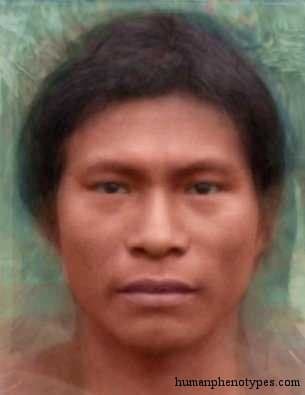
The encyclopedia at the heart of Ethnicity Guesser holds 209 named entries: Nordid and Borreby from northern Europe, Huanghoid from the Yellow River basin, Bantuid from Sub-Saharan Africa, Andid from the high Andes, Barrinean from tropical Australia. Every entry has the same anatomy — an average face composite (a statistical average of documented appearance, never a real person), a trait description, a geographic anchor set roughly 1,500 years ago, and references to the sources that defined it.
Read end to end, the catalogue is a strange and rather beautiful artifact: a field guide to human appearance, compiled by the anthropologists of the nineteenth and early twentieth centuries and preserved as what it is — a record of how trained observers described visible variation, region by region. Like any field guide, it works by comparison. You learn the entries not one by one, but against their neighbors.
How the Catalogue Is Organized
The entries are arranged by region — Northern Europe onward through the rest of the continent, then North Africa and the Middle East, Sub-Saharan Africa, South and East Asia, the Americas, Oceania — following the geography the typologists themselves used. Within each region, entries sit next to their documented neighbors. The ordering is the argument.
It matters more than it looks. A bird guide places similar species on the same page so the differences jump out; a phenotype catalogue works the same way. Browse a region and you can watch the logic operate: Europe's pages step from the taller, narrower-faced northern entries toward the broader central ones and the Mediterranean south, because that is the gradient the observers recorded. The information is not in any single entry but in the contrasts between adjacent ones — distance in the list is a rough proxy for documented dissimilarity.
Nothing in the sequence ranks anything. The catalogue runs across a map, not up and down a ladder, and its honesty depends on keeping it that way: these are documented distributions, not assessments of worth — a point the discipline's own history makes painfully clear.
Where the Names Come From
The vocabulary is the typological anthropology of the 1800s and 1900s, and most names carry the discipline's signature suffix — -id or -oid — appended to a root that usually names a place. Nordid points north. Huanghoid takes its root from the Huang He, the Yellow River. Bantuid refers to the Bantu-speaking regions of Africa, Andid to the Andes. Others honor sites where the type was first described — Borreby after a place in Denmark, Hallstatt after the Austrian lake-site whose cemetery gave archaeology one of its famous cultures.
The cataloguers themselves were a small and earnest circle: Bertil Lundman in Sweden, Egon von Eickstedt in Germany, Renato Biasutti in Italy, among others, each working inside a tradition that believed visible human types could be named and mapped the way a naturalist names and maps species. The names encode geography, history, and occasionally the namer; they are period artifacts, and this site keeps them for exactly that reason. A renamed entry would be a falsified document.
How to Read an Entry
Every entry has four parts, and each answers a different question. The trait description lists what the observers documented — pigmentation, hair form, facial architecture — the visible pattern the entry names. The distribution anchor places that pattern on the map as of roughly 500 CE: where it was recorded as common, before centuries of migration reshuffled populations again. The anchor's date is doing real work; it keeps the catalogue a historical document rather than a claim about the present.
Then come the nearest-neighbor comparisons — the tables setting the entry beside its closest confusables, with the distinguishing traits called out — and the references, which point back to the sources where the type was defined and described. These reward slow reading: the comparison tables are where an entry becomes learnable, because a trait in isolation means little and a contrast means everything.
How to Browse Meaningfully
The catalogue repays a method. Four habits, in rough order of value:
- Compare neighbors, not distant types. Nordid against Borreby is a lesson; Nordid against Andid is trivia. The catalogue's information is concentrated at the borders between adjacent entries.
- Read the region pages first. The overview — which gradients run through a region, which entries dominate it — is the frame that makes individual entries stick.
- Work the comparison tables before the trait lists. The tables tell you what to look at; the trait lists then confirm what you saw.
- Follow the game's reveals into the encyclopedia. Every quiz answer is a doorway: miss a face, read its entry, and the next encounter is a recognition rather than a guess.
The Honest Framing
The catalogue requires a frame, and the frame is this: it is a historical document of how trained observers described visible variation — not a genetic census, not a list of races, not a set of identities. The typologists worked before genetics could check their conclusions, from samples that were small and uneven, inside assumptions their era handed them. Modern population genetics found that within-group variation exceeds the differences between group averages — Richard Lewontin's famous 1972 result, repeatedly refined since — which means no entry, however carefully drawn, contains its people. A phenotype describes a documented tendency; it never describes a person.
And the distributions themselves are anchored to about 1,500 years ago — a snapshot taken before the migrations of the last millennium and a half blurred the patterns further. Read the catalogue the way you would read a historical map: with interest in what it shows, and humility about what it cannot. It is a field guide to a map that keeps changing under your feet — which is exactly what makes it worth reading, and worth playing.
Frequently Asked Questions
- Are the 209 types real biological categories?
- No. They are historical descriptions of appearance patterns, compiled by typological anthropologists before genetics could test them. Modern genetics finds human variation clinal and continuous; the entries are documents, not divisions of the species.
- Do the entries describe people living today?
- No. Each entry is anchored to a distribution from roughly 1,500 years ago, before centuries of migration and mixing reshaped populations. The catalogue is a historical reconstruction, not a portrait of any living community.
- Why keep period terms like Nordid or Bantuid at all?
- Because the catalogue is a preserved historical document. The names record who described what, when, and where; renaming them would falsify the record. Kept with honest framing, they teach both the geography and the history of the discipline.
Related Phenotypes
Faces from the encyclopedia that appear in this article. Open any entry for its full description, distribution, and references.
Botocudo
South America
Lagid subtype of the Mata Atlântica forests of Brazil, partially mixed with the Fuegid substratum (South Fuegids, Huarpids). Was the dominan...
Barrinean
Australia
Australid subtype of the forest belt associated with the Australian pygmies. Could be the remnant of an ancient Negrito strain that once occ...
Test what you learned
Put your eye for regional faces to work in the daily quiz — a composite face, a world map, and your best guess.