What Is a Phenotype - and Why It Is Not a Race
Phenotype is a century-old scientific term for observable traits, not a synonym for race. The difference matters: clines, Lewontin's 85 percent, and how to read human variation honestly.
A Word Invented to End a Confusion
The word phenotype is barely a century old. It was coined around 1909 by the Danish botanist Wilhelm Johannsen, who wanted a clean split between two things his era kept muddling: the hereditary material an organism carries — the genotype — and the observable traits it actually shows — the phenotype. Johannsen's distinction seems obvious now, but it was radical then. It severed the visible from the inherited, and it created the vocabulary modern genetics still runs on.
The term landed in a field that needed it badly. Nineteenth-century anthropology had spent decades sorting humanity into 'types' and 'races' based on faces and skulls, treating appearance as a direct readout of biological essence. The genotype-phenotype distinction broke that assumption: what you see on the outside is the product of genes, environment, and development tangled together — not a transparent window into the bloodline.
What Counts as a Phenotype
A phenotype is any observable characteristic of an organism: height, skin tone, hair form, eye color, skull proportions, blood type, disease resistance. The key points are three.
- Genes plus environment: The same genotype produces different phenotypes in different conditions — human height, for example, has risen across whole countries as nutrition improved, without any genetic change.
- Polygenic: Most visible human traits are shaped by many genes at once, plus their interactions. Eye color is unusually simple; nearly everything else is not.
- Statistical, not absolute: A phenotype describes tendencies across a population, not a rule every member follows. Individual variation within any group dwarfs the average differences between groups.
Where the Historical Catalogue Comes From
The 240 phenotypes referenced by this site come from the typological anthropology of the nineteenth and twentieth centuries — researchers like Eickstedt, Lundman, and Biasutti, who compiled named types such as Nordid, Huanghoid, and Bantuid, each with a described face, a set of traits, and a geographic center of distribution. We keep the catalogue as what it is: a historical record of how trained observers documented visible variation, anchored to distributions from roughly 1,500 years ago.
The honest framing also states the catalogue's limits. It was assembled before genetics could check it, from samples that were small and uneven, by observers working inside their own era's assumptions. Some types blend into their neighbors; some entries contradict each other. It is a useful map of documented appearance patterns, not a genetic census.
Why a Phenotype Is Not a Race
The distinction matters because race, as a biological category, fails empirically — and phenotypes are precisely where people most often mistake description for division. Two findings anchor this.
First: clines, not categories. In a 1962 essay, the biological anthropologist Frank Livingstone wrote that 'there are no races, only clines.' A cline is a gradual geographic gradient in the frequency of a trait or gene. Skin tone darkens along a smooth gradient from the poles toward the equator; the sickle-cell trait follows malaria's map; the blue-eye variant fades outward from the Baltic. Each trait has its own gradient, pointing its own direction — and that is the problem for race as a category. A classification system needs boundaries; human variation is a patchwork of overlapping slopes.
Second: variation is local. In 1972, Richard Lewontin measured genetic diversity across human populations using the protein markers available at the time and found that about 85.4 percent of human genetic variation exists within populations — within a village, within a so-called race — while only about 6.3 percent separates the major geographic regions. Two neighbors are, on average, more genetically different from each other than two continents' averages are from each other. Later genomic work has refined the numbers, but the shape of the result has held.
What this means is simple: the traits our eyes are wired to notice — face shape, skin tone, hair — are a small, unrepresentative sample of the genome, tuned hard by selection in different environments, while the rest of our genes say we are one recently-expanded, thoroughly mixed species. A phenotype catalogue describes that visible surface. It cannot carve the species into kinds, because no such carving exists.
How to Read the Game
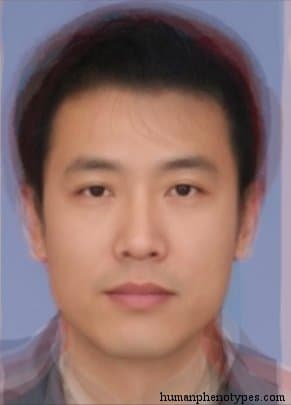
This is why Ethnicity Guesser is a geography quiz and not an identity tool. The composite faces in the game are statistical averages of documented appearance patterns; guessing where a pattern was historically common is a challenge in regional knowledge, in the same family as flag quizzes and map games. The score measures how well you know a 1,500-year-old distribution map — not anything about yourself.
It is also why every page on this site carries the same disclaimer: phenotypes describe historical appearance patterns, not modern nationality, DNA ancestry, or personal identity. You can use a face to practice geography. You cannot use it to sort people into races — and neither could the anthropologists whose catalogue we preserve. For how we source and correct entries, see the editorial policy.
Frequently Asked Questions
- Is a phenotype the same as an ethnicity?
- No. Ethnicity is a social and cultural identity — language, heritage, community. A phenotype is a bundle of observable physical traits with a documented historical distribution. One country contains many phenotypes, and one phenotype can span many countries and ethnic groups.
- Can a DNA test tell me my phenotype?
- Not reliably in both directions. Your DNA influences your visible traits, but ancestry and appearance are only loosely coupled: a person genetically matched to one region can look like another, and vice versa. If you want your genetic ancestry, take a DNA test; this site estimates nothing about you.
- Why are the distributions from 1,500 years ago?
- The historical typologies we preserve were assembled before modern migration and intermarriage reshaped populations. Anchoring to roughly 500 CE keeps the map stable and honest about what it is — a historical reconstruction, not a snapshot of any living population.
Related Phenotypes
Faces from the encyclopedia that appear in this article. Open any entry for its full description, distribution, and references.
Huanghoid
East Asia
North Sinid type, named after the Huang Ho (Yellow) river in Northern China. Developed from loess and millet farmers. Usually regarded as th...
Test what you learned
Put your eye for regional faces to work in the daily quiz — a composite face, a world map, and your best guess.