South Korea Average Face - Phenotype & People
Every national population has a statistical center of gravity, and for South Korea the composite below approximates it in facial terms. It is a research and visualization artifact built from recurring features, and the demographics, geography, history, and culture sections give it the context an average on its own cannot supply.
Average Face Composite
To build the south korea average face, individual portraits are aligned by facial landmarks and then merged. Averaging keeps the features people share and cancels the ones they do not, so the result reads like a portrait but works like a statistic — a summary of recurring structure across the population, never a face you would meet.
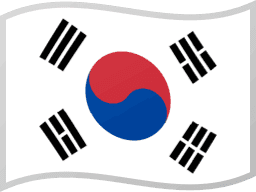
People of South Korea
The composite only becomes meaningful against the population it summarizes. The four sections below cover who lives in South Korea, the terrain they settled, the history that moved them, and the culture they practice — the background against which the south korea average face should be read.
Demographics
South Korea is a country in East Asia with a population of approximately 51 million. Seoul serves as the capital and largest urban center, concentrating political institutions, universities, and much of the urban population. The national population is a Korean majority with small Chinese, Vietnamese, Thai, and Filipino communities, and this composition reflects the broadly similar facial features, with subtle variation across national boundaries, that millennia of shared East Asian population history shaped. Korean dominate public life, education, and media.
When an average face composite is generated for South Korea, it statistically aggregates these demographic layers — the majority population together with the historically significant minorities — rather than representing any single individual.
Geography
South Korea covers the southern half of a mountainous peninsula — seventy percent hills — with the population concentrated in the Han basin around Seoul, the Nakdong valley, and the southern coastal plains around Busan. Lying 36 degrees north of the equator in the Northern Hemisphere, South Korea falls within a temperate climate band with four distinct seasons.
The gallery entries closest to South Korea are Japan at about 943 kilometers, then China and Philippines. Distance like this is a rough guide to facial similarity — composites from nearby countries share more than either shares with a distant one.
Historical Background
The Joseon dynasty ended with Japanese colonial rule from 1910. Liberation in 1945, the Korean War, and authoritarian development preceded democratization from 1987 and the Han River economic miracle.
Japanese colonial rice policy and the 1945–53 war displaced more than a million northerners into the south; industrialization then moved half the nation into the Seoul capital region, one of the densest metropolitan areas on earth.
Those layers are what the south korea composite condenses: an average over the descendants of every phase above, not a snapshot of one of them.
Culture
K-pop, K-drama, hanok architecture, hanji paper, kimchi and bibimbap cuisine, and a global cultural wave (Hallyu).
The south korea average face summarizes recurring structure in the population, while the traditions above shape how that population presents and photographs itself — the two readings always travel together.
Play the Country Quiz
Put your eye for faces to the test. In the Countries game mode you are shown an average face composite like the south korea one above and asked to guess which country it represents. Try a few rounds and see how quickly you can recognize the South Korea composite alongside the other 47 countries in the gallery.
Play Guess the Nationality GameRelated Countries
The average faces below come from the same part of the world as the south korea composite. The similarities show regional continuity; the differences show where one population's history diverges from another's.


Further Reading
Background articles on how these composite faces are built and what they do and do not show about the people behind them.
What Is a Phenotype - and Why It Is Not a Race
Phenotype is a century-old scientific term for observable traits, not a synonym for race. The difference matters: clines, Lewontin's 85...
What Country Do I Look Like: The Count Comes Before the Face
Which country a face resembles depends on which official list you are using, and the world publishes several that disagree on how many...