AI Phenotype Scanner: What a Scanner Cannot Do for a Face
The phrase names a face classifier, not a device that reads a stored record. What the scanner metaphor hides, what the 209-entry catalogue stores, and five questions that separate a description from a score.
What the word scanner promises
A barcode scanner is a simple machine wearing a grand name. It turns a printed pattern into a string of digits, then looks that string up in a registry somebody else built: a product database, a shipping manifest, a library shelf list. The scan returns a record because the record was written down first. A computed tomography scan works much the same way once reconstruction finishes, because the result is filed, labelled, and comparable against earlier images taken under the same protocol. Scanning, in every one of those cases, means producing a key that an existing registry already holds.
Face software borrowed the word because the word flatters it. A camera aimed at a person does produce numbers, and those numbers do get compared, so scanner sounds like a description of the process. The difference sits at the far end of the chain. There is no registry keyed to a human face, no canonical record waiting to be retrieved, and no protocol under which two photographs of the same person are guaranteed to resolve to the same entry. Whatever a face model hands back, it composed from the image in front of it.
A face model ranks instead of reading
Underneath the marketing, the pipeline is ordinary. A detector finds the face box; a landmark model places roughly 68 points, or 478 in the widely used MediaPipe layout, on brows, nose, mouth and jaw; an encoder such as FaceNet or ArcFace turns the aligned crop into a vector of 128 or 512 numbers. Recognition systems then compare vectors by cosine similarity, and a classifier picks one label from a fixed list. Nothing in that chain reads a stored fact about the person in the photograph.
The final step decides how honest the output can possibly be. A softmax head or a nearest-centroid rule returns a ranking over the labels it was trained on, and the top label wins even when the top two are separated by a rounding error. Ask a consumer tool for the second-nearest label and its distance and most have nothing to give, which is the clearest sign that the figure on screen is a position in a list rather than a measurement of anything.
What a catalogue stores instead
The alternative is not more modelling. It is a written record. This site's catalogue holds 209 entries compiled from the typological anthropology of the early twentieth century, principally Eickstedt's 1934 scheme, Biasutti's two-volume synthesis of 1941 to 1943, Coon's 1939 survey, and Lundman's later work. Each entry names a pattern, gives its morphological description, and states the region where trained observers reported it, anchored to a distribution map roughly 1,500 years old.
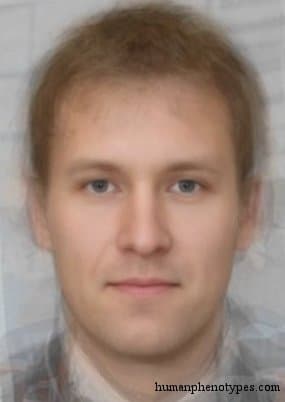
Take Aisto Nordid, an East Nordid subvariety reported along the Baltic coast and only a minority type across most of that range today, with a Hälsingland subvariety noted in Sweden and a role in the formation of the Tavastid and Trønder descriptions. Huanghoid takes its name from the Huang He and was associated with loess and millet farmers in northern China, later dispersed toward Manchuria, Korea and Mongolia. Central Bantuid was described as dolichocephaly with elongated features, reported from Mozambique and Zimbabwe and carried there by the Bantu expansion a few thousand years ago.
The value of the format is that every claim arrives with a source and a date attached. A reader can disagree with Eickstedt and still use the entry, because the entry states who wrote it, in which year, and for which region of the map. A label from a classifier offers no equivalent handle: there is no author to weigh, no date to check, and no stated geographic range that a reader could call too broad or out of date.
The label set freezes, the faces do not
A registry gets maintained. A training set does not. Face datasets used for demographic classification, among them Labeled Faces in the Wild, UTKFace and the Racial Faces in the Wild benchmark, were assembled from public photographs and labelled with a small set of categories chosen by their builders at one particular moment. A model cannot emit a label that was missing when its data were annotated, and it cannot retire one that has since started to look unwise. The taxonomy is frozen into the weights.
The phrase in the search box has no settled technical meaning at all. Look for an AI phenotype scanner and you find face classifiers, skin-analysis apps and ancestry-style estimators, which are three instruments answering three different questions. Phenotype is a descriptive term from genetics, coined for the observable traits an organism shows, and it does not appear as a category in the datasets those tools were trained on. The word was attached to the marketing rather than to the model.
Where a scan is genuinely informative
None of this means faces carry no information. A small number of visible traits are strongly shaped by single genes of large effect, and those are real, measurable and worth recording. SLC24A5 carries a variant linked by Lamason and colleagues in 2005 to lighter pigmentation and now close to fixation in European populations. SLC45A2 and OCA2 follow similar logic, with variants near HERC2 accounting for much of the common variation in iris colour. EDAR's V370A variant, characterised by Kamberov's team in 2013, affects hair thickness, sweat gland density and incisor shape.
A tool that reports hair form or iris variation is therefore reporting something real about an image. The error starts one step later, when a visible trait is converted into a claim about descent. Selection has driven pigment genes steeply across a few latitudes, which is precisely why appearance makes such a poor proxy for the rest of the genome: the traits a camera can capture are the ones climate and diet have pushed hardest.
Two clocks run at different speeds
A mismatch in time runs through the whole exercise, and no amount of tuning repairs it. The catalogue describes a distribution map reconstructed for roughly 1,500 years ago, before the transatlantic trade and later global movement rearranged where people live. A photo dataset is a snapshot of the internet during the years it was scraped. One records the past, the other records the present, and the software compares the second against a question the first was built to answer. Proto Ethiopid illustrates the gap: the entry covers an ancient type of the southwestern Eritrean lowlands, present before Ethiopid populations arrived, and its compilers noted a resemblance to early out-of-Africa forms. That sentence only makes sense against a timeline.
Admixture makes the comparison worse rather than better. Genome-wide estimates place only on the order of ten to fifteen percent of human genetic variation between continental groups, and the correlations that do exist are statistical tendencies rather than individual predictions. Where visible traits and genetic ancestry disagree, and they do so routinely, a face classifier will report the visible traits with perfect confidence. That is not a defect in the classifier. It is the classifier doing exactly what it was built to do.
How to test a scanner in five minutes
The five questions below separate a documented description from a score with no provenance. They work on any tool that claims to read a phenotype from a photograph, and none of them requires a technical background to ask. A tool that answers all five is doing something worth reading; a tool that answers none of them is a slideshow with a camera attached.
- What exactly are the labels? Ask for the full list rather than one example. A tool that cannot name its own categories has not defined the thing it predicts.
- What was the runner-up, and by how much? A first-place answer with no margin hides the cases the model is unsure about, which are the informative ones.
- Does the same face score the same twice? Crop it differently, change the light, upload it again. A readable measurement survives small changes; a ranking often does not.
- Is the output a description or an identity? Straight hair, dark iris, broad nasal base describes a photograph. Anything phrased as who somebody is has left measurable territory.
- Where does the entry come from? A catalogue entry cites an author, a year and a region. If the tool cites nothing, treat the label as a suggestion about a picture, not a fact about a person.
Frequently Asked Questions
- Is an AI phenotype scanner a real instrument?
- No. The phrase describes software that classifies a face image against a fixed list of labels it was trained on. It does not retrieve a stored record the way a barcode scanner reads a product code, because no registry of human faces exists to read from. What comes back is a ranking over categories, plus whatever confidence figure the tool chooses to display.
- Can software read my ancestry from a photo?
- Not reliably. Visible traits are shaped by a handful of genes with large effects, selected hard by climate, while ancestry is spread across the whole genome. The two overlap enough to make quiz answers interesting and far too little to support a prediction about one person. Estimates of between-group variation sit around ten to fifteen percent, and an average of that kind says nothing about any individual.
- What does phenotype mean on this site?
- It means a documented pattern of observable traits with a stated historical distribution, attached to a region, an author and a year rather than to a box that a person belongs in. The catalogue holds 209 such entries, reconstructed for roughly 1,500 years ago. Appearance is not ancestry, and a phenotype is not an identity.
Related Phenotypes
Faces from the encyclopedia that appear in this article. Open any entry for its full description, distribution, and references.
Aisto Nordid
Northern Europe
East Nordid subvariety, common in coastal regions of Baltic countries. One of the last strongholds of East Nordids that are only a minority ...
Huanghoid
East Asia
North Sinid type, named after the Huang Ho (Yellow) river in Northern China. Developed from loess and millet farmers. Usually regarded as th...
Central Bantuid
Sub-Saharan Africa
Bantuid variety, characterised by elongated features and strong dolichocephaly. Found especially in Mozambique and Zimbabwe, also Malawi, Na...
Proto Ethiopid
East Africa
Ancient type that inhabited the Southwestern Eritrean lowlands prior to the arrival of Ethiopids, and possibly resembles early "Out of Afric...
Test what you learned
Put your eye for regional faces to work in the daily quiz — a composite face, a world map, and your best guess.