Average Face Generator: The Count Is the Whole Design
A generator averages what sits in the folder, weighted by how many photos each face supplied, so the count per group is the design decision, not the total.
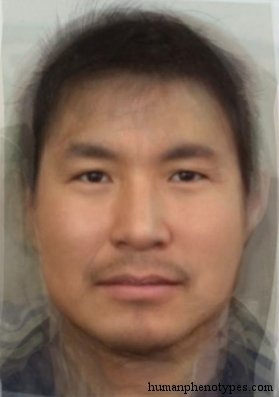
A composite is an exposure budget
Francis Galton read a paper to the Anthropological Institute on 30 April 1878 describing a process that needed no statistics, only patience. He stacked eight portraits on a frame, pinned so that the eyes of each sitter aligned with the eyes of the next, and exposed each one onto the same photographic plate for ten seconds. An exact copy of a single portrait took eighty seconds. Eight portraits at ten seconds each therefore produced one image in which every sitter held exactly one eighth of the total exposure.
That is the whole algorithm, and the modern version differs only in notation. A generator writes it as a weighted mean in which each face's weight is one over the number of faces, and the weights are fixed by the count rather than by any judgement about the faces themselves. Put 300 photographs from one district and 30 from another into the same folder and the second district contributes nine per cent of the result. Nothing in the software has misbehaved; it divided.
What the plate kept and what it dropped
Galton described the outcome in one sentence that still reads like a design brief: those of its outlines are sharpest and darkest that are common to the largest number of the components. A feature carried by seven of eight plates accumulates seven tenths of the exposure and prints as a firm edge. A scar carried by one plate receives a tenth of it and sinks into the grain. The composite does not report the sample; it reports what the sample agrees about.
Two folders can therefore return the same picture. One holds faces that genuinely resemble each other, the other holds half broad faces and half narrow ones, and the mean of the two groups lands in the middle where nobody sits. The second case is not a failure of resolution and more faces will not repair it. North Andamanid is recorded as very short, with males at 147 centimetres; averaged into any wider sample, that row leaves no mark on the image at all.
More faces buy precision, not truth
The standard error of a mean falls with the square root of the count, so halving the uncertainty costs four times the photographs. This is the generous part of the arithmetic: a few hundred faces settle the estimate and a few thousand barely improve it. What the count cannot do is move the estimate toward the population. Precision describes the noise inside the folder, and representativeness describes who was let into it. A generator with a large count and a narrow frame returns a crisp portrait of the frame.
Hadza makes the scale concrete. The catalogue records the type as basically restricted to the Hadza people, who number no more than eight hundred, and adds that loss of culture might end it. A composite drawn from a group that size is a precise measurement of a small and fragile sample, and no amount of alignment or resampling changes which sample it is. Where the source descriptions themselves rest on a few hundred measured people, the count in the folder is not the count standing behind the number.
The mean hides the spread it was built from
An average is a single point, and an image cannot carry a standard deviation. The operation that reveals the spread runs the same arithmetic backwards. Brennan's Caricature Generator, published in 1985, marks 165 feature points on a face, compares them with the same points on a mean face, and displaces them away from that mean by a constant factor. Redman had named the idea a year earlier as exaggerating the difference from the mean. The caricature and the composite are one equation with the sign flipped.
Mo, Lewis and Neumann pointed out what the flip leaves out. A mouth two centimetres wider than the mean may still read as ordinary while eyes two centimetres wider read as strange, because the two features have different variances. Distance from the mean is not distinctiveness; distance divided by the spread is. The catalogue has no spreads to divide by. It records stature with an adjective in 207 of 209 rows and gives a figure in centimetres in three, and only one of those three states a range.
Alignment deletes what a photograph carries
Before anything is averaged, every face is translated, rotated and scaled onto a common frame. Those three operations are the price of a clean mean, and they delete three variables: where the head sat in the frame, how far it was tilted, and how large it was. A composite cannot show how tall a group stood, which way they held their heads, or how far away the camera was. What survives is the shape left after size and pose have been taken out.
The catalogue does record some of what alignment removes. Central Andid carries a very large thorax, macroskelic proportions and a note about high-altitude adaptation; Inuid sits at 77.62 north with a nose described as having the smallest opening in the world. Feed those descriptions to a renderer that draws a frontal face and the thorax is gone, the latitude is gone, and the nasal aperture becomes a number the renderer was never given. A face image is a projection, and a projection loses the axis it looked along.
Five checks before trusting a generator
The checks below change the output rather than the styling, and none of them is visible in the finished image. Each is a decision the operator makes before the first face is loaded, which is why they belong in the method rather than in the caption under the result. Taken together they settle whose face the average is, how much of it the image is able to carry, and what a reader is entitled to infer from the picture.
- Count per group and print the count beside the picture; a composite without its count is an unlabelled average.
- Hold pose, focal length and lighting constant, or the mean will encode the photographer instead of the sitters.
- Fix one landmark protocol before the first face; mixing a 68-point and a 478-point set shifts the mean shape.
- Average only faces that share a documented description, since pooling two regions returns a face neither region has.
- Run the transform away from the mean by one standard deviation and show it beside the average, because the pair carries what one image cannot.
What the picture may claim
A generated average is a diagram of a documented distribution with a date attached. The catalogue's descriptions were assembled from published anthropometric work and anchored to a baseline of roughly 1500 years ago, so the honest caption names the source sample, the count and the year. None of that turns the image into a portrait of a people, and no improvement in the rendering will.
The two ways of producing one fail differently, which is worth stating on the image itself. A photographic average inherits the photographer: the lighting, the lens, the session, and the decision about whom to ask. A face rendered from trait text inherits the adjective list including its gaps, so it can draw a head index and cannot draw a spread. Naming which of the two produced a given picture is the cheapest honesty available, and it keeps the composite inside the evidence it came from.
Frequently Asked Questions
- How many faces does an average face generator need?
- Few hundred settle the estimate, because the standard error of a mean falls with the square root of the count. Four times the photographs halve the uncertainty, and beyond a few thousand the gain is small. The count controls precision only. It cannot correct a narrow sampling frame, and a generator fed one district returns a very crisp picture of that district.
- Why do average faces look so similar to each other?
- Because averaging keeps what the sample shares and attenuates what only one face contributed. Galton noted in 1878 that the outlines printing sharpest were those common to the largest number of components. A scar, a mole or one asymmetric jaw is present in the folder but receives a share of the exposure too small to survive, so distinctiveness is removed by the same operation that produces the face.
- Can an average face show how much a group varies?
- Not on its own. An average is one point in a space and the image carries no standard deviation. To see the spread you run the transform in the other direction, displacing features away from the mean as Brennan's Caricature Generator did in 1985, and show that pair beside the average. The catalogue cannot support even this, since it records stature as an adjective in 207 of 209 rows.
Related Phenotypes
Faces from the encyclopedia that appear in this article. Open any entry for its full description, distribution, and references.
Inuid
Arctic
Eskimid proper type, ranging over the vast, sparsely populated tundra along the icy coasts of Alaska, Nunavut, and Labrador (Canada) to Gree...
North Andamanid
South Asia
Almost extinct, isolated type endemic to the Andaman Islands. Particularly in Great Andamanese groups, rarer in other Andamanese. After cont...
Central Andid
South America
Andid variety, mostly native the Andes mountains from South Peru to Northern Chile. The large thorax and other traits indicate a significant...
Hadza
East Africa
Ancient type of the Tanzanian Bushmen, living close to Lake Eyasi. Very distinct from any other type in the world and has probably long been...
Test what you learned
Put your eye for regional faces to work in the daily quiz — a composite face, a world map, and your best guess.