Ethnicity Guesser vs DNA Test: Two Different Questions About Where You're From
A DNA test answers 'what fraction of my ancestors came from reference regions' - a face quiz answers 'what historical pattern does this face resemble.' Neither answers 'who am I.' Here is what each actually measures.
Two Questions That Sound Like One
'Where am I from?' feels like a single question, but the tools that promise to answer it are answering at least three different ones. A consumer DNA test asks: what fraction of my genome resembles the reference panels this company has assembled from labeled regions? A face quiz like this one asks: what historical appearance pattern does this composite most resemble? And the question people usually actually care about — who am I? — is answered by neither, because ethnicity is a social and cultural identity, built from language, family, community, and memory. No instrument reads it off a genome or a face.
That distinction is the point of this article. DNA tests and face-guessing games get lumped together in search bars and dinner conversations, and the confusion runs in both directions: people expect DNA tests to deliver an identity, and they expect face games to estimate an ancestry. Both expectations are wrong in instructive ways. Here is what each tool actually measures, where each one blurs, and why the blur matters.
What a Consumer DNA Test Actually Measures
A consumer ancestry test does not sequence your whole genome. It genotypes you: it reads your letters at hundreds of thousands of positions — single nucleotide polymorphisms, or SNPs — selected precisely because they vary across human populations. Those markers are then compared against reference panels: groups of living people, typically enrolled because their recent ancestry is documented in one region (companies often prefer participants whose four grandparents were all born there, where such records exist). The algorithm then chops your genome into segments, assigns each segment to whichever panel it resembles most, and totals the assignments into the percentages on your report.
Two specialized readings deserve separate mention, because they are widely over-interpreted. Mitochondrial DNA passes only from mother to child, and the Y chromosome only from father to son, so each traces exactly one lineage — one thread out of the more than a thousand ancestors you have at ten generations back. Haplogroups built on these markers are genuinely fascinating, and genealogically narrow: they describe two ancestors, not the mixture of all the rest. A person can carry a famously 'northern' maternal haplogroup while being overwhelmingly southern in every other lineage.
Where DNA Estimates Get Fuzzy
The famous pie charts look authoritative, but they are estimates wearing a lab coat. The main sources of blur:
- Reference panel gaps: where sampled populations are sparse — much of Africa, Central Asia, and the Pacific among them — the algorithm runs out of close matches and returns hedged answers like 'broadly' this or that region. The precision of an estimate is largely the precision of the panel behind it.
- Moving targets: companies enlarge their panels and refine their algorithms as data accumulates, and the same genome that read 30 percent one thing last year can quietly become 26 percent this year. Your spit did not change; the yardstick did.
- Sibling divergence: full siblings inherit different shuffled halves of their parents' genomes, so the same two parents can produce children whose ancestry percentages differ — visibly, in ways that surprise families.
- Proprietary disagreement: panels, markers, and algorithms are trade secrets. Send one sample to two services and you will get two different charts, each presented with equal confidence.
What a Face Quiz Measures — and Doesn't
Face-guessing has its own honest limits, and they are different in kind. Human face perception is trained rather than given: people recognize faces most accurately among the populations they grew up seeing — the well-documented other-race effect — and accuracy falls off for unfamiliar groups. Neighboring populations overlap heavily in visible traits, because for most of history people married within walking distance. And faces encode environment as much as descent: skin tone tracks ultraviolet exposure, and the nose negotiates with the temperature and humidity of the air a population breathed for centuries. A face is a joint statement about ancestry and adaptation, and no observer — human or algorithm — can fully separate the two.
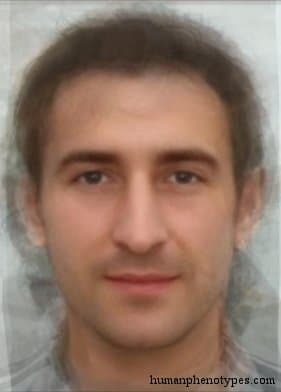
This site, specifically, measures nothing about you. There are no photo uploads and no personal analysis anywhere in the game: it never examines your face, and it never claims to identify anyone. The quiz presents statistical composites of documented historical appearance patterns and asks where each pattern was recorded, roughly 1,500 years ago. It is a geography test in which the faces are the questions. What it shares with a DNA test is the honesty of probabilities: every answer is a 'most likely', never a certification.
Where the Two Agree
Oddly, the two tools converge on the same large conclusions. Both show that human variation is clinal — gradual gradients across space rather than bordered categories — and that human populations are heavily mixed. The DNA test finds that nearly everyone is a mosaic of neighboring regions; the face catalogue shows neighboring composites shading into one another along the same routes. The geneticist Richard Lewontin made the deeper point in 1972, when he measured human diversity with the protein markers of his day and found the great majority of it within populations rather than between them. Genomes and faces agree: the boundaries are drawn on maps, not into biology.
Read correctly, both tools return probabilities over populations — never identities. A DNA report says your genome resembles these panels; a quiz score says you know this historical map. Neither says who you are, and any product that promises otherwise — kit, app, or quiz — is selling a certainty that human variation does not contain.
Use Each Tool for What It Is Good At
DNA tests are genuinely good at genealogy: finding cousins, confirming documented lines, recovering record where paper trails fail. The quiz is genuinely good at geography practice: learning the gradients, the regions, and the history of how trained observers described them. One traces your particular past; the other trains your general map. They answer different questions, and both questions are more interesting than the marketing around either.
So distrust anything that promises to tell you 'what you really are.' You are what the sociologists say you are: a person with a culture, a family, and a story. The genome is a record of mixture; the face is a record of adaptation; this game is a geography lesson. 'Where you're from' deserves better than being flattened into any of them.
Frequently Asked Questions
- Can a DNA test tell me my ethnicity?
- No. It reports how closely segments of your genome resemble the company's reference panels — a statement about similarity to sampled populations. Ethnicity is a social and cultural identity: language, heritage, community. A test can inform a genealogy; it cannot read an identity.
- Is this site a face version of a DNA test?
- No. The site never analyzes user photos, never estimates your ancestry, and measures nothing about you. It quizzes you on composite faces from a historical catalogue of appearance patterns — a geography game, not a biometric estimate.
- Why did my sibling and I get different DNA results?
- Because recombination deals each child a different shuffle of the parental genomes, siblings' segment assignments differ — and companies' differing panels and algorithms widen the gap further. The family history did not change; the sampling did.
Related Phenotypes
Faces from the encyclopedia that appear in this article. Open any entry for its full description, distribution, and references.
Baskid
Central Europe
Ancient European type associated with the Basques. Found in its purest form in the Pyrénées-Atlantiques region of Southwestern France, altho...
Borreby
Central Europe
Ancient Northern European variety. Named after some of the Neolithic Borreby skulls of Denmark (not all!). Some emphasised resemblance with ...
Test what you learned
Put your eye for regional faces to work in the daily quiz — a composite face, a world map, and your best guess.