The Daily Face Quiz: How Classic Daily Works (and How to Get Better)
Ten composite faces, one world map, the same ten questions for every player each day, up to 5,000 points. The mechanics of the daily quiz - and the habits that actually raise your score.
Ten Faces a Day, All Over the World
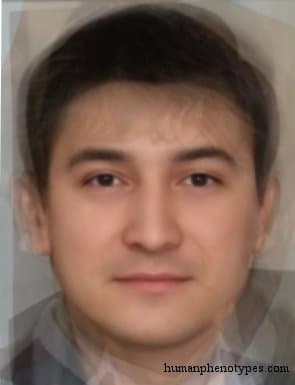
Classic Daily, the main mode of Ethnicity Guesser, is a simple ritual. Each day the game presents ten composite faces drawn from the catalogue of 209 historical phenotypes. For each face, you drop a pin on a world map, and the score decays with your distance from the face's documented reference coordinates — up to 500 points per face, 5,000 for the day. The faces are statistical averages of documented appearance patterns, anchored to distributions from roughly 1,500 years ago. None of them is a real person, and none of them is you.
If the format feels familiar, it should. This is the same daily-puzzle family as Wordle and GeoGuessr's daily challenge: a fixed serving of questions, a score to compare, a reason to come back tomorrow. The twist is the subject. Instead of guessing a word from letters or a place from street view, you are guessing a place from a face — the geography of human appearance, reconstructed from the historical record and delivered ten at a time.
Why Everyone Gets the Same Ten Faces
The same ten faces go to every player in the world, every day. That single design decision does most of the work of turning a quiz into a shared ritual. When the questions are identical, the score measures the player rather than the draw — a 4,800 in Tokyo means exactly what a 4,800 means in Toronto, and the daily leaderboard is a fair race rather than a lottery.
Sameness is also what makes results shareable, and sharing is what makes the game social. A score is only worth comparing when it answers the same question, and the daily set turns ten faces into a small global conversation: which one fooled everybody, which region nobody expected, which face separated the players who had read the encyclopedia from the players who had not. It is also what makes streaks meaningful — a fixed puzzle is a standing appointment, and the culture of keeping an appointment is half of what a daily game is.
How the Scoring Actually Works
Scoring is distance-decay: the further your pin lands from a face's documented reference coordinates, the faster the points fall — a smooth slide from near-full credit for a close guess toward almost nothing for the opposite side of the planet. Each face is worth up to 500 points, for a daily maximum of 5,000.
The practical geometry is worth internalizing early. When a phenotype's nearest neighbors in the catalogue sit hundreds of kilometers away, simply placing the face in the right region earns most of the available credit — recognition of the broad gradient is what the scoring rewards first. Precision matters most where the map is crowded: many European entries sit close together, so a pin that would be a generous guess in a sparse part of the catalogue can bleed points among the Alps. The map has a density, and the score quietly teaches it.
Strategy That Actually Works
New players tend to stare at the face and reach for hunches; better players interrogate the map and the gradients. The habits that survive contact with the scoring:
- Keep anchor cities. Memorize one city per region of the catalogue — a Nordic anchor, a West African anchor, a Central Asian anchor — so every guess starts from a shelf you trust rather than a continent-sized cloud.
- Reason by latitude and climate. Skin tone, hair form, and eye color run in broad gradients that track ultraviolet exposure and climate; use them as coarse clues and let the latitude narrow the map before you commit.
- Read absence. What a composite lacks is often more decisive than what it shows. No strong contrast between hair and skin? Whole regions just fell away. Elimination is faster than identification.
- Split the difference. When torn between two neighboring regions, pin between them: distance-decay punishes a confident wrong side far more than a hedge. Darts players know this instinctively; now you do too.
The Practice Loop
The game is built around a loop, and the loop is where the learning happens. You miss a face — you pinned the Baltic for a composite documented further east — and the reveal hands you the encyclopedia entry: the trait description, the distribution anchor, the nearest neighbors. Thirty seconds of reading is the entire lesson. The next time that family of faces appears, the recognition is already there, because you have attached the pattern to a place.
This is deliberate. The quiz is retrieval practice wrapped around the encyclopedia: each miss is a private tutorial on one documented distribution, and each hit is confirmation that the tutorial took. Over weeks, the mental map of gradients and anchors fills in the way a language learner's vocabulary does — not by memorizing a list, but by meeting each entry when you need it and missing it once first.
What the Quiz Trains — and What It Does Not
One honest note belongs in every guide: this quiz trains a map, not a profiling skill. There are no photo uploads and no personal analysis anywhere on the site — it never examines your face or anyone else's, and it never claims to identify individuals. What you practice is placing composite images of historical appearance patterns on a reconstruction of distributions from about 1,500 years ago. An atlas exercise, with a face-shaped interface.
That is also the pleasure of it. You will not walk away better at reading strangers — the other-race effect alone would see to that, and the catalogue is historical besides. You will walk away knowing the world's gradients a little better: where light eyes concentrate, where broad faces were documented, which regions blend into which neighbors. A daily geography lesson disguised as a face game — and it works because you keep coming back to it.
Frequently Asked Questions
- Does everyone really get the same faces?
- Yes. Every player worldwide sees the same ten composite faces each day. Identical questions are what make scores comparable, results shareable, and streaks meaningful.
- How is the daily score calculated?
- Each of the ten faces is worth up to 500 points, for a maximum of 5,000 per day. Points decay with the distance between your pin and the face's documented reference coordinates — close guesses earn near-full credit, distant ones very little.
- Can I upload my own photo for the quiz to analyze?
- No. The site never analyzes user photos or claims to identify individuals. The quiz presents composites from a historical catalogue of appearance patterns — a geography game, not a face-recognition tool.
Related Phenotypes
Faces from the encyclopedia that appear in this article. Open any entry for its full description, distribution, and references.
Andronovo-Turanid
Central Asia
Northern Turanid variant, has probably been more widespread prior to the Tungid expansion of Hunnic, Avar, and Chasar tribes. Influenced by ...
Aralid
Siberia
West Tungid variety of the vast Central Asian steppes, influenced by Turanid. Developed in ancient times when Hunnic, Avar, and Chasar expan...
Test what you learned
Put your eye for regional faces to work in the daily quiz — a composite face, a world map, and your best guess.