GeoGuessr Alternatives: What Each One Actually Swaps Out
Alternatives to GeoGuessr differ less in theme than in what they replace: the licensed street imagery, the pin-on-a-map answer, or the once-a-day pace. Each one keeps a different part of the loop and drops the rest.
Why an alternative exists at all
GeoGuessr began as a weekend project. The Swedish developer Anton Wallen released it on 9 May 2013, dropping players into a random Google Street View panorama and asking them to pin the location on a world map. Within a week it was drawing hundreds of thousands of visitors a day. It stayed free for years, supported by advertising and then by an optional premium tier that existed as early as 2016.
The economics underneath it changed on 16 July 2018, when Google merged its mapping products into a single pay-as-you-go platform and began billing Street View imagery by request. Developers reported increases as steep as fourteen times on some calls, and a two-hundred-dollar monthly credit covered only a fraction of heavy use. A game whose content is rented imagery had to shrink what it gave away, and by early 2024 the free tier had narrowed to a daily challenge while longer sessions sat behind the subscription.
Swap the imagery, keep the hunt
The most direct alternatives keep the deduction loop and change the pictures. City Guesser replaces frozen panoramas with point-of-view walking videos, so the available clues include moving traffic, shopfronts, weather and ambient sound rather than a single camera position that never moves. That shifts the skill slightly: reading a moving street is closer to travelling than to examining a photograph.
Others switch to open imagery. Mapillary is a crowdsourced street-level platform whose coverage is contributed by volunteers who drive, cycle and walk with cameras, and several community projects build on its interface instead of Google's. OpenGuessr, StreetSeekr and a project simply called Mapillary GeoGuessr all drop players into scenes drawn from that pool. Coverage is thinner than a corporate fleet's and the photographs age differently, which changes the puzzle: one road captured in a single season carries a narrower set of cues than repeated passes over years.
Swap the pin for a list
A second family changes the answer mechanic rather than the pictures. Worldle, released in late January 2022 by the French developer Antoine Teuf, shows a country's silhouette and asks you to name it within six attempts, returning a distance in kilometres and a compass bearing after each wrong guess. The title is a deliberate pun on the word game, and Teuf has said the format was inspired both by that puzzle and by an older social game about country shapes. It reached ten thousand players within ten days.
Globle, launched days later by Abraham Train in Toronto, gives no outline at all. You type country names, and each guess is shaded on a three-dimensional globe from pale to deep red according to proximity to the hidden answer, with no distance figure and no direction arrow to steer by. Guesses are unlimited, so the score is simply the number of attempts. Train has credited the word game and earlier map-guessing titles on Sporcle, and the game accepts historical names such as Burma for Myanmar.
Swap the clock for a lesson
Some alternatives drop the timer altogether. Seterra was written in 1998 by the Swedish developer Marianne Wartoft and became the standard geography drill in Swedish classrooms; an online version followed in 2011, and the library now runs to hundreds of click-to-label quizzes in dozens of languages, covering flags, capitals, rivers and physical features. There is no deduction under pressure, only a map to label correctly and a time to beat.
That model is older than the browser, and it survives because it trains a different skill: not reading a landscape, but holding a map in memory. Asked to place a river or a capital, the player either knows it or does not, and the correction is immediate, which is precisely what guessing games withhold until the round ends. Seterra now belongs to the GeoGuessr group rather than competing with it, which says something about how consolidated the genre has become.
Put people inside the frame
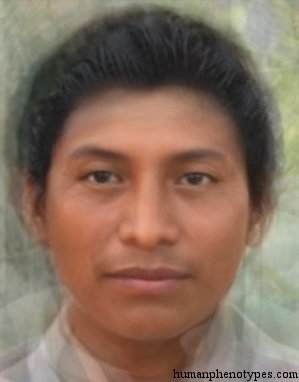
A smaller family makes human appearance the clue. The reference case is this site's own catalogue: 209 documented historical appearance patterns, each anchored to a region, described from the typological literature, and drawn as a composite face. The entries read like specimen records rather than labels. The Maya pattern is placed in southern Mexico and Guatemala and was the dominant element in the ancient Maya civilisation; the Kalaharid is a desert-specialised Sanid variety recorded for the northern and central Bushmen of the Kalahari; the South Polynesid is described from the Maori of New Zealand and Rapa Nui; the Pampid is a gracilised Patagonid recorded for the plains of the Argentine Chaco and Pampa.
The game built on those entries asks a narrower question than a street-view hunt: not where in the world is this, but where on a historical map was this pattern recorded. The clue is a statistical composite of a population, and the answer is a region, not a person. That makes it closer to a drill than to a puzzle, and it keeps a distance the genre often loses: the face is the question, never a verdict about anyone alive.
Where the original still wins
None of this makes the original the wrong choice, and it holds advantages the alternatives have not matched. Its imagery comes from the best-funded street-level fleet in the world, reaching places volunteers rarely photograph, and its competitive layer is far ahead: live duels, party rooms a subscriber can host for players without a subscription, seasonal ladders, and a tournament circuit that has become an esport with its own world championship.
It is also the most polished product of the group, with years of tuning behind the scoring curve that converts a distance into points out of five thousand per round, and behind the balancing that keeps a round playable in remote terrain. If the pull is the deepest imagery and the strongest multiplayer, the original remains the best-equipped option, and the daily challenge is still a fair sample of what it does.
Which alternative matches your question
The alternatives are less rivals than different questions wearing similar clothes. If the appeal was the licensed imagery and the pinpoint answer, a clone built on open imagery or a video-tour game preserves that loop. If the appeal was a short daily ritual to compare with friends, a silhouette or heat-map puzzle fits better, because it is designed as one shared round a day rather than an endless session.
If what you wanted was to learn where things are, a click-to-label quiz teaches faster than any guessing game, because it corrects you on the spot. And if the interest was people rather than places, a catalogue of composite faces is the honest version of that curiosity: it shows the pattern, names the region, and stops short of claiming it describes anyone now living. Since the underlying map has kept moving, the guesses matter less than what you absorb while making them.
Frequently Asked Questions
- Is GeoGuessr still free to play?
- Only partly. General play is now limited, with the daily challenge as the main free mode and unlimited rounds tied to the paid subscription. The change followed a 2018 revision of Google's imagery pricing that sharply raised the cost of serving Street View at scale. Anyone who wants unlimited free play is better served by one of the alternatives than by hunting for a workaround.
- What is the closest free alternative to GeoGuessr?
- There is no single answer, because the games differ in kind. For the same street-view deduction loop, a community project built on the Mapillary imagery interface or a video-based game such as City Guesser comes closest. For a daily one-round habit, Worldle and Globle are the nearest fit. None of them reproduces the full imagery library or the multiplayer depth of the original.
- Does GeoGuessr own Seterra?
- Yes. Seterra, the map-labelling quiz first written in 1998 by Marianne Wartoft, is now part of the GeoGuessr group. It is a reminder that the genre has consolidated: the best-known name absorbed one of the oldest drill tools, even though the two train different skills, one reading a landscape and the other labelling a map from memory.
Related Phenotypes
Faces from the encyclopedia that appear in this article. Open any entry for its full description, distribution, and references.
Maya
North America
Centralid subtype with a position between Pueblid and Isthmid and a variety of unique features. Was the dominant element in the ancient Maya...
Kalaharid
Sub-Saharan Africa
Sanid variety, native to the Kalahari. Very ancient and distinct, specialised desert type with many unique features. Typical for the Norther...
South Polynesid
Polynesia
Southern Polynesid variety. Some assume similarities with the first Polynesid variety that migrated from South-East Asia into Oceania. Found...
Pampid
South America
Slightly gracilised Patagonid variety, native to the vast plains of the Argentinian Chaco and Pampa. Sometimes mixed with Amazonid elements....
Test what you learned
Put your eye for regional faces to work in the daily quiz — a composite face, a world map, and your best guess.