How Average Face Composites Are Made
An average face is not a real face. It is a statistical average of hundreds of aligned photographs - and that is exactly why it is so good at describing population patterns.
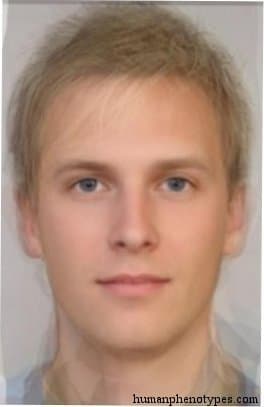
The Photograph Is Not the Face
Every face you see in the quiz is built from many faces, not one. The process starts with a plain confession: no single photograph can represent a population. One person's nose, one person's brow, one person's scar and smile all arrive in the frame by accident. To describe a pattern, you need to strip away the accidents—which is precisely what an average face does.
An average (or composite) face is created by aligning a set of individual photographs so that their features sit on top of one another, then averaging the shape and the shading at every point. Done well, the result is a face no one exactly has, one that reads as 'generic' because it is literally the center of a cluster of real faces. This is the same technique the nineteenth-century polymath Francis Galton experimented with when he exposed several portraits onto a single photographic plate, hoping to distill a 'type.' The modern computer version is vastly cleaner, but the idea is Galton's.
Align, Average, Repeat
The technical recipe has four steps, and the first two determine everything.
- Collect: gather a sample of faces that share the quality you care about—in this project, a documented phenotype from a defined historical region. Sample size and consistency matter more than almost anything else.
- Align: mark each photo with matching reference points—the pupils, the tip of the nose, the corners of the mouth. The software deforms every face to a common grid so that the nose of one sits on the nose of another. Wrong alignment means a blurry, unrecognizable mess.
- Average shape: take the mean position of every landmark across all faces. This produces a single, undistorted geometry—the 'average skull,' so to speak.
- Average texture: warp each original photo to that average shape, then blend the pixel colors. Smoothing out lighting differences yields the final, eerily calm composite.
Why an Average Face Looks So Attractive
People are strikingly consistent in rating composite faces as more attractive than most of the individual faces that went into them. The effect is partly cosmetic—averaging removes asymmetries, blemishes, and the small deviations that make a face distinctive. It is also partly perceptual: our visual system implicitly compares a face to an internal average, so a face close to the average of its category simply registers as 'normal,' and normal reads as pleasing.
That is a virtue and a warning for anything built on composites. The smooth, appealing face that emerges is a statistical center, and it inevitably flatters the group it describes. A composite of a given phenotype looks a bit better, a bit calmer, than any one of its members. Keeping that in mind stops us from treating the image as a portrait of a real person—it is a diagram drawn in light.
What Composites Can and Cannot Show
Composites are powerful exactly because they compress a noisy sample into a single legible image. They can reveal a population's central facial architecture—relative brow size, cheekbone prominence, nose width, jaw shape—at a glance, the way an average of spoken sentences would reveal a language's grammar.
But their limits are the same as any average. They hide diversity: a group made of half very-broad and half very-narrow faces averages into a medium face that no one has. They carry whatever bias the sample carried: a set of faces photographed in one town, or drawn from the athletes of one era, quietly smuggles that town or era into the 'average.' And they can never tell you who any particular person is. For all these reasons, the composites here are presented as what they are—historical reconstructions of catalogued appearance patterns—rather than as specimens of living people.
From Photographs to the Quiz
Our workflow leans on existing, carefully assembled phenotype data rather than starting from raw photos for every entry. Where source photographs are available and licensed, we build composites from them using the align-and-average method above; where they are not, we generate consistent avatar-style faces programmatically from the documented physical traits of each phenotype, using the same coordinate-space logic so that every entry sits on the same mental grid.
That consistency is the quiet work of the project. A Hallstatt composite and an Aisto Nordid composite must be comparable—same gaze, same lighting, same neutral expression—or the whole comparison collapses into a pile of inconsistent apples and oranges. Standardizing the pipeline is what lets a player glance at a face and think 'Europe,' not 'that one photograph was brighter,' and a game built on such an intuition needs its inputs to be as fair as the scoring.
An Average Is an Argument, Not a Verdict
A composite face is an argument about what a group's center of gravity looks like—an honest, useful, and limited kind of claim. It is not a verdict about any individual, and it is not a statement that a group is 'really' one face. The whole reason this site needs composites at all is that the underlying truth is diversity: phenotypes are statistical tendencies with documented historical distributions, and an average is the cleanest way to draw a tendency.
When you play the quiz, you are reading those drawings. You guess where a central tendency was historically common, and the satisfaction is in recognizing a pattern on a map—not in labeling a person. An average made fair, presented honestly, is one of the best teaching tools in anthropology: it shows that every group centers somewhere, and that nowhere does a single face tell the whole story.
Frequently Asked Questions
- Is an average face a real person?
- No. It is the statistical center of a sample of aligned faces—a shape and a texture that no single person has. Reading it as a portrait would be like treating the mean of a set of heights as one particular height everyone has.
- Can an average hide differences within a group?
- Always. Averaging erases variation by design: a group split between broad-faced and narrow-faced members will average into a medium face nobody matches. That is why composites describe centers, never capture individuals.
- How is a fair composite made?
- By keeping every input in the sample, aligning them consistently, and standardizing lighting and expression so one face isn't visually louder than another. Fair io composites let a viewer compare patterns rather than photography accidents.
Related Phenotypes
Faces from the encyclopedia that appear in this article. Open any entry for its full description, distribution, and references.
Hallstatt
Northern Europe
Nordid proper, resembles the Iron Age remains of the Austrian village of Hallstatt. Most common among Swedes and South Norwegians. Frequent ...
Aisto Nordid
Northern Europe
East Nordid subvariety, common in coastal regions of Baltic countries. One of the last strongholds of East Nordids that are only a minority ...
Test what you learned
Put your eye for regional faces to work in the daily quiz — a composite face, a world map, and your best guess.