Phenotype vs Genotype: What Each Word Really Names
A genotype is the particular set of alleles carried at the positions a named assay queries, while a phenotype is whatever an observer can measure. One experiment separated the two ideas before either word existed.
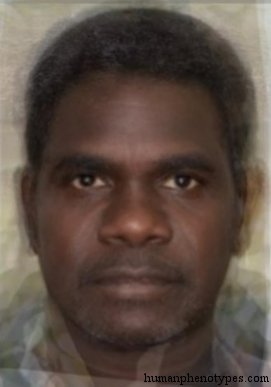
One experiment separated the two words
Wilhelm Johannsen did not begin with a definition. In the autumn of 1900 he bought a sack of Princess beans, a self-fertilising variety of Phaseolus vulgaris, and weighed five thousand seeds one at a time. He planted the largest, the smallest and a sample of the middling ones, then harvested each plant separately and carried nineteen lines through several seasons. Because the plants self-fertilise, the offspring of one seed share an inherited constitution. A pure line, in his vocabulary, is a row of genetically near-identical plants.
The results carried the argument. Between lines, selection worked: parent and offspring weights correlated at roughly 0.34, so heavy-parent lines stayed heavy. Within a single line, selection did nothing. Six generations of picking the heaviest and the lightest seeds out of the same line produced harvests of 69 and 68 centigrams, and the parent-offspring correlation inside line 13 came out at 0.02. Johannsen published the experiment in 1903 and named the two concepts in his 1909 textbook: the genotype is the inherited constitution, the phenotype is what conditions allow it to show.
A genotype is a list of named positions
In ordinary speech the word genotype sounds like a synonym for ancestry. In laboratory use it means something far narrower: the particular alleles present at the specific positions an assay happens to query. A forensic short tandem repeat profile genotypes around twenty markers. A consumer array reads several hundred thousand single-nucleotide polymorphisms. A whole-genome sequence resolves billions of positions. Those are three different genotypes of one person, because each names a different list of addresses.
The distinction bites whenever someone asks what a face says about someone's genes. A phenotype record and a genotype record are not two views of one object. The genotype is an enumerable set of letters at coordinates chosen in advance. The phenotype is a reading taken off the surface. Nothing in the first is a picture, and nothing in the second is a sequence, which is why a photograph cannot be converted into one.
Phenotype records are protocols, not traits
Every phenotype in a scientific record is produced by an instrument and a rule, and the rule usually predates the trait it measures. Skin colour has been graded by the Fitzpatrick scale since 1975, a six-part classification built from a short interview about how a person burns and tans. The same property has also been measured by reflectance spectrophotometry, which reports the fraction of light returned at stated wavelengths and converts it into a melanin index. Two laboratories can describe the same volunteer with two different strings.
Clinical genetics answered the naming problem by building a controlled vocabulary. The Human Phenotype Ontology, published by Peter Robinson and colleagues in 2008, opened with more than eight thousand terms for individual anomalies and was used to annotate every clinical entry in a catalogue of inherited disease. The terms exist so that two workers describing one patient produce one string. A historical phenotype entry is the same kind of object, except that its vocabulary was fixed by observers who had no sequence to check it against.
One genome, a range of outcomes
Johannsen's pure lines showed that one genotype can produce a spread of measurements, because conditions are part of the phenotype. In 1909 the zoologist Richard Woltereck described the same principle in water fleas, tracking head height across successive generations of a single clone of Daphnia as a season turned, and called the resulting curve a reaction norm. One genome, many shapes, arranged predictably along a gradient of circumstances.
Human cases are messier to isolate but not absent. Average height climbed by several centimetres across whole countries in a single century without any measurable shift in gene frequencies, because nutrition moved. Identical twins who share a genotype can still differ in the traits that genotype is meant to govern. Genetics carries separate words for how often an allele produces any effect at all and how strongly it shows when it does. The two terms were coined precisely so that an outcome would stop being mistaken for its input.
The same appearance, other genotypes
The reverse case is where a phenotype record earns its keep, because a resemblance in appearance is not evidence of shared descent. Take two entries from the catalogue. North Australid, recorded around the Gulf of Carpentaria and Arnhem Land, is described as showing similarities to Paleo Melanesid patterns, and some observers linked it instead to prehistoric arrivals from India. The entry states the resemblance and lists the competing explanations without settling between them. It documents a look, and it leaves the pedigree open.
Observers also logged the harder problem, where two populations converge on the same described trait from unrelated starting points. Modern genetics has confirmed how often this happens with pigment. The variant that lightens European skin most strongly is rare or absent in African and East Asian samples, and the East Asian route to lighter skin runs through other loci altogether. A shared trait word is a shared measurement, and it is not a shared ancestor.
A trait is a variance, not a value
Continuous traits needed a second vocabulary, and it arrived in 1918 when Ronald Fisher showed that the smooth bell-shaped distribution of a measurable trait could fall out of ordinary Mendelian inheritance acting at many sites at once. The paper, read to the Royal Society of Edinburgh and printed in its Transactions, introduced the statistical term variance and founded quantitative genetics. It also fixed the modern sense of the word trait: not a value, but a distribution with a mean and a spread.
The spread is what heritability describes, and it is a ratio of variances rather than a property of a person. That distinction survives in the awkward arithmetic of the genome-wide era. Family studies put the heritability of adult height near 80 percent, yet the first large scans found roughly forty variants that together accounted for little more than 5 percent of it, a shortfall Brendan Maher named the missing heritability in Nature in 2008. Adding every common variant at once recovers closer to 45 percent, and the remainder is still argued about. The argument is about measurement, not about whether genes matter.
What the catalogue records, and where it drifts
Read an entry as a measurement and its shape becomes clear. Mtebid, a Caucasus mountain pattern, is recorded with the lowest nasal index of the whole region. East Bambutid, the rainforest pattern of the Ituri forest, is recorded at a male stature of 140 to 145 centimetres. Guinesid runs from Guinea to Cameroon and sporadically to north-western Angola. Each is a position on a scale or a distribution on a map, quoted with an author and a date, and none of them is a statement about an individual.
The complication is movement. Those distributions were reconstructed for roughly 1,500 years ago, and the populations attached to them have since migrated, mixed and been displaced at a pace the record does not follow. Guinesid's coastal belt and East Bambutid's forest both sit inside regions whose borders and inhabitants have been redrawn repeatedly in the last two centuries. A phenotype catalogue can say which appearance was documented, where, by whom and when. It has no entry, and can have none, for the person standing in front of you.
Frequently Asked Questions
- Is a genotype the same as a DNA ancestry estimate?
- No. A genotype in the laboratory sense is the set of alleles at the positions a particular assay queries, which may be a few dozen markers or several hundred thousand. An ancestry estimate is a statistical inference drawn from such a genotype by comparison with reference populations, and it arrives with confidence intervals attached. A phenotype is a third thing again, an observation made from the outside. The three are related, and they are not interchangeable.
- Can two people with the same phenotype have different genotypes?
- Constantly. A single described trait can be produced by different variants in different families, which is why clinical genetics keeps long lists of conditions that look alike and have separate causes. The reverse also holds. Identical twins share a genotype and can still differ on a measured trait, because development and conditions are part of the phenotype. Resemblance in appearance is evidence about appearance, and it is not evidence about inheritance.
- Why does the catalogue describe phenotypes instead of publishing genetic data?
- Because the records predate the data. The typological literature was assembled in the nineteenth and twentieth centuries from measuring and grading, before anyone could read a sequence, so an entry carries a described face, a region, a named author and a date. Keeping them as phenotype documents holds their claims at the size the evidence supports. A face is a phenotype, and a phenotype has never been a way of reading a sequence.
Related Phenotypes
Faces from the encyclopedia that appear in this article. Open any entry for its full description, distribution, and references.
North Australid
Australia
Australid type of Northern and Central Australia typical for the Gulf of Carpentaria. Shows some similarities to Paleo Melanesids. By some a...
Mtebid
Caucasus
Regional type of the Caucasus Mountains. Probably an Alpinised Dinaro-Armenid adapted to life in mountainous regions. Mtebids are typical of...
East Bambutid
Sub-Saharan Africa
Bambutid proper: shortest pygmy type in the world with an extreme rainforest adaption that has evolved since the Middle Paleolithic. Histori...
Guinesid
West Africa
West African forest type native to the littoral of the Gulf of Guinea. Extends from Guinea all the way to Cameroon and sporadically even to ...
Test what you learned
Put your eye for regional faces to work in the daily quiz — a composite face, a world map, and your best guess.