Surname Origin and Ethnicity: Three Records, Three Error Rates
A surname answers three separate questions, about language, about place and about lineage, and each of the three carries its own error rate and date.
One question, three records
Search for surname origin and ethnicity and you will be handed a single answer, usually a country with a flag beside it. The name does not hold one answer. It holds three, stacked on top of each other, and they were made by different processes at different times: a word with a grammar, a distribution on a map, and a line of transmission from father to child. Each record has a different resolution, and each fails in its own direction.
Keeping them apart is most of the work. Etymology cannot tell you where a family lived, a density map cannot tell you what a word means, and a Y chromosome cannot follow a name through a household that did not pass it down the male line. The three are usually bundled into one confident sentence, which is why the confident sentence is normally wrong in at least one of the three ways.
Etymology answers a language question
A surname is first a word in a particular language, and its morphology is the most reliable thing about it. German naming is dominated by trades: Müller, Schmidt, Schneider, Fischer and Weber, the five commonest German surnames, are a miller, a smith, a tailor, a fisher and a weaver. Slavic adjectival endings in -ski and -ský began as locatives, so Kowalski originally marked someone from a place called Kowal rather than a member of a clan. Arabic nisba endings in -i do the same work, as in al-Baghdadi, from Baghdad.
Morphology survives translation badly and survives bureaucracy well. Irish names were anglicised in the seventeenth century, when Ó and Mac prefixes were dropped or mangled by clerks working in English, and the modern spelling often records the clerk rather than the family. Patronymics froze at different moments in different countries: a Scandinavian -sson or -sen stopped changing with the father's name when the state started taxing households by fixed name. The spelling you inherit is a document about an administration, and the root is a document about a language. Neither is a document about a face.
A frequency table is the geographic record
The only geographic claim a surname supports is a density. National registers publish it, and the numbers are unglamorous and useful. The United States census tabulation for 2010 lists 162,253 distinct surnames, and its top ten runs Smith, Johnson, Williams, Brown, Jones, Miller, Davis, Garcia, Rodriguez, Wilson. Two Spanish-language names in that top ten is a fact about twentieth-century immigration, not a fact about descent, and it is the clearest demonstration that a frequency table tracks populations moving rather than lineages enduring.
Read that way, a density map answers a narrow question well: in which counties or provinces is this name common enough to be worth searching in a parish register. It answers nothing about why the name is common, because a name can be frequent through one prolific line, through a fashion, or through a clerk assigning the same name to a whole municipality. Frequency alone cannot distinguish those three causes, and the third one is more common than most people expect.
Isonymy: when a name stood in for a gene
Before cheap genotyping, population geneticists used surnames as a proxy for alleles. Crow and Mange proposed the method in Eugenics Quarterly in 1965: if marriage between two people with the same surname is treated as a sign of shared ancestry, the proportion of isonymous marriages in a parish gives a coefficient of relationship, conventionally divided by four to yield an inbreeding estimate. Lasker later generalised the idea into a coefficient of relationship by isonymy, and Zei and colleagues applied it to Sardinian surnames in Human Biology in 1983, treating names explicitly as neutral alleles.
The assumption that made it work was isolation. In a mountain parish where almost everyone was born within twenty kilometres, surname frequencies drifted in the same way allele frequencies did, and the two curves moved together closely enough to be useful. The assumption is also what ended the method's career. Once a genotype cost less than the fieldwork, the proxy had no advantage left, and surnames became a way to design a sampling frame rather than a way to estimate a kinship coefficient.
Four places where the premise breaks
The premise behind all three records is a name that is inherited, stable and passed from a father to his children. Each clause of that premise fails somewhere, and the failures are documented in registers, in court decisions and in the fieldwork of anthropologists rather than being hypothetical edge cases. Four of them are worth knowing before a surname is used as evidence of anything.
- Paternity is not guaranteed. A 2005 review of pedigree and paternity studies by Bellis and colleagues reported a median rate of about 1.7% per generation, which compounds to a substantial share of lines over twenty generations.
- Names are sometimes assigned rather than inherited. A Spanish decree of 21 November 1849, issued by Governor-General Narciso Clavería, distributed surnames in the Philippines from a printed catalogue, allocated roughly by municipality, so a name can record a town clerk's page rather than a founder.
- Names are sometimes avoided. Among several Semang groups of the Malay Peninsula, including the Jahai, a person may be referred to by a teknonym rather than a personal name, and the name of a dead person may go unspoken, which is a poor substrate for a five-century lineage.
- Descent does not always follow the name. Among the Akan of Ghana, membership runs through the mother's abusua while a child may still carry the father's name, so the surname and the lineage point at different groups.
The two records do not overlap in time
The mismatch that matters most is chronological. Most European surnames are less than eight centuries old, many Asian ones less than two, and the catalogue on this site describes documented appearance patterns at a baseline roughly fifteen hundred years back. A name and an entry therefore describe different centuries, and joining them produces a sentence with no single date in it.
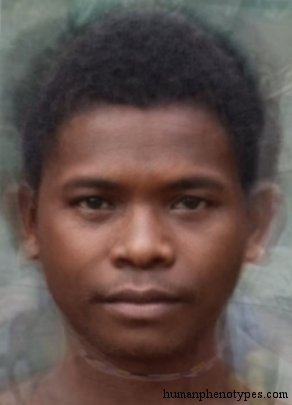
The entries also show how a label gets attached after the fact. Aetid is recorded in the mountains of Luzon, Mindanao and Palawan, among Aeta, Ati, Batak and Mamanwa communities, with only a few thousand typical individuals described, and the upland groups it names were largely outside the parish registries through which the 1849 catalogue operated. Kachinid takes its name from Kachin State in northern Myanmar, an administrative unit created in 1948, while the pattern it describes was catalogued from literature reaching back much further. Jahai-Semangid is narrower still, typified by a few hundred Jahai and Bateq individuals and read as a Palaeolithic relict of the peninsula's forest population. In each case the entry's name is an index key chosen by a researcher, which is exactly what a surname is for a household.
What a surname can be asked
Three questions survive contact with the evidence. What language does the word belong to, and what did it mean. In which counties or provinces is it dense enough to search. And is the transmission rule in that place and period the one the name assumes. Everything else, including the country with a flag beside it, is a compression of those three into a single line, and the compression is where the error enters.
The catalogue's own rule applies here too. An entry describes a documented pattern in a historical sample, not a living person and not a nationality, and a surname describes a word and a register in the same restricted way. Both are indexes into records. Neither is a description of what anyone looks like, and a name has never been able to return a face.
Frequently Asked Questions
- Does a surname's meaning tell you where your family came from?
- It tells you which language the word belongs to, and languages cross modern borders freely, so the answer is usually a linguistic region rather than a country. German trade names such as Müller and Schmidt describe occupations, Slavic names ending in -ski began as descriptions of a place, and Arabic names ending in -i mark a town. Each points at a language and a naming convention. None of them records a village, and none records a lineage.
- How reliable are surname studies of ancestry?
- They work best for rare names in isolated populations, which is why isonymy studies clustered in mountain parishes and on islands. The method assumes a name is inherited from a father, stable across centuries and not assigned by an administrator, and each assumption fails somewhere: non-paternity runs near 1.7% per generation, the Philippines assigned surnames by decree in 1849, and matrilineal societies pass names and descent along different paths. Treat a surname result as a lead for archival research, not as a measurement.
- Can a surname be matched to a phenotype entry?
- Not in any way that carries evidence. The entries on this site describe documented appearance patterns with historical distributions at a baseline roughly fifteen hundred years old, while most surnames in Europe are under eight centuries old and were fixed by registrars rather than by descent. Appearance also varies continuously within any region a name points at, so even a precise place and period would not fix a face. A name can send you to a parish register. It cannot send you to a description of a body.
Related Phenotypes
Faces from the encyclopedia that appear in this article. Open any entry for its full description, distribution, and references.
Aetid
Southeast Asia
Ancient type found in the mountains of the Philippine islands of Luzon, Mindandao and Palawan. Probably developed during the Paleolithic. Si...
Kachinid
Southeast Asia
Robust Proto Malayid subtype that probably originated in the Tibet/China border region and spread southwards some millennia ago. Named after...
Jahai Semangid
Southeast Asia
Semangid variety, a Paleolithic relict of the original Malaysian forest population. Shows more Veddoid/Australoid features and is similar to...
Test what you learned
Put your eye for regional faces to work in the daily quiz — a composite face, a world map, and your best guess.