An Ethnicity Detector Would Need a Unit, Not a Label
A detector is defined by the quantity it reports, the threshold that calls a reading positive, and the freedom to return nothing at all. Tools named ethnicity detectors supply the first two and skip the third.
Every detector reports a quantity
A detector is an instrument, and instruments are defined by what they report and where they stop reporting. The limit of detection, in the formulation the International Union of Pure and Applied Chemistry recommends, is three times the standard deviation of a blank reading divided by the slope of the calibration curve, with the blank measured at least twenty times before the figure is quoted. Below that limit the instrument is permitted to report that it found nothing.
Radon measurement shows how much judgement sits inside such a figure. The World Health Organization's 2009 handbook on indoor radon set a reference level of 100 becquerels per cubic metre. The United States Environmental Protection Agency keeps an action level of 4 picocuries per litre, which converts to 148 becquerels per cubic metre. The guidance around those numbers treats them as points at which mitigation is advised, not as lines dividing presence from absence. What makes the number usable anyway is that the quantity is physical, the unit is fixed, and a reading of zero is one of the outputs the device can give.
What a face model returns instead
A classifier trained on a fixed list of labels returns one number per label, the numbers are non-negative, and they sum to one. The largest is reported. There is no setting in which the model answers that it found nothing, because the arithmetic has no slot for that answer. Change the length of the list and the numbers change for the same photograph: a face scored against four candidate labels and against four hundred yields different values, since the normalisation spreads a fixed total across whatever labels the developer chose to include.
The output therefore has no unit. A radon reading is a concentration; a label score is a share of a total the tool itself defines. C. K. Chow set out the missing piece in a 1970 paper in IEEE Transactions on Information Theory on the error and reject tradeoff: an optimal recognition system needs a third outcome alongside correct and wrong, namely a refusal, and the relation between the error rate and the rejection rate is fixed once the class distributions are known. Systems without a refusal option still produce refusals. They record them as answers.
A target has to be a state
Detection also needs something to detect, and the catalogue's entries make that difficulty concrete, because what they name is mostly a place. Each entry carries coordinates, a region, a description drawn from published sources and a bibliography. Nothing in the file is a class a person could be assigned to. The coordinates fall on landforms, rivers and coastlines rather than on political boundaries, so two entries can share a region while pointing at places a thousand kilometres apart. Four entries show the scale of the referent.
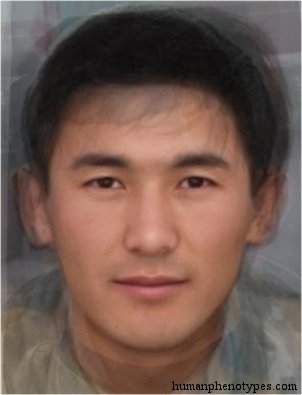
- Mountain Aralid, a Tungid variety of the Tian Shan mountains in Kyrgyzstan and western China, pinned at 42.09 north and 80.13 east.
- Brachio Melanesid, an atypical brachycephalic variety whose most pronounced form is placed among the Kerewo of Goaribari Island in the Gulf of Papua, with a second centre in the Bismarck Archipelago.
- East Sudanid, an isolated Sudanid variety of the Nuba mountains in Kurdufan, recorded as present in the region at least since the Neolithic.
- Micronesid, a northwestern Polynesid subtype of Micronesia, Guam and Palau, whose earliest citation is Desmoulins in 1826.
Two targets that have already ended
Tasmanid is the clearest case. The entry describes an insular, slightly gracilised Australid subtype of Tasmania, most likely formed after the island was separated from the mainland, and then records the end of its subject: the last full-blooded man died in 1869 and the last full-blooded woman in 1876, after war, displacement and introduced disease removed the population within a few decades. Descendants of mixed ancestry remain. The entry persists as a citation with a location and a bibliography. Its target does not.
South Australid, the subtype associated with the Murray basin of south-eastern Australia, carries a similar note. The fertile south-east was colonised first, the population was pushed off it, and the pattern is now described as surviving only in mixed form. A detection specification has to name the state it is looking for and the conditions under which that state is present. These two entries describe distributions that were measured and then closed. The record keeps the measurement; nothing can be sampled against it now.
Two centuries of calibration notes
The bibliographies are the part of the catalogue closest to a calibration sheet, and their span is the surprise. Across 209 entries there are 1,367 citations. The oldest is from 1826, when Desmoulins described the Micronesid pattern under the name Carolinese. The newest is from 2014. Individual entries carry between 2 and 15 references, and the widest single list runs 181 years, from 1825 to 2006. Thirty-four entries cite at least one work published before 1900.
A bench instrument is calibrated against one standard, held under stated conditions, and its drift is quoted in the same units it reports. A face classifier has a different kind of paper trail: a training corpus that is rarely published in full, a label list that is revised between versions, and accuracy figures that are averages over that corpus. The catalogue sits closer to the first pattern than to the second, yet matches neither exactly, because every name in it is a proposal by an identifiable researcher that later workers kept, altered or dropped.
Why the label gets borrowed
The word detector sells well because it promises an event with a moment and a boundary. A smoke alarm either sounds or stays quiet. A walk-through metal detector either reports a mass of metal or does not. Borrowing the word transfers that promise to a product whose actual output is an entry in a list. Someone searching for an ethnicity detector is not, in most cases, shopping for an instrument, and the page that answers the search is usually selling a category with a number beside it that looks like confidence.
Three things would have to be published before the word fit. The target would need a definition that survives being written down, rather than a list assembled from photographs. The instrument would need a reference standard against which it was measured. And it would need a stated score at which it returns no answer, together with the false-positive rate at that score. None of the three is technically impossible. Their absence is what separates a detector from a classifier with a reassuring name.
Where the record stops matching
The catalogue describes documented appearance patterns against a rough baseline of about 1,500 years ago, and its own text says where later movement intervened. The East Sudanid entry notes that Nilotid, Congolid and Orientalid admixture is common even in isolated villages of the Nuba mountains. Karroid, named after the Karoo, was dominant in southern Africa some centuries ago and survives among a few thousand speakers. Patagonid (proper) was pushed back by Mapuche and then by European settlement, and is described today as found mainly in mixed form.
Those notes matter for a reason other than chronological accuracy. A detection system is calibrated against a state that persists long enough to be sampled repeatedly, and the entries repeatedly describe the opposite: the pattern is documented, the distribution shifts, the entry stays. Read as a description with a date, a location and a bibliography, an entry is a solid object. Read as a class into which a living person is sorted, it collapses, because sorting is the one operation the source material never performed.
Frequently Asked Questions
- Can an AI detect someone's ethnicity from a photo?
- No instrument senses ethnicity, because ethnicity is not a quantity with a unit. A photo model returns a label from a list it was trained on, which is a category in its training data rather than a property of the person photographed. Detection would require a defined target, a threshold on a measured quantity, and the option to report nothing found. A label classifier supplies the third option least of all, since its arithmetic always spreads a fixed total across the labels available to it.
- Why does a face model never answer that it does not know?
- Because the usual design has no slot for that answer. Scores are normalised to sum to one across however many labels the developer included, and the largest is returned, so there is no threshold beneath which the model stays silent. Chow's 1970 analysis of the error and reject tradeoff showed that an optimal recogniser needs a refusal outcome, and that the balance struck between errors and refusals is a design decision rather than a property of the input.
- How is a catalogue entry different from a detection class?
- An entry carries a place, a description written from published sources and a dated bibliography. The Tian Shan, the Nuba mountains and Goaribari Island are what those records point at. A detection class would need a definition that can be written down, a reference standard the instrument was measured against, and a stated score at which it returns no answer. The entries are historical descriptions of documented appearance patterns with known distributions, and they do not sort living people into groups.
Related Phenotypes
Faces from the encyclopedia that appear in this article. Open any entry for its full description, distribution, and references.
Mountain Aralid
Central Asia
Tungid variety, weakly influenced by Turanid. Usually united with Aralid, but more Mongoloid. Native to the Tian Shan mountains of Kyrgyzsta...
Brachio Melanesid
Melanesia
Atypical brachycephalic Melanesid variety native to Melanesia and New Guinea. In its most pronounced form in the Kerewo of Goaribari Island ...
East Sudanid
East Africa
Isolated Sudanid variety of the Nuba mountains in Kurdufan / Sudan, native to the region at least since the Neolithic. Has resisted historic...
Tasmanid
Australia
Insular, slightly gracilised Australid subtype of Tasmania. Similar to Barrinean, sometimes also associated with Melanesid or Negritid. Most...
Test what you learned
Put your eye for regional faces to work in the daily quiz — a composite face, a world map, and your best guess.