What Is an Ethnicity Guesser? The Map Game Where Faces Are the Clues
Ethnicity guessers are the newest branch of geography gaming: a composite face appears, you pin the map. Here is the genre, where it came from, and what our version does differently.
A Genre With a Van in Its Family Tree
In 2013, a Swedish developer launched GeoGuessr, a game that drops you into a random Street View panorama with a single instruction: work out where you are. It became a genuine phenomenon, and its suffix became a genre. A '-guessr' is now shorthand for any game that hands you a fragment of the world — a road, a skyline, a stadium, a plate of food — and asks you to point at the map. The pleasure is always the same: the shock of discovering how much geography you carry around without noticing.
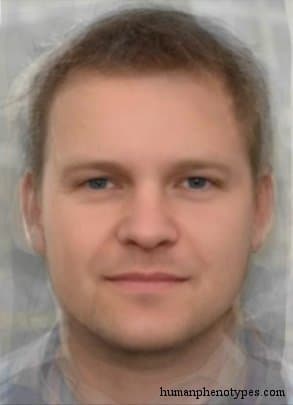
An ethnicity guesser is the newest branch of that family, and it makes one substitution: the fragment of the world is a human face. Not a photograph of a person — a composite average face, the statistical center of a documented appearance pattern, produced by aligning many photographs and averaging them until only the shared architecture survives. The question it asks is the same one GeoGuessr asks of a road: where on Earth is this pattern historically common?
How One Round Works
The loop is deliberately spare. An unlabeled composite appears — no name, no country, no caption. You study it the way a GeoGuessr player studies asphalt and roof tiles: the brow, the cheekbones, the bridge and base of the nose, the hair, the fold of the eyelid. Then you drop a pin on a world map. The pin is your entire answer.
Scoring follows distance-decay: land near the pattern's documented historical center and the round pays out fully — up to 5,000 points in the Classic Daily mode — with the reward tapering as the pin moves away. The geometry is honest. It rewards being roughly right before it rewards being precisely right, which is a fair description of how geographic knowledge actually behaves.
Then comes the reveal: the encyclopedia entry behind the face. Every composite is backed by a catalogue entry — the phenotype's name, the traits the old typologists recorded, and a distribution anchored to roughly 1,500 years ago. You learn what the pattern was called, where it centered, and which neighbors it fades into. A round takes under a minute; the rabbit hole it opens can take an evening.
Why a Face Works as a Map Clue
Visible human traits do not sort into discrete blocks; they grade smoothly across the map. Skin tone deepens along a gradient from the poles toward the equator; the frequency of the epicanthic eyelid fold sweeps across Eurasia; nose shape broadly tracks the climates populations adapted to. Biologists call these gradients clines, and clines are why a face carries location information at all — the way a street sign's alphabet carries a country, systematically but imperfectly.
A cline has a corollary that shapes the whole game: neighbors look alike. Distant regions produce faces that are easy to tell apart at a glance; adjacent regions blur into each other. Some rounds read gently — a face that announces a continent — while others pit you against near-neighbors like the Anatolid and Armenid types, which fool almost everyone. That gradient of difficulty, from continent to confusable neighbor, is the genre's engine.
The Encyclopedia Behind Every Round
What distinguishes this site within the genre is what sits underneath the quiz. Every composite comes from a catalogue of 209 historical human phenotypes, compiled from the typological anthropology of the 1800s and 1900s — researchers like Eickstedt, Lundman, and Biasutti, who gave names, trait lists, and geographic centers to the appearance patterns they documented. The distributions are anchored to roughly 500 CE, before modern migration reshuffled the world's populations.
The honest framing matters. That catalogue was assembled before genetics could check it, from uneven samples, by observers working inside their own era's assumptions. It is a historical record of documented appearance patterns — not a genetic census, and not a claim that humanity sorts into types. The game is the front door to that library; the library is the point.
Three Ways to Play
Different players want different levels of commitment, so the quiz comes in three shapes.
- Classic Daily: ten composite faces per day, the same ten for every player worldwide. Drop your pins, watch the distance-decay scoring stack up to 5,000 points a face, and compare — and share — your result with everyone else playing that day.
- Challenge Mode: more faces whenever the daily ten is not enough.
- Countries Mode: 48 country average faces — coarser targets and the gentlest on-ramp for players who are new to the map.
Who Actually Plays This
Three crowds overlap here. Map-game fans arrive from the GeoGuessr-adjacent world, chasing the same dopamine as a well-placed pin. Travelers come to test the intuitions they have accumulated — and to find out how often those intuitions are wrong. The anthropology-curious wander in for a quiz and stay for the encyclopedia, because every reveal is a short essay about a documented pattern and where it lived.
What unites them is a comfort with the genre's premise: a face is a geography question, not an identity verdict. The daily format — the same ten faces for every player worldwide — gives the game a small shared ritual: scores are comparable across continents, and arguments about a tricky face are universal. And the game never analyzes your photos — there is nothing to upload, and the site refuses photo uploads by design. You point at the map; the map never points at you.
Frequently Asked Questions
- Is an ethnicity guesser the same thing as a face-analysis app?
- No. Face-analysis apps classify photographs you upload; this site never accepts uploads and never analyzes anyone's picture. Here, faces are the quiz material — historical composites you study — and you do the guessing, at a map.
- Do I need to know anthropology to play?
- Not at all. Coarse regional knowledge — recognizing that a face reads as broadly Northern European or West African — already scores well, because points decay with distance rather than vanishing at a wrong answer's border. The fine distinctions are what you learn by playing.
- Are the faces in the game real people?
- No. Every face in the game is a composite: a statistical average of aligned photographs, or a reconstruction from documented trait descriptions. A composite depicts no individual, and none should be read as a portrait of a real person.
Related Phenotypes
Faces from the encyclopedia that appear in this article. Open any entry for its full description, distribution, and references.
Borreby
Central Europe
Ancient Northern European variety. Named after some of the Neolithic Borreby skulls of Denmark (not all!). Some emphasised resemblance with ...
Aisto Nordid
Northern Europe
East Nordid subvariety, common in coastal regions of Baltic countries. One of the last strongholds of East Nordids that are only a minority ...
Test what you learned
Put your eye for regional faces to work in the daily quiz — a composite face, a world map, and your best guess.