What Is My Ethnicity? Who Is Asking Changes the Answer
What the phrase assumes is that ethnicity is one thing a person has. Four registers answer it instead: a census form, a family record, a genetic estimate, and a face.
The question assumes a single owner
Ask someone what ethnicity they are and the sentence carries three assumptions that rarely survive inspection: that ethnicity is a property a person holds, that each person holds exactly one, and that a competent observer could in principle retrieve it. In ordinary use the word slides between a legal nationality, a family's recorded history, a set of cultural practices, and an impression created by a face. Those four things have different sources, different durabilities and different failure modes.
The practical consequence is that the question has no single answer because it has no single author. A registry records a person, a form asks them, an algorithm estimates them, and a stranger guesses them. Each of those produces a different statement, and the statements can be simultaneously correct within their own frame while contradicting each other outright. Keeping the frames apart is not pedantry. It is the only way to work out which kind of answer would even count as an answer.
How a census form builds a category
Modern ethnic categories are mostly administrative artefacts with dated birthdays. In the United States, the categories used across federal statistics descend from the Office of Management and Budget's Statistical Policy Directive 15, issued in 1977 and revised on 30 October 1997. The 1977 version set four race categories and two ethnic ones. The revision split Asian or Pacific Islander into Asian and Native Hawaiian or Other Pacific Islander, renamed Black as Black or African American, and settled on five minimum categories for race alongside two for ethnicity, Hispanic or Latino and Not Hispanic or Latino.
The 2000 census was the first to ask race and ethnicity as two separate questions, with ethnicity collected first. What those categories were never meant to do is describe anyone. The Census Bureau's own quality review calls them a social and political construct built for collecting data on broad population groups, and states plainly that they are not anthropologically or scientifically based. A respondent is therefore answering a question written to make tabulation possible, which is why the questions keep being revised and why each revision shows up as a change in how people answer.
The same person, three different forms
Brazil asks one question, about cor ou raça, with five options, and the answer is self-declared: branco, pardo, preto, amarelo, indígena. In the 2022 census 45.3% of the population, some 92.1 million people, selected pardo, against 43.5% who selected branco. It is the first time on record that branco has not drawn the largest response. Nothing about the population changed inside that decade to force the shift. The vocabulary printed on the form, and people's willingness to pick from it, did the work.
England and Wales went two-stage in 2021. Respondents chose first from five high-level groups, then from nineteen tick-box options, several of which carry a write-in line for anyone the boxes miss; the published output files distinguish 287 detailed categories. France took the opposite route and asks nothing of the kind, collecting no racial or ethnic categories in its census at all, while its data-protection law restricts processing that reveals racial or ethnic origin. One person who has lived in London, São Paulo and Lyon is answerable to three entirely different sets of boxes, and all three answers can be true.
Where self-identification is the authority
There is one frame in which the answer is authoritative, and it is the one most often treated as the least reliable. The Office for National Statistics defines the census ethnic group as the group the respondent feels they belong to, which may rest on culture, family background, identity or physical appearance, and notes that because the question is self-identified and subjectively meaningful, how a person chooses to answer can change over time. Inside that frame the respondent is the source of the definition, so there is nothing to verify and nothing to get wrong.
That instability is a property of the measurement rather than a defect to be corrected. When the definition is subjective, a changed answer is a changed fact about the respondent, not an error, which is why percentages in this frame move quickly and why growth in write-in and multiple responses is usually read as a shift in how willing people are to describe themselves that way. Every other frame has to infer from something outside the person, and each pays for that inference with a stated uncertainty.
What a historical entry actually names
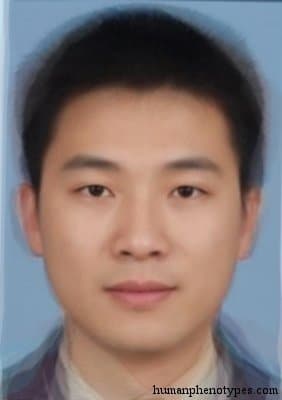
The catalogue this site publishes belongs to a different frame again, and its entries show how far it sits from a form. Changkiangid takes its name from the Chang Kiang, the Yangtze, and is anchored to river and rice farmers in central China and the provinces that drain into that basin, with millennia of dispersal carrying it to the Sunda Islands, the Tibetan plateau and Indochina. Bobo is named neither after a state nor after a border but after Bobo-Fing and Bobo-Dyula communities in the Upper Volta region of Burkina Faso and Mali.
Entries are named after rivers, landforms, language communities and nineteenth-century coinages, not after ministries. Egyptid is described as a Libyid variety of the Nile Valley, recorded in its most characteristic form among Egyptian Copts, which makes it a pattern tied to a religious community inside a state rather than to the state's population. North Ethiopid runs along the Red Sea coast and the Nile Valley from Egypt into Eritrea and deep into the Ethiopian highlands. Faced with the question, a catalogue can only ask one back: which documented pattern, in which sample, at which period?
What migration did to the forms
The modern complication runs in both directions at once. People move faster than forms are revised, so a category can describe a population that no longer sits where the category was written. The 2021 England and Wales questionnaire added a Roma tick-box beside Gypsy or Irish Traveller, and a write-in line inside the African option, because the earlier options were catching answers they could not hold. A form is a snapshot of the vocabulary available on the day it was printed, and that vocabulary can trail the population by a decade or more.
The historical catalogue has the same problem in reverse. Its distributions are anchored roughly 1,500 years back, which places them before the later phases of the Bantu expansion, before the forced crossings of the Atlantic and the Indian Ocean, and before the industrial and wartime movements of the last two centuries. Many people now combine traits from several documented patterns and match none of them closely. That outcome is the expected result of centuries of movement layered over an older distribution, not a gap in the record.
What an honest answer sounds like
A workable answer names its frame before it names anything else. "By the census category I selected, this" is a different statement from "by my recorded family history, this", and both differ from "by similarity to genetic reference panels, this". The first is a self-description, the second is a document, and the third is a probability with an interval attached. Saying which one is meant costs a clause and removes most of the confusion that follows when two people use one sentence to mean different things.
What does not work is treating the frames as competing measurements of a single quantity, with one true value that better tools would eventually recover. Appearance is the weakest of them, because the visible traits rest on a modest number of genes with wide distributions and heavy overlap between regions. A face supplies weak evidence about a distribution and none at all about anyone's records or their own account of themselves. The catalogue is worth reading for precisely the reason it cannot answer the question: an entry has a place, a date and a citation, and no owner.
Frequently Asked Questions
- Is there any single correct answer to what my ethnicity is?
- Only inside a stated frame. If the frame is self-identification, the answer is whatever the person says, and no outside evidence can overrule it. If the frame is a legal or administrative record, the answer is what the document says, which can be incomplete or wrong. If the frame is a genetic estimate, the answer is a set of proportions over reference panels with an interval attached. The question is unanswerable as asked and straightforward once the frame is named.
- Why do different countries ask about ethnicity in different ways?
- Because the categories were built for national statistics rather than for describing individuals. The United States settled on five minimum race categories plus a separate Hispanic question; Brazil asks one colour-or-race question with five self-declared options; the England and Wales census uses two stages and nineteen tick-boxes. France collects no such categories at all and restricts processing that reveals racial or ethnic origin. Each design reflects a different legal and statistical history, and each produces answers the others cannot.
- Can a phenotype catalogue tell me what my ethnicity is?
- No, and its structure shows why. The entries describe appearance patterns documented in a region at a period, often in small samples, with the source literature cited alongside. Changkiangid is anchored to the Yangtze basin, Bobo to communities in Burkina Faso and Mali, and Egyptid to the Nile Valley as recorded among Egyptian Copts. Those are statements about where a pattern was documented. They carry no claim about anyone reading them now, and appearance is not ancestry.
Related Phenotypes
Faces from the encyclopedia that appear in this article. Open any entry for its full description, distribution, and references.
Changkiangid
East Asia
Sinid subtype, named after the Chang Kiang (Yangtze) river in Central China. Today the most populous human variety in the world. Developed f...
Bobo
West Africa
Sudanid variety with shorter skulls than Sudanids proper, and several other unique features that set it apart from other neighbouring groups...
North Ethiopid
East Africa
Ethiopid subtype that is often regarded as a northern branch of East Ethiopid. Common along the Red Sea coast and the Nile Valley from Egypt...
Egyptid
Southern Europe
Libyid variety, typical for the Nile Valley of Egypt. May result from ancient South/West Asian migrations that mixed with native Berberids. ...
Test what you learned
Put your eye for regional faces to work in the daily quiz — a composite face, a world map, and your best guess.