Why Dark Skin Is Common Near the Equator
Skin reflectance data show that sub-Saharan Africa holds a wider range of the trait than any other region, so the question has no single value to explain. The gradient tracks ultraviolet radiation rather than quantity.
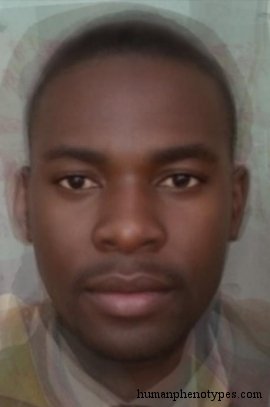
A continent does not have one tone
The question contains a smaller question inside it. Africa takes in the Sahara, the Sahel, the Congo basin, the Horn and the Cape, and the reflectance measurements collected from those regions span a wider range than any other continent's. John Relethford's 2000 analysis of skin reflectance from 98 male samples across eight world regions found that within-population skin-colour diversity is higher in sub-Saharan Africa than anywhere else, and that the result holds after adjusting for distance from the equator.
That finding is the first thing to keep hold of, because it means the trait has no single African value to account for. The catalogue's own entries record the spread without commentary. Central Bantuid, which entered southern and eastern Africa with the Bantu expansion, is listed with dark brown and sometimes black skin. South Nilotid, common from Lake Albert down to Lake Victoria, is listed with black skin. Pre Nilotid, an older population of the Sudan and Ethiopia border country, is listed the same. Three entries, three histories, one line each in a trait list.
Pigment sits in packets, not only drops
Constitutive skin colour is not a simple quantity of paint. Melanocytes sit in the basal layer of the epidermis at roughly one cell for every thirty-six keratinocytes, and that ratio barely shifts between people of different tones. What shifts is what the melanocytes hand over. In dark skin the melanosomes are larger and travel into keratinocytes individually; in light European skin they are smaller and arrive bundled into membrane-bound clusters of four to eight; Asian skin sits between the two.
Hyun-Young Thong and colleagues at National Taiwan University Hospital put figures on the contrast in 2003, finding that 88.9 percent of melanosomes reached keratinocytes singly in their dark-skin samples, against 84.5 percent arriving in clusters in their light-skin samples. Mean melanosome area ran around 1.44 in the dark group against 0.94 in the light group, in units of a hundredth of a square micron. The comparison with chemistry is the surprising part. Alaluf and colleagues measured melanin content directly in 2002 and reported that the dramatic visible difference between the lightest and darkest samples corresponded to only about a two-fold difference in melanin. Packaging and particle size carry more of the signal than raw quantity does.
Two chemical reactions pull in opposite directions
The selective argument reached its modern form in work by Nina Jablonski and George Chaplin, and their 2010 treatment describes two clines rather than one. In the tropics ultraviolet A arrives at high intensity all year while ultraviolet B peaks twice, at the equinoxes. Ultraviolet radiation photolyses folate and its main serum form, 5-methylhydrofolate, and ultraviolet A contributes as well by generating reactive oxygen species. Folate is needed for cell division and DNA repair, so the cost of losing it rises with the dose.
Away from the tropics the sign flips. Ultraviolet B is the photon that lets skin synthesise vitamin D3, and at high latitudes there is little of it and almost none in winter. The pigment that protects folate in the tropics also reduces vitamin D synthesis further from the equator. Their maps put annual mean ultraviolet B at 305 nanometres between about 1 and 135 joules per square metre, and ultraviolet A at 380 nanometres between about 65 and 930, with the least pigmented populations sitting where the ultraviolet B totals are lowest. Neither end of that trade is an improvement on the other. Each is a fit to a different dose.
The ancestral ape was pale under its fur
Uniformly dark skin is not the deep ancestral condition of the primate line in the sense people usually assume. Chimpanzee skin is pale beneath the coat and darkens with age, which points to an ancestral ape with light skin under dark hair rather than the reverse. What changed the arithmetic was losing the coat. An equatorial hominin without fur is exposed to unfiltered sun across most of the body, and the protection a coat supplied has to come from pigment instead.
The timing rests on two independent clocks that do not quite agree. Alan Rogers, David Iltis and Stephen Wooding examined silent mutations at MC1R in 2004 and concluded that the last selective sweep for uniform dark skin happened no later than about 1.2 million years ago, with a lower bound near 565,000 years depending on assumptions, in a population of roughly 14,000 breeding individuals. Studies of lice place the loss of body hair earlier, around 3.3 million years ago, so the window stays wide and openly contested. The direction is the part that is not: the evenly dark, hairless human is the derived arrangement, and it is young.
The gradient has no steps in it
Skin colour has an unusual statistical shape. Neutral genetic markers put roughly 85 percent of their variation inside local populations, with only a small slice between continents. Pigmentation runs the other way. Relethford's compilations place around 88 percent of skin-colour variation among geographic regions, with only a few percent separating local populations within those regions. That imbalance is exactly why the trait is the one every racial classification scheme reaches for first.
The catch is that the gradient has no natural cut points. Walk from the equator toward either pole and each level of pigmentation blends into the next, with no gap anywhere for a boundary to run along. A classification needs discontinuities, and a cline supplies none. Both statements hold at once, and together they explain why this particular trait is so easy to sort and so hard to sort honestly.
One appearance, different chemistry
Two populations can arrive at the same recorded trait from unrelated starting points, and the catalogue sometimes says so within a single paragraph. Bukaid, described in the western Solomon Islands, is recorded with the darkest skin in Oceania, dark enough that even the palms are affected, a detail the compilers set against their African material. The same entry notes that the pattern has sometimes been described as bantuiform, then states plainly that no close genetic relationship to Africans exists. A resemblance was recorded and a lineage was refused in the same breath.
Genetics has since supplied the reason those refusals were correct. Sandra Beleza and colleagues dated the sweeps that lightened European skin in a 2013 study and found that two of the alleles involved sit above 90 percent frequency in Europe while staying rare or absent in African and East Asian samples, with the European-specific sweeps beginning only within the last 11,000 to 19,000 years. A variant near KITLG is shared between Europeans and East Asians but sits near 7 percent in Africa against roughly 80 percent in those two regions. Lightening happened more than once along separate routes, and unrelated populations have reached similar tone while related ones have not.
What has changed since the baseline
Facultative pigmentation, the capacity to tan, matters most in the band where ultraviolet B swings hardest with the seasons, which Jablonski and Chaplin place between roughly 23 and 46 degrees of latitude. Tanning is a separate trait from baseline tone, and together they are machinery that a long-settled population is matched to. The catalogue's distributions are anchored around 1,500 years ago, and that matching has been disrupted since by movement at every scale.
The entries document some of the movement themselves. Central Bantuid is recorded as arriving in its region with the Bantu expansion some millennia ago. South Nilotid is placed by a southward shift from the Lake Albert area toward Lake Victoria. Pre Nilotid's record notes that many of the groups typed to it have been displaced and are now dispersed worldwide. A phenotype catalogue can state that a described appearance was common in a stated place and time, written down by named observers. It cannot tell you what anyone's skin looks like, and it was never built to try.
Frequently Asked Questions
- Why is dark skin common in low latitudes?
- Ultraviolet radiation is intense all year near the equator, and it breaks down folate, a vitamin needed for cell division and DNA repair. Eumelanin, the brown-black pigment, absorbs ultraviolet before it reaches the deeper layers, which limits that loss. Farther from the equator the constraint reverses, because ultraviolet B photons are what skin uses to make vitamin D, and less pigment allows more synthesis. Neither arrangement is superior. Each fits the ultraviolet dose a population has lived under.
- Is dark skin controlled by a single gene?
- No. Pigmentation is polygenic, and the variants that build it differ between regions, so the same tone can rest on different sets of alleles. The variants that lightened European skin most strongly are rare or absent across African and East Asian samples, and the East Asian route runs through other loci again. Within Africa the trait covers a wider range than on any other continent, which is what a polygenic trait under sustained regional selection looks like.
- If skin colour is a gradient, why is it used as a racial category?
- Because it is the most visible polymorphism our species has, and visible traits get named. Skin colour is also unusual in its statistics: unlike neutral genetic markers, most of its variation lies between geographic regions rather than inside local populations, which makes it feel like a natural dividing line. Yet the gradient has no gaps, and the same deep tone in Oceania and in Africa comes from different variants. A continuous trait with no cut points cannot supply the boundaries a classification needs.
Related Phenotypes
Faces from the encyclopedia that appear in this article. Open any entry for its full description, distribution, and references.
Central Bantuid
Sub-Saharan Africa
Bantuid variety, characterised by elongated features and strong dolichocephaly. Found especially in Mozambique and Zimbabwe, also Malawi, Na...
South Nilotid
East Africa
Type common to the southern branch of Nilotic people of Lake Albert south to Lake Victoria, in South Sudan, Uganda, and Western Kenya. In so...
Pre Nilotid
East Africa
Ancient type with Proto Nilotid traits, today still found in the border region of Sudan and Ethiopia. Common in Kwama, Uduk, Gumuz, Mao, and...
Bukaid
Melanesia
Melanesid variety, associated with the ancient "Walzenbeil" culture. Has sometimes been described as bantuiform, although no close genetic r...
Test what you learned
Put your eye for regional faces to work in the daily quiz — a composite face, a world map, and your best guess.