Why Do Northern Europeans Have Light Eyes?
Every blue-eyed person alive today descends from one ancestor who carried a single mutation 6,000-10,000 years ago. Here is the genetics, the physics, and the evolution behind Europe's lightest eyes.
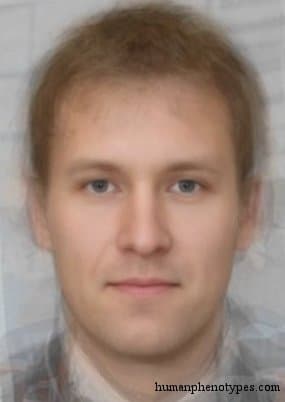
One Mutation, One Ancestor
Every blue-eyed person alive today appears to descend from a single common ancestor. In 2008, a team at the University of Copenhagen led by Hans Eiberg showed that blue-eyed individuals from places as far apart as Denmark, Turkey, and Jordan all carry the same variant — rs12913832 — sitting on the same stretch of DNA around it. That shared genetic background, or haplotype, is the signature of a founder mutation: one change that happened once, in one person, and then spread.
The mutation itself is strikingly small. It does not damage a gene; it is a single letter change in a regulatory region of HERC2, right next to OCA2 on chromosome 15. OCA2 is one of the most important pigment genes in the body — when it fails completely, the result is albinism. This variant simply turns OCA2 down, and studies of iris pigmentation suggest it can cut melanin production in the iris by as much as fivefold. The change likely occurred between roughly 6,000 and 10,000 years ago, probably somewhere in or near the Black Sea region, at the dawn of the Neolithic.
The allele behaves mostly like a recessive trait: it usually takes two copies, one from each parent, for blue eyes to appear. Today its frequency peaks around the Baltic — in Estonia and Finland, large majorities of the population carry light eyes — and falls off steadily with distance from that corner of Europe.
Why Blue Eyes Are Actually Not Blue
There is no blue pigment in a blue eye. The color comes from physics. The iris contains melanin, which absorbs incoming light, and a mesh of collagen fibers in the stroma, which scatter it. Short wavelengths — the ones we perceive as blue — scatter most strongly. In a dark brown iris, abundant melanin absorbs the light before scattering matters. In a blue iris, melanin is so sparse that the scattering wins, and the eye returns blue light to the viewer.
It is the same mechanism, Rayleigh scattering, that makes the sky look blue. Green and hazel eyes sit in between: some melanin, some scattering, sometimes with a yellowish lipochrome pigment shifting the mixture toward green. Brown was the original human setting — the ancestral condition our species carried out of Africa — and it remains the global default by a wide margin.
What Ancient DNA Reveals
Sequencing ancient skeletons has rewritten this story twice over. Hunter-gatherers who lived in Germany, Scandinavia, and the eastern Baltic shortly after the last ice age were, by some counts, half or more blue-eyed — yet their skin was still relatively dark. Light eyes, in other words, are older in Europe than light skin. The combination of dark hair, dark-ish skin, and blue eyes that Mesolithic genomes show is one no living population matches today.
Then farming arrived. Anatolian farmers who spread into Europe from the southeast carried brown eyes (and lighter skin), and for a few thousand years the blue-eye variant diluted across much of the continent. Later migrations from the steppe, plus renewed selection, appear to have pushed light eyes back up in the north. When Homer mentions glaucos eyes in Greek poetry, blue eyes were already old news in the Baltic. The full picture is still debated — some researchers argue for earlier, glacial origins of the variant — but the broad arc holds: one mutation, repeatedly reshuffled by migration, and almost certainly amplified by selection rather than chance alone.
Why Did It Spread? The Competing Theories
A trait that offers no obvious survival advantage should not go from one individual to half a continent in a few hundred generations. That is the puzzle of light eyes, and there are three main candidate answers.
- Sexual selection: The oldest and best-known hypothesis, argued by Peter Frost in 2006, notes that Europe's hair and eye colors are unusually diverse for one region — the signature of selection that favors rare, attention-grabbing variants in mate choice. Ice-age hunting conditions may have skewed sex ratios and intensified competition, giving striking colors an edge.
- A self-reinforcing loop: A 2025 paper by Paola Bressan proposes that blue eyes spread like a peacock's tail — a 'greenbeard' effect. People who find blue eyes attractive preferentially mate with blue-eyed partners and, because eye color is visible at birth, may invest more in blue-eyed children. Preference and trait reinforce each other, accelerating the spread.
- Drift and demography: Small, partially isolated post-glacial populations could carry the variant to high frequency by chance. Most researchers treat drift as a helper, not the whole story, because the speed and geographic pattern of the spread argue for something stronger.
The Vitamin D Explanation - and Why It Fails
The popular answer — that pale eyes let in more light in dim northern latitudes, like skin lightening for vitamin D — does not survive scrutiny. Eyes do not synthesize vitamin D; that happens in skin. If anything, the trade-off runs the other way: pale irises block bright and ultraviolet light worse than dark ones, and light eyes are associated with somewhat higher light sensitivity and risk of certain eye conditions. Whatever pushed blue eyes to Baltic frequencies, it was not eyesight.
That asymmetry is exactly why most current explanations land on social rather than ecological selection. A mutation with a mild health cost that spread anyway was probably valued, consciously or not, by the people who carried it and the people who chose them as partners.
What Light Eyes Are Not
One regulatory SNP is not an identity. It says nothing about the rest of a person's genome, their ancestry in general, or who they are. Most genetic variation in northern Europe is shared with the rest of the world — the light-eye variant is one conspicuous exception, not the tip of some deeper divergence. It is a reminder that the features our eyes latch onto are a thin, unrepresentative slice of human variation.
That is also how the quiz on this site treats it. In the phenotype catalogue, light eyes are one recorded trait of historical European populations like the Aisto Nordid — a description of a distribution roughly 1,500 years ago, not a statement about any person playing the game today.
Frequently Asked Questions
- Are blue eyes going extinct?
- No. The variant is mostly recessive, so it can hide in carriers for generations, and recessive alleles fade very slowly even under mixing. Frequencies are gradually declining in populations with high migration and intermarriage, but 'extinct' — a claim that circulates every few years — misreads how recessive inheritance works.
- Can two brown-eyed parents have a blue-eyed child?
- Yes. If both parents carry one copy of the rs12913832 blue-eye allele, each child has roughly a one-in-four chance of inheriting two copies and having blue eyes. Eye color also involves other loci, which is why the simple Punnett-square story sometimes fails.
- Do blue eyes see differently?
- People with light eyes tend to be more sensitive to bright light and glare, and some studies find slightly elevated risks of UV-related eye conditions. The differences are small and say nothing about visual acuity.
Related Phenotypes
Faces from the encyclopedia that appear in this article. Open any entry for its full description, distribution, and references.
Aisto Nordid
Northern Europe
East Nordid subvariety, common in coastal regions of Baltic countries. One of the last strongholds of East Nordids that are only a minority ...
Hallstatt
Northern Europe
Nordid proper, resembles the Iron Age remains of the Austrian village of Hallstatt. Most common among Swedes and South Norwegians. Frequent ...
Test what you learned
Put your eye for regional faces to work in the daily quiz — a composite face, a world map, and your best guess.