Finland Average Face - Phenotype & People
What would the "typical" face of Finland look like? The composite below answers statistically rather than personally: recurring features from many individual portraits are merged into one image. The sections that follow — people, land, history, and culture — explain what that average does and does not represent.
Average Face Composite
Averaging many faces produces an image that no one person matches exactly, and the finland composite is exactly that kind of construction. Recurring skull outline, nose form, and pigmentation tendencies survive the merge; personal idiosyncrasies cancel out. Treat it as a population-level summary with no real-world twin.
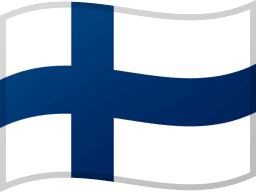
People of Finland
Faces carry the history of the populations that make them. In the sections below, the demographics, geography, history, and culture of Finland unpack what the finland composite statistically compresses into a single image.
Demographics
Finland is a country in Europe with a population of approximately 5.5 million. Helsinki serves as the capital and largest urban center, concentrating political institutions, universities, and much of the urban population. The national population is a Finnish majority with Swedish-speaking Finns, Sami in Lapland, and Estonian, Russian, Iraqi, and Somali minorities, and this composition reflects the strong regional variation in pigmentation, facial morphology, and stature that centuries of state formation, urbanization, and migration produced. Finnish and Swedish dominate public life, education, and media.
These are the demographic layers the finland average face statistically aggregates; individual variation within each group, and overlap between them, is far greater than any composite can show.
Geography
Finland is a shield of granitic bedrock smoothed by Ice Age glaciers into forest, lake, and bog — 188,000 lakes dot the interior, the coastline forms the world's largest archipelago, and the land is still rising slowly from under the ice sheet's weight. Lying 62 degrees north of the equator in the Northern Hemisphere, Finland falls within a cooler temperate to boreal climate band with cold winters.
Among the countries in the gallery, the nearest to Finland are Sweden (431 km), Norway, and Denmark; comparing their composites side by side shows both the overlap that geography produces and the differences that history keeps.
Historical Background
Finland moved from Swedish rule to a Russian Grand Duchy in 1809, declared independence in 1917, fought the Winter and Continuation Wars, and built a Nordic welfare state.
Postwar resettlement relocated 420,000 Karelians from territory ceded to the Soviet Union; Sweden's long role as both ruler and employer drew westward migration for centuries, and recent arrivals from Iraq, Somalia, Estonia, and Ukraine have reshaped Helsinki's suburbs.
Those layers are what the finland composite condenses: an average over the descendants of every phase above, not a snapshot of one of them.
Culture
The sauna, Sibelius's music, the Kalevala epic, Moomin stories, design from Marimekko and Alvar Aalto, and education.
The finland average face summarizes recurring structure in the population, while the traditions above shape how that population presents and photographs itself — the two readings always travel together.
Play the Country Quiz
Curious whether you could actually tell the Finland composite from its neighbors? The Countries game mode tests exactly that — an unmarked average face from the 48-country gallery appears, and you guess its origin. Most players start by confusing the Europe entries with each other.
Play Guess the Nationality GameRelated Countries
Compare the finland composite with these neighboring gallery entries: the shared features trace regional population history, and the contrasts mark where geography or migration drew the boundaries.

Further Reading
Background articles on how these composite faces are built and what they do and do not show about the people behind them.
What Nationality Do I Look Like? A Legal Status, Not a Face
Nationality is a status that states assign and reassign. A face can resemble a documented regional pattern; it cannot resemble a...
Race Guesser: Why the Word Does Not Fit a Face Quiz
The phrase is a search term before it is a tool. Here is where the word race came from as a sorting device, why a century of measuring...