What Nationality Do I Look Like? A Legal Status, Not a Face
Nationality is a status that states assign and reassign. A face can resemble a documented regional pattern; it cannot resemble a passport, and the catalogue is named for mountains, not ministries.
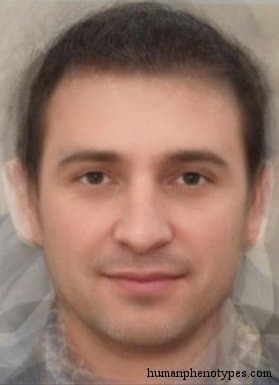
The Question Mixes Two Things
"What nationality do I look like" sounds like a question about resemblance and turns out to be about paperwork. Nationality, in law, is a bond between a state and a person. The International Court of Justice described it in its judgment of 6 April 1955 in the Nottebohm case as "a legal bond having as its basis a social fact of attachment, a genuine connection of existence, interests and sentiments". Nothing in that definition is visible on a forehead. A bond of that kind is conferred by an authority, entered in a register and revocable by legislation.
The number of people holding no such bond is not small. UNHCR estimated that 4.4 million people worldwide were stateless or of undetermined nationality at the end of 2022, a figure it calls an underestimate because roughly half the world's countries report no data at all. Every one of those people has a face. Two children of the same parents can hold different nationalities depending on where a mother was born. The question assumes the category is written on the person, and the category is written in an office.
States Have Renumbered Themselves
The United Nations opened in 1945 with 51 member states and has 193 today, the most recent addition being South Sudan in 2011. The intervals between admissions are where the difficulty sits. A city that was Austro-Hungarian before 1918, Polish between the wars, then Soviet, and Ukrainian after 1991 has carried four nationalities across four generations, while none of its residents changed what they looked like to earn the paperwork.
The rules for conferring nationality differ as well. Some states assign it by place of birth, others only by descent, and most combine the two, so children born in the same hospital on the same afternoon can end up holding different ones. Dissolution, annexation and secession have repeatedly rewritten which register a family belongs to. A century ago dozens of current states were not on the map. The faces in a region are the continuity; the categories are the disruption.
The Catalogue Names Landforms, Not Nations
The entries in this catalogue are named after physical geography, and that is not decoration. Carpathid takes its name from the Carpathian Mountains, and its recorded range runs through Huzul and other Ruthenian communities, Romanians, Poles, Hungarians, Slovenians, Czechs, Croatians and Serbs. Dinarid takes its name from the Dinaric Alps, recorded among Serbs, Croats, Montenegrins and Bosniaks, in the Eastern Alps and the Carpathians, in Albania and western Ukraine, reaching France and western Greece. Two mountain ranges, one pattern each, and more than a dozen passports between them.
The naming habit also outlasted events that the political map did not. The Dinarid entry still refers to former Yugoslavia, a state that appeared in 1918 and had dissolved by 1992. An author working in 1936 could hardly have named a pattern after a state not yet assembled, and a careful author today would not rename it after one that has since broken apart. Landforms are the stable coordinate system available, which is why the catalogue keeps returning to them.
Where One Pattern Crosses the Water
Casamance is named for the lower Casamance region and recorded across southern Senegal, Gambia and Guinea-Bissau, with lower frequencies noted further through West Africa. It is described as a contact belt carrying features that separate it from the groups on either side. Shown a face from that belt and asked for a nationality, an observer has to choose among three flags for a single documented pattern whose name comes from a river basin rather than from a capital city.
Alföld pulls the tension in the other direction. The entry is named after the Great Hungarian Plain and recorded mainly in Hungary, yet the literature classifies it as a Western Turanid subtype, formed when Huns and Magyars entered the basin in the early Middle Ages and several regional types blended. The typological grouping points east while the name and the recorded populations point at one specific plain in Central Europe. Both statements are accurate, and a nationality quiz has no way to hold them at once.
Forty-Eight Countries, Two Hundred and Nine Patterns
This site publishes 48 country composites and a catalogue of 209 patterns, and those two numbers are axes on different graphs. The country axis is political and recent, drawn by treaty and dissolved by the same means. The pattern axis is morphological, assembled from sources written across roughly a century of anthropometric fieldwork. Nothing guarantees the two grids line up, and they do not. A state can contain many catalogued patterns, and one pattern can run through many states. A question phrased as nationality admits an answer from only one of those axes.
The consequence is that a resemblance can be genuine and the answer still unusable. A face may sit comfortably inside a distribution recorded across a mountain range, and that distribution may correspond to no state at all, or to half a dozen. Reading the resemblance as a nationality means collapsing a morphological statement onto a legal one and hoping the two coincide. Sometimes they do. Nothing in the evidence makes them coincide. The catalogue describes historical distributions rather than living populations, and this is the practical reason for that caution.
Migration Outruns the Border
The contemporary complication is movement. UN DESA estimated 281 million people living outside their country of birth in 2020, 3.6 per cent of the world population, up from 173 million in 2000. Two thirds of them live in just twenty countries: the United States hosts about 51 million, Germany around 16 million, Saudi Arabia 13 million, Russia 12 million and the United Kingdom 9 million. India alone accounts for roughly 18 million emigrants. In the cities where those totals accumulate, a face is a poor proxy for the passport in a drawer.
The catalogue's own baseline is candid about this, describing patterns as documented at roughly 1500 years ago, before most of the states whose names a quiz would offer. That framing is not a gap to be closed with better data. It is an acknowledgement that the historical map and the political map are separate objects, and that a question borrowing the vocabulary of nationality is asking the older of the two to report on the newer.
How to Ask a Better Version
A version of the question the evidence can carry runs like this: which documented regional patterns does this set of features resemble, which source samples describe those patterns, and how heavily do the samples overlap? That question has a real answer, and it arrives with a range rather than a single name. It also fails usefully, because a stated sample size can be argued with. The narrower question, which country, has no comparable backing.
The ceiling is worth stating plainly. Observers sort faces into broad regions well above chance, and their accuracy falls away sharply between neighbouring populations, where the distributions sit almost on top of one another. Asking the coarse question and reading the reply as a nationality is the error that follows. The catalogue's own commitment, that its entries name historical patterns and never identify living people, is that same position reached from the other side.
Frequently Asked Questions
- Can a face tell you someone's nationality?
- No. Nationality is a legal bond conferred by a state, and the International Court of Justice described it in 1955 as resting on a genuine connection of existence, interests and sentiments rather than on appearance. A face can be compared with catalogued patterns that have historical distributions, which is a statement about regional resemblance. It cannot show which register a person appears in, and that register can change through naturalisation, marriage, the dissolution of a state, or a border being redrawn.
- Why do catalogued patterns carry names like Carpathid and Dinarid?
- Because the authors who recorded them named patterns after landforms. Carpathid refers to the Carpathian Mountains, Dinarid to the Dinaric Alps. Those names outlive the states that have contained the regions, which is why an entry can still mention former Yugoslavia, a state that dissolved in 1992, while the mountain range has not moved. A naming system built on states would need rewriting every few decades, and the literature had already learned that lesson.
- Is it possible to guess a country from a face at all?
- At the scale of broad regions, people perform well above chance. Between neighbouring countries the distributions overlap so heavily that the signal largely disappears, which is why the answer is more reliable the more the map is zoomed out. A resemblance can therefore be described and named, but not certified as a status. This site's catalogue takes the same position from the other direction: its entries describe historical appearance patterns and are not intended to identify any living person.
Related Phenotypes
Faces from the encyclopedia that appear in this article. Open any entry for its full description, distribution, and references.
Carpathid
Eastern Europe
European type with Gorid and Dinaro-Armenid elements. Common around the Carpathian Mountains of Central Eastern Europe, e.g. in Huzulis and ...
Dinarid (proper)
Southeastern Europe
Central European type typical for mountain and forest regions. Presents the counterpart of Alpinids. The name derives from the Dinaric Alps ...
Casamance
West Africa
Type of the Sudanid-Guinesid contact belt with a variety of unique features that set it apart from other groups. Most common in the lower Ca...
Alföld
Central Asia
Western Turanid subtype, named after the Alföld (Great Hungarian Plain). It developed when Huns and Magyars entered the area during the earl...
Test what you learned
Put your eye for regional faces to work in the daily quiz — a composite face, a world map, and your best guess.