Pakistan Average Face - Phenotype & People
What would the "typical" face of Pakistan look like? The composite below answers statistically rather than personally: recurring features from many individual portraits are merged into one image. The sections that follow — people, land, history, and culture — explain what that average does and does not represent.
Average Face Composite
Averaging many faces produces an image that no one person matches exactly, and the pakistan composite is exactly that kind of construction. Recurring skull outline, nose form, and pigmentation tendencies survive the merge; personal idiosyncrasies cancel out. Treat it as a population-level summary with no real-world twin.
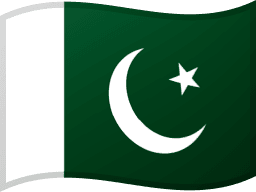
People of Pakistan
Faces carry the history of the populations that make them. In the sections below, the demographics, geography, history, and culture of Pakistan unpack what the pakistan composite statistically compresses into a single image.
Demographics
Pakistan is a country in South Asia with a population of approximately 240 million. Islamabad serves as the capital and largest urban center, concentrating political institutions, universities, and much of the urban population. The national population is Punjabi, Pashtun, Sindhi, Saraiki, Muhajir, Baloch, and Kashmiri peoples, and this composition reflects one of the most genetically and phenotypically diverse regional populations in the world, with deep caste, language, and geography-driven variation. Urdu and English plus Punjabi, Pashto, Sindhi, Saraiki, and Balochi dominate public life, education, and media.
These are the demographic layers the pakistan average face statistically aggregates; individual variation within each group, and overlap between them, is far greater than any composite can show.
Geography
Pakistan descends from the Karakoram giants — including K2 — through the Indus valley's irrigated corridor to the Thar desert and the Arabian Sea, with the Balochistan plateau filling the arid west and the delta reaching Karachi. Lying 30 degrees north of the equator in the Northern Hemisphere, Pakistan falls within a subtropical climate band with hot summers and mild winters.
Among the countries in the gallery, the nearest to Pakistan are India (1,453 km), Iran, and Bangladesh; comparing their composites side by side shows both the overlap that geography produces and the differences that history keeps.
Historical Background
The Indus Valley civilization, Gandharan Buddhism, and a succession of empires preceded the 1947 Partition creating Pakistan. East Pakistan became Bangladesh in 1971, and the country has alternated between civilian and military rule.
Partition exchanged some seven million Muslim refugees into Pakistan for departing Hindus and Sikhs; the nineteenth-century canal colonies had already settled Punjab's barren plains, and Gulf labor migration now employs millions of Pakistanis abroad.
Each of those movements left demographic deposits, and the pakistan composite reflects their cumulative statistical outcome rather than any single ancestral group.
Culture
Sufi poetry and qawwali music, cricket, biryani and kebab cuisine, truck art, and Mughal architectural heritage.
Clothing, grooming, and photographic conventions all influence which faces enter a composite and how they are perceived, so this cultural texture is part of the context in which the pakistan average face should be read.
Play the Country Quiz
Curious whether you could actually tell the Pakistan composite from its neighbors? The Countries game mode tests exactly that — an unmarked average face from the 48-country gallery appears, and you guess its origin. Most players start by confusing the South Asia entries with each other.
Play Guess the Nationality GameRelated Countries
Compare the pakistan composite with these neighboring gallery entries: the shared features trace regional population history, and the contrasts mark where geography or migration drew the boundaries.
Further Reading
Background articles on how these composite faces are built and what they do and do not show about the people behind them.
Guess My Ethnicity: What One Guess Can Carry
When someone types guess my ethnicity, they are asking a stranger to place a bet, and the odds depend far more on the list of labels...
Geography Games Like GeoGuessr: Six Kinds of Clue
Street panoramas, country outlines and average faces all answer one question. Here are six geography games sorted by the clue they hand...