India Average Face - Phenotype & People
What would the "typical" face of India look like? The composite below answers statistically rather than personally: recurring features from many individual portraits are merged into one image. The sections that follow — people, land, history, and culture — explain what that average does and does not represent.
Average Face Composite
The india composite below is a statistical synthesis: many individual photographs of people from India are aligned and averaged to produce a single image that emphasizes recurring facial structures, skin tone tendencies, and hair patterns. It is not a photograph of a real person, and individual variation within India is far greater than the composite suggests.
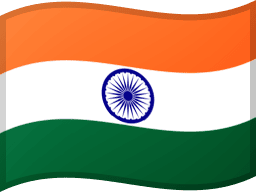
People of India
To understand the india average face, it helps to understand the people behind it. India is located in South Asia, and the sections below describe the demographics, geography, history, and culture that together shape the recurring facial features captured in the composite.
Demographics
India is a country in South Asia with a population of approximately 1.42 billion. New Delhi serves as the capital and largest urban center, concentrating political institutions, universities, and much of the urban population. The national population is Indo-Aryan and Dravidian peoples including Hindi, Bengali, Telugu, Marathi, Tamil, Gujarati, Kannada, Punjabi, and Urdu speakers, alongside hundreds of tribal and scheduled communities, and this composition reflects one of the most genetically and phenotypically diverse regional populations in the world, with deep caste, language, and geography-driven variation. Hindi and English plus 22 scheduled languages dominate public life, education, and media.
These are the demographic layers the india average face statistically aggregates; individual variation within each group, and overlap between them, is far greater than any composite can show.
Geography
India spans from the Himalayan wall across the Indo-Gangetic plain to the Deccan basalt plateau, with the Thar desert guarding the northwest and monsoon-drenched Malabar and Coromandel coasts framing the peninsula. Lying 21 degrees north of the equator in the Northern Hemisphere, India falls within a tropical climate band with year-round warmth and pronounced wet and dry seasons.
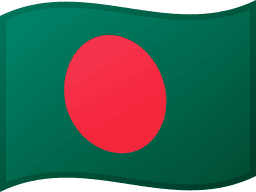
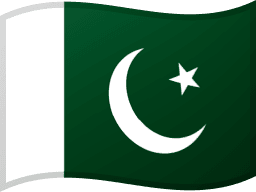
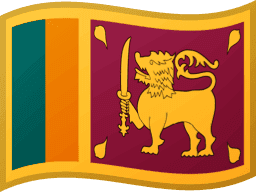
Among the countries in the gallery, the nearest to India are Bangladesh (1,222 km), Sri Lanka, and Pakistan; comparing their composites side by side shows both the overlap that geography produces and the differences that history keeps.
Historical Background
The Indus Valley civilization, successive empires from Maurya and Gupta to Mughal, two centuries of British Raj, and the 1947 independence and Partition into India and Pakistan.
Partition moved fourteen to eighteen million people across the new borders in history's largest peacetime migration; Green Revolution prosperity and later IT growth pulled vast streams from the Gangetic plain toward Delhi, Mumbai, and Bangalore.
Those layers are what the india composite condenses: an average over the descendants of every phase above, not a snapshot of one of them.
Culture
Hindu, Muslim, Sikh, Christian, Jain, and Buddhist traditions, Bollywood cinema, classical and folk dance, yoga, and regional cuisines from dosa to biryani.
The india average face summarizes recurring structure in the population, while the traditions above shape how that population presents and photographs itself — the two readings always travel together.
Play the Country Quiz
Curious whether you could actually tell the India composite from its neighbors? The Countries game mode tests exactly that — an unmarked average face from the 48-country gallery appears, and you guess its origin. Most players start by confusing the South Asia entries with each other.
Play Guess the Nationality GameRelated Countries
Other countries in South Asia and neighboring regions whose average face composites share features with the india composite. Comparing them side by side makes the regional patterns clearer.


Further Reading
Background articles on how these composite faces are built and what they do and do not show about the people behind them.
Guess Ethnicity From a Photo: What Gets Measured First
Before a face model names anything, it measures. Here is the geometry stage: the landmark schemes tools rely on, the photo standards...
Ethnic Guesser: Which Facial Cues Actually Decide a Round
A round of the game turns on a handful of facial cues, and they are not equal. Here is how pigment, the epicanthic fold, nasal shape...