Saudi Arabia Average Face - Phenotype & People
The saudi arabia average face is a composite image synthesizing the most frequently recurring facial features among people from Saudi Arabia. This page presents the composite, then situates it within the country's demographics, geography, history, and culture, so that the image can be read in context rather than as a portrait of any individual.
Average Face Composite
Averaging many faces produces an image that no one person matches exactly, and the saudi arabia composite is exactly that kind of construction. Recurring skull outline, nose form, and pigmentation tendencies survive the merge; personal idiosyncrasies cancel out. Treat it as a population-level summary with no real-world twin.
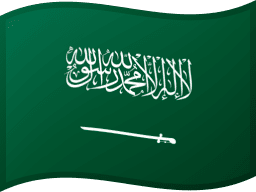
People of Saudi Arabia
Faces carry the history of the populations that make them. In the sections below, the demographics, geography, history, and culture of Saudi Arabia unpack what the saudi arabia composite statistically compresses into a single image.
Demographics
Saudi Arabia is a country in Middle East with a population of approximately 36 million. Riyadh serves as the capital and largest urban center, concentrating political institutions, universities, and much of the urban population. The national population is Saudi Arab majority alongside large expatriate communities from South Asia, the wider Arab world, the Philippines, and Africa, and this composition reflects a crossroads of Arabian, Persian, Levantine, and Anatolian populations shaped by centuries of trade and migration. Arabic dominate public life, education, and media.
When an average face composite is generated for Saudi Arabia, it statistically aggregates these demographic layers — the majority population together with the historically significant minorities — rather than representing any single individual.
Geography
The Arabian shield and sedimentary platform tilt from the Red Sea escarpment eastward across the Empty Quarter's dune seas to the Gulf coast, where the oasis chains of al-Ahsa and the date gardens of Qatif interrupt the desert. Lying 24 degrees north of the equator in the Northern Hemisphere, Saudi Arabia falls within a subtropical climate band with hot summers and mild winters.
Within our average face gallery, Iraq lies closest to Saudi Arabia at roughly 1,047 kilometers, followed by Iran and Israel; neighboring composites tend to share features because populations mix along the routes that terrain allows.
Historical Background
The birthplace of Islam in the 7th century, the Arabian Peninsula later hosted the House of Saud, which unified the kingdom in 1932. Oil wealth from the 1938 discovery transformed the country.
The 1938 oil discovery transformed a largely nomadic and oasis society into a wage economy; Yemeni, Egyptian, and South Asian guest workers built the boom cities, and expatriates still make up roughly a third of the population.
Those layers are what the saudi arabia composite condenses: an average over the descendants of every phase above, not a snapshot of one of them.
Culture
The Two Holy Mosques of Mecca and Medina, Bedouin heritage, Arabic poetry, dates and kabsa cuisine, and Vision 2030 reforms.
The saudi arabia average face summarizes recurring structure in the population, while the traditions above shape how that population presents and photographs itself — the two readings always travel together.
Play the Country Quiz
Put your eye for faces to the test. In the Countries game mode you are shown an average face composite like the saudi arabia one above and asked to guess which country it represents. Try a few rounds and see how quickly you can recognize the Saudi Arabia composite alongside the other 47 countries in the gallery.
Play Guess the Nationality GameRelated Countries
Compare the saudi arabia composite with these neighboring gallery entries: the shared features trace regional population history, and the contrasts mark where geography or migration drew the boundaries.




Further Reading
Background articles on how these composite faces are built and what they do and do not show about the people behind them.
Ethnicity Guesser Tools: Three Methods, Three Answers
One search term covers three unrelated tools: genetic ancestry estimation, photo classifiers, and documented phenotype catalogues.
Can You Really Guess Ethnicity From a Face? What the Research Says
Humans beat chance at coarse region-guessing from faces - but fall apart at anything finer. The other-race effect, confusable neighbors...