Iran Average Face - Phenotype & People
Every national population has a statistical center of gravity, and for Iran the composite below approximates it in facial terms. It is a research and visualization artifact built from recurring features, and the demographics, geography, history, and culture sections give it the context an average on its own cannot supply.
Average Face Composite
To build the iran average face, individual portraits are aligned by facial landmarks and then merged. Averaging keeps the features people share and cancels the ones they do not, so the result reads like a portrait but works like a statistic — a summary of recurring structure across the population, never a face you would meet.
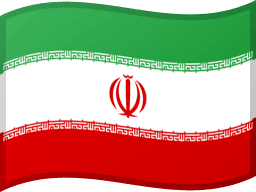
People of Iran
The composite only becomes meaningful against the population it summarizes. The four sections below cover who lives in Iran, the terrain they settled, the history that moved them, and the culture they practice — the background against which the iran average face should be read.
Demographics
Iran is a country in Middle East with a population of approximately 88 million. Tehran serves as the capital and largest urban center, concentrating political institutions, universities, and much of the urban population. The national population is Persians, Azeris, Kurds, Lurs, Baloch, Arabs, Turkmens, Qashqai, and Mazandarani among many groups, and this composition reflects a crossroads of Arabian, Persian, Levantine, and Anatolian populations shaped by centuries of trade and migration. Persian (Farsi) plus Azeri, Kurdish, Gilaki, Luri, Balochi, and Arabic dominate public life, education, and media.
When an average face composite is generated for Iran, it statistically aggregates these demographic layers — the majority population together with the historically significant minorities — rather than representing any single individual.
Geography
Iran is a high plateau ringed by the Zagros and Alborz mountains and enclosing the Dasht-e Kavir and Dasht-e Lut deserts; population concentrates in mountain valleys, the Caspian and Khuzestan plains, and the Tehran basin. Lying 32 degrees north of the equator in the Northern Hemisphere, Iran falls within a subtropical climate band with hot summers and mild winters.
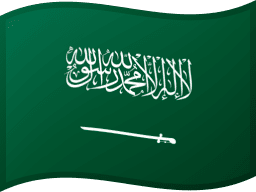
The gallery entries closest to Iran are Iraq at about 939 kilometers, then Saudi Arabia and Pakistan. Distance like this is a rough guide to facial similarity — composites from nearby countries share more than either shares with a distant one.
Historical Background
The Achaemenid, Parthian, and Sassanid Persian empires fell to Arab conquest in the 7th century. The Safavid dynasty established Shia Islam as state religion, and the 1979 revolution created the Islamic Republic.
Azeri, Kurdish, Baloch, and Turkmen communities anchor the border regions shaped by centuries of frontier wars; rural-to-Tehran migration swelled the capital after 1980, and the post-revolutionary diaspora planted large Iranian communities in Los Angeles, Toronto, and Europe.
Read this way, the average face for Iran is a cumulative record — every conquest, migration, and resettlement above contributed recurring features to the statistical mix.
Culture
Persian poetry from Rumi to Hafez, Nowruz new year, miniature painting, carpet weaving, and a refined cuisine centered on rice, herbs, and kebab.
For an average face composite, cultural context matters twice: it shapes who is photographed and how, and it frames the expectations a viewer brings to a Middle East face.
Play the Country Quiz
Put your eye for faces to the test. In the Countries game mode you are shown an average face composite like the iran one above and asked to guess which country it represents. Try a few rounds and see how quickly you can recognize the Iran composite alongside the other 47 countries in the gallery.
Play Guess the Nationality GameRelated Countries
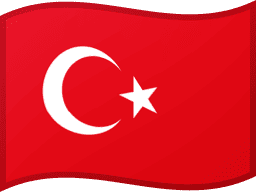
The average faces below come from the same part of the world as the iran composite. The similarities show regional continuity; the differences show where one population's history diverges from another's.
Further Reading
Background articles on how these composite faces are built and what they do and do not show about the people behind them.
Ethnicity Guesser Tools: Three Methods, Three Answers
One search term covers three unrelated tools: genetic ancestry estimation, photo classifiers, and documented phenotype catalogues.
Can You Really Guess Ethnicity From a Face? What the Research Says
Humans beat chance at coarse region-guessing from faces - but fall apart at anything finer. The other-race effect, confusable neighbors...