Ethnic Guesser: Which Facial Cues Actually Decide a Round
A round of the game turns on a handful of facial cues, and they are not equal. Here is how pigment, the epicanthic fold, nasal shape, and cranial form carry information, and where each one misleads.
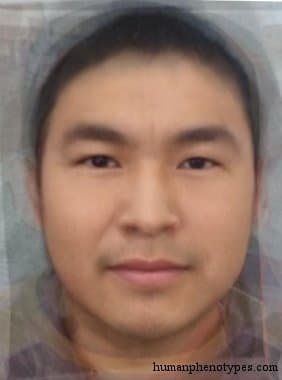
What the Game Asks You to Read
Every round of the quiz hands you one composite face and one question: where was a face like this historically common? Nothing in the interface names a cue. There is no checklist, no second photograph, and no hint button. The whole task runs on what your visual system already does when it meets a stranger, which is to tally a small set of features and weigh them against everything it has seen before. Naming those features turns a vague instinct into something you can practise.
The tally is short. Skin tone, hair colour and hair form, the epicanthic fold and the overall shape of the eye, the breadth of the nose at its base, the roundness of the cranial vault, the ratio of facial height to facial width, and the prominence of the brow all show regional averages that differ measurably. Observers of the nineteenth and twentieth centuries measured most of them with calipers and recorded the results entry by entry, and that record is what the catalogue on this site preserves.
Three Properties Decide a Cue's Value
Not every trait deserves the same weight in a guess, and the difference has little to do with how noticeable a feature is. A cue earns its place in a decision only if it satisfies three conditions at once, and several of the features players name first fail at least one of them. The three conditions also explain most of the mistakes that show up in a beginner's rounds.
- Between-group contrast: the trait's averages must differ across regions by more than neighbours vary inside any one region. A feature with a wide range everywhere and the same midpoint everywhere gives away nothing.
- Survival through standardisation: the composites strip lighting, expression, and camera angle, so a cue that only reads from a single snapshot can disappear. Pigment and vault shape survive that treatment; a tan line does not.
- Geographic rather than purely climatic tracking: sun exposure and temperature shape several of these traits, so a cue tuned to ultraviolet dose narrows your answer to a latitude band rather than a place.
- Independence from the other cues: two traits that answer to the same environmental pressure double-count one piece of evidence, which makes an answer feel more certain than it is.
Pigment, the Strongest and Bluntest Cue
Skin pigmentation is the most thoroughly studied of the visible human traits, and its genetic architecture explains why it reads so fast. In 2005, Rebecca Lamason and colleagues tracked a light-skin variant in SLC24A5 through a zebrafish mutant called golden, whose pigment cells are sparse and pale. The same change, a single alanine-to-threonine substitution, sits in nearly every European sample tested and is far rarer in East Asian ones. A second gene, SLC45A2, contributes to lighter pigmentation along a partly overlapping route.
The African picture is messier, and it demolished the older idea that light skin evolved once. A 2017 study in Science led by Nicholas Crawford found variants near MFSD12 associated with darker pigmentation, and a separate variant at the same locus associated with lighter skin in San populations of southern Africa. Lighter skin has therefore arisen more than once, on different genetic routes. As a cue, pigment is strong but blunt, because it follows ultraviolet dose closely: it places a pattern in a latitude band, not in a region.
The Epicanthic Fold Is Not One Region's Marker
The epicanthic fold, that small curtain of skin over the inner corner of the eye, is the cue players reach for fastest and the one most often overread. Its strongest genetic signal is a variant in EDAR known as V370A, which arose in East Asia roughly 30,000 years ago. Kamberov and colleagues reported in 2013 that the same variant thickens hair shafts, raises sweat gland density, and alters incisor shape along with the eyelid. Catalogue entries for northern Siberia, such as the Bering Sea pattern, record the fold together with a flatter facial plane and heavier subcutaneous fat as a package that observers read as an Arctic adaptation.
The fold is not confined to that package. It is documented at lower frequencies among Khoisan-speaking populations in southern Africa, in parts of Southeast Asia, among some Indigenous peoples of the Americas, and in northern Europe. A trait that appears in unrelated populations is a poor fingerprint and a fair hint. What makes it useful in a round is co-variation: the fold combined with a flat nasal bridge and a rounded vault points somewhere specific, while the fold alone points almost anywhere.
The Nose, the Vault, and Climate's Long Shadow
Nasal shape follows a rule anthropologists noticed long before they could measure it properly. Populations in cold, dry regions tend toward narrower nasal apertures and larger internal nasal volumes, which warm and humidify air before it reaches the lungs, while populations in hot, humid regions tend toward broader openings. The gradient is strong enough to survive averaging, which is why a narrow, high-bridged nose reads as northern or highland and a broad base reads as equatorial or lowland. South American highland entries such as the Huarpid pattern record the narrow form alongside other altitude-related traits.
Cranial shape is a worse cue than it looks, and the reason is worth stating plainly: the vault is plastic. Franz Boas reported in 1912 that the head shapes of immigrants' children shifted toward the local average within a generation, a result that Sparks and Jantz reanalyzed in 2002 with a more skeptical reading. Across the world, the cranial index has drifted toward rounder forms over the past thousand years, a trend visible in South Asian series as well as European ones. Because the vault moves with nutrition, altitude, and time, catalogue entries such as East Brachid describe a period rather than a constant.
Where a Single Cue Stops Working
Players who get better at the game stop reasoning from one feature at a time. The logic is straightforward: every cue carries its own error rate, and if the cues were independent, combining four of them would beat any single one comfortably. They are not independent. Climate shapes pigment and nasal breadth together, so a cold-adapted face scores high on both, and one underlying fact gets counted twice as two pieces of evidence.
Hair is the clearest trap of that kind. Tightly coiled hair is common across much of sub-Saharan Africa, while curly and wavy forms also appear in Melanesian populations, documented in the catalogue under entries such as the Insular Melanesid pattern. Separately, a variant in TYRP1 accounts for blond hair in parts of the Solomon Islands, where roughly a quarter of residents carry it, an outcome that arose independently in a region of otherwise dark hair. Colour and form travel on separate genetic tracks, so one of them can mislead you about the other.
The Map Has Moved Since the Catalogue Was Drawn
Every distribution in the catalogue is anchored to roughly 1,500 years ago, and the last five centuries have been the most disruptive stretch of that record. European expansion, the forced transport of enslaved Africans across the Atlantic, indentured labour schemes that carried hundreds of thousands of people from South Asia to islands in the Indian Ocean and the Pacific, and twentieth-century urbanisation all redistributed the populations these entries describe. The United Nations counted about 281 million international migrants in 2020, more than three times its estimate for 1970.
That mismatch is the game's actual subject rather than a defect in it. Guessing the historical distribution of a documented pattern is an exercise in regional knowledge, and the answer key is a map from 500 CE, not a census of any living city. Read the cues as evidence about where a pattern was recorded and the round stays honest. Read them as a claim about who someone is and the exercise turns into something it was never built to do.
Frequently Asked Questions
- Which facial cue is most useful in the game?
- Skin tone is the strongest single cue, because its regional averages differ widely and it survives the standardisation used for the composites. Its weakness is specificity: pigment tracks ultraviolet dose, so it narrows a guess to a latitude band rather than a place. Players who score well lean on pigment first and then refine with nasal breadth, hair form, and vault roundness, treating the combination as the answer rather than any one feature.
- Does an epicanthic fold mean a face is from East Asia?
- No. The fold is most common in East Asian and Arctic populations, where it travels with variants in the EDAR gene, but it is also documented at lower frequencies in southern African, Southeast Asian, Indigenous American, and northern European groups. Because it appears in unrelated populations, the fold is a weak marker on its own. Its value comes from what accompanies it, such as a flat nasal bridge or a particular vault shape.
- Why does the catalogue use distributions from 1,500 years ago?
- Because the typological literature those entries come from was compiled before modern migration remade the map. Anchoring to roughly 500 CE gives every entry the same baseline and makes clear that a named pattern describes where a documented appearance type was historically common. It is not a statement about who lives in that region now, and a composite is not a portrait of anyone you would meet there.
Related Phenotypes
Faces from the encyclopedia that appear in this article. Open any entry for its full description, distribution, and references.
Bering Sea
Siberia
Western Eskimid variety common in Alaska and along the Bering Strait, esp. St. Lawrence Island. The result of a relatively late migration to...
Insular Melanesid
Melanesia
Melanesid proper, associated with many Austronesian speakers of Melanesia. Similar to Paleo Melanesid, but with softer features. Common in E...
East Brachid
South Asia
Relatively recent contact type intermediate between Indids and South Mongolids. Widespread, reaching from Western Himalaya / Nepal to Bhutan...
Huarpid
South America
Northern Fuegid variety that is often considered part of the Lagoid group. Shows Melanesiform features and probably arrived with one of the ...
Test what you learned
Put your eye for regional faces to work in the daily quiz — a composite face, a world map, and your best guess.