Ethnicity Guesser vs hbd.gg: Two Ways to Ask a Face
Two sites ask a face to name a place. Here is what each one shows you, where breadth and provenance actually differ, and how to tell which one fits the question you are asking.
Two sites, one genre name
Search for a face-based geography quiz and two different propositions answer under similar names. hbd.gg is a daily quiz site that also trades as EthnoGuessr; its own description reads "Guess the geographic origin of ethnic groups based on their phenotype," and the loop is exactly that. This site runs a comparable loop with a different emphasis. Both build rounds from composite average faces and ask you to pin a location on a map, and both draw on the same published typological literature. The difference is not the game itself. It is what each one puts underneath the game, and how each one describes what a finished round means.
The naming matters for a practical reason. The spelling ethno guessr has been adopted by more than one project, so a search result does not identify a single owner. The more useful question is not which site is the real one. It is whether the page in front of you says what it is showing, what the answer set was built from, and what a score is measuring. Those three questions separate a game you can reason about from a box that returns a number.
The loop both sites share
Both products stand on the same method. A composite face is built by scaling portraits to a common frame, placing reference points on brows, orbits, nostrils and mouth corners, and warping every portrait onto the mean until only the shared architecture survives. Neither site invents its reference material: both work from the typological anthropology of the nineteenth and twentieth centuries, the tradition that gave appearance patterns their names, trait lists and geographic centres. Round design then follows a familiar shape. An unlabeled composite appears, you study the brow and the cheekbones and the fold of the eyelid, and you drop a pin. Scoring pays out by distance to a documented centre.
That shared inheritance sets the ceiling on both products. A composite is a diagram rather than a portrait of anyone, and the catalogue behind it was assembled over a century from uneven samples by observers who had no way to check their categories against genetics. A site can present that material with more or less context, and it can explain the limits of what it holds, but no site can make the source material more certain than it is. The material is a historical record, and a record is what the answer should be described as.
Where hbd.gg does more
The clearest genuine advantage on the other side of this comparison is range. This site's quiz centres on a daily draw. hbd.gg spreads the same premise across a wider menu: a classic daily round, a countries mode, a genomes mode, a World Cup mode, a challenge mode, and a novelty round built on dog photographs. It also splits by region, so a player who wants to drill East Asia or the Middle East specifically has a page for it. If your goal is variety, a longer session, or a themed round rather than one fixed daily set, that breadth is the thing it does better, and it is a real advantage rather than a marketing one.
Breadth has a second effect that a short comparison tends to skip. More round types mean more entry points for someone who is not yet sure whether the format interests them. A single daily draw is a clean ritual and an easy habit to keep, but it is one door. A site with six modes lets a visitor find the version they like instead of being told which version to like. That is worth stating as a strength in its own right, because a player with twenty spare minutes and a player with two behave like different customers.
What a catalogue-first site does instead
The differentiator here is not accuracy, and framing it that way would be dishonest. It is provenance and scope. This site publishes a catalogue of 209 documented appearance patterns, and each entry carries what a literature-derived record can carry: a named region, the traits that were recorded for it, the neighbouring patterns it grades into, and a stated baseline of roughly 1,500 years ago. Four entries show the level of detail involved.
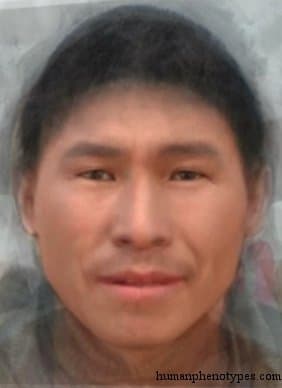
- Chukchid, catalogued for the Arctic tundra of Chukotka and Kamchatka and described in its source as one of the coldest habitable regions on Earth.
- Mountain Melanesid, a highland New Guinea pattern recorded among groups such as the Dani and Enga, and noted as relatively ancient.
- Norid, whose name comes from the Roman province of Noricum in present-day Austria, and whose lighter pigmentation authors attribute to admixture.
- Isthmid, a Centralid subtype adapted to the forests of the Isthmus of Panama, tied in the source to the ancient Maya and recorded from Colombia to Mexico.
The boundary neither site crosses
A quiz score is a statement about distance on a map, not about a person, and the two get confused precisely here. Human appearance changes gradually across space instead of in discrete blocks, which is why adjacent entries overlap and why the middle of a large continent stays ambiguous in any round. That clinal structure is also why the word race does not survive contact with the data. Livingstone argued in 1962 that there are no races, only clines, and Lewontin's 1972 partition placed the overwhelming share of human genetic variation within populations rather than between them. A game built on gradients inherits that finding whether it wants to or not.
The narrower claim is the honest one. A face carries visible traits produced by a modest number of genes plus developmental noise, and it does not carry a genealogical record. A pin lands somewhere on a map of where a pattern was documented, and a score reports how close that landing was to a recorded centre. Neither statement converts into ancestry, and reading a round as an ancestry result is the mistake both formats invite. A reader who wants the game to answer what am I will be disappointed, and it is better to say so before the first round than after.
Which one suits your question
If you want variety, more modes than a single daily draw, and a themed round you can finish in a spare moment, hbd.gg is the broader product and there is no reason to pretend otherwise. If what you want is the material behind the faces, with named regions, recorded traits and stated baselines you can read after the round, then the catalogue is the point and it is the reason this site publishes one. Plenty of players will use both, and nothing about that is contradictory: the formats overlap, the underlying literature is largely shared, and neither one is a substitute for an ancestry test.
The habit worth keeping is to check the framing before trusting a result. Ask what the composite is, where the answer set came from, and what the score is actually measuring. A site that answers those three questions is a game you can reason about, whichever domain name is on it, and that test works the same way on this page as it does on the other one.
Frequently Asked Questions
- Is hbd.gg the same as this site?
- No. They are separate products that share a genre and a naming style. hbd.gg runs a face-based geography quiz under the EthnoGuessr name, with several modes including a daily round, a countries mode and a genomes mode. This site runs a comparable quiz alongside a catalogue of 209 documented appearance patterns. The overlap is in the format and the underlying literature, not in ownership or affiliation.
- Which of the two is more accurate?
- Accuracy is the wrong frame for both. Neither format identifies anyone: each asks you to place a composite face on a map, and a score measures distance to a documented centre. The catalogue's claim is the narrower one, since it describes appearance patterns recorded in the literature with an old baseline and states plainly that a face is not a record of ancestry. Read the framing, and treat any score as a geography result.
- Does a face quiz identify anyone's ethnicity?
- No. Ethnicity is a label about people and descent, while appearance is a set of visible traits influenced by a modest number of genes plus developmental noise, and the two do not convert into each other. Composites in these games represent documented patterns rather than individuals, and no score counts as evidence about who anyone is. If ancestry is the real question, a direct-to-consumer DNA test addresses a different and better-posed version of it.
Related Phenotypes
Faces from the encyclopedia that appear in this article. Open any entry for its full description, distribution, and references.
Chukchid
Siberia
Far Eastern Sibirid variety, influenced by Eskimid, adapted to one of the coldest inhabitable places on Earth: the Arctic tundra of Chukotka...
Mountain Melanesid
Melanesia
Melanesian mountain variety, relatively ancient with similarities to Paleo Melanesid. Found mainly among New Guinean highlanders like Dani, ...
Norid
Southeastern Europe
Central European type that closely resembles Dinarids except for lighter pigmentation. Authors interpret this to be the result of Nordid and...
Isthmid
South America
Centralid subtype, that has partially adapted to the tropical forests of the Isthmus of Panama and the surrounding regions from Colombia to ...
Test what you learned
Put your eye for regional faces to work in the daily quiz — a composite face, a world map, and your best guess.