Portugal Average Face - Phenotype & People
What would the "typical" face of Portugal look like? The composite below answers statistically rather than personally: recurring features from many individual portraits are merged into one image. The sections that follow — people, land, history, and culture — explain what that average does and does not represent.
Average Face Composite
The portugal composite below is a statistical synthesis: many individual photographs of people from Portugal are aligned and averaged to produce a single image that emphasizes recurring facial structures, skin tone tendencies, and hair patterns. It is not a photograph of a real person, and individual variation within Portugal is far greater than the composite suggests.
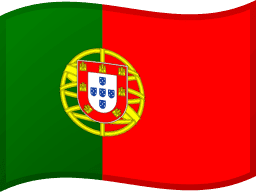
People of Portugal
To understand the portugal average face, it helps to understand the people behind it. Portugal is located in Europe, and the sections below describe the demographics, geography, history, and culture that together shape the recurring facial features captured in the composite.
Demographics
Portugal is a country in Europe with a population of approximately 10.3 million. Lisbon serves as the capital and largest urban center, concentrating political institutions, universities, and much of the urban population. The national population is a Portuguese majority with Brazilian, Cape Verdean, Goan, Angolan, and Ukrainian communities, and this composition reflects the strong regional variation in pigmentation, facial morphology, and stature that centuries of state formation, urbanization, and migration produced. Portuguese dominate public life, education, and media.
The portugal average face should be read as a statistical impression of recurring traits across this multi-part population, not as a portrait of a real person or of any one of the groups above.
Geography
Portugal's Atlantic strip carries the verdant Minho and the Douro's terraced vineyards in the north, the Tagus and Sado plains around Lisbon, and the Alentejo's rolling wheat steppe down to the dry, cliff-cut Algarve. Lying 39 degrees north of the equator in the Northern Hemisphere, Portugal falls within a temperate climate band with four distinct seasons.
Among the countries in the gallery, the nearest to Portugal are Spain (399 km), Morocco, and France; comparing their composites side by side shows both the overlap that geography produces and the differences that history keeps.
Historical Background
The 1143 Reconquista kingdom launched the Age of Discoveries in the 15th century, building an empire from Brazil to Macau. The 1974 Carnation Revolution ended dictatorship and released African colonies.
The 1960s sent a million Portuguese to France, Germany, and Luxembourg to escape dictatorship-era poverty; African decolonization brought retornados from Angola and Mozambique, and Brazilians, Ukrainians, and Cape Verdeans anchor the immigrant communities today.
Read this way, the average face for Portugal is a cumulative record — every conquest, migration, and resettlement above contributed recurring features to the statistical mix.
Culture
Fado music, codfish and pastry traditions, azulejo tilework, port wine, and a global Lusophone cultural footprint.
For an average face composite, cultural context matters twice: it shapes who is photographed and how, and it frames the expectations a viewer brings to a Europe face.
Play the Country Quiz
The Countries game mode works exactly with material like the Portugal composite above: you see an unmarked average face and pin down which of the 48 gallery countries it belongs to. It is a surprisingly effective way to train your sense of regional facial patterns.
Play Guess the Nationality GameRelated Countries
Other countries in Europe and neighboring regions whose average face composites share features with the portugal composite. Comparing them side by side makes the regional patterns clearer.


Further Reading
Background articles on how these composite faces are built and what they do and do not show about the people behind them.
What Nationality Do I Look Like? A Legal Status, Not a Face
Nationality is a status that states assign and reassign. A face can resemble a documented regional pattern; it cannot resemble a...
AI Ethnicity Guesser: What the Tools Really Return
An AI ethnicity guesser returns a label from a fixed list rather than a measurement of ancestry. Here is what the models are trained on...