The History of Racial Typology Is a History of Counts
Every racial typology began with a number, and the number followed the classifier's method rather than the people being measured. Linnaeus counted four, Blumenbach five, and the names still point at dig sites.
Linnaeus counted four, then ten
The first edition of Systema Naturae in 1735 divided humans into four varieties, named for continents and tied to the four humours: Europaeus sanguineus, Asiaticus melancholicus, Americanus cholericus, Africanus phlegmaticus. The scheme was a filing system for a natural history cabinet, and its subdivisions followed geography and temperament rather than anatomy. Almost nothing in it had been measured. The count was four because the map in front of Linnaeus had four columns, and the columns were Europe, Asia, America and Africa.
By the tenth edition of 1758 the list had grown. Linnaeus added a variety for fabled peoples, another for wild children, and split the American and Asiatic entries further. Two decades of revision produced several new categories without a single new measurement. The pattern repeats through the whole literature: the number of human kinds rises when a classifier adds a column, and falls when the next classifier decides the columns were arbitrary. Typology was never short of categories. It was short of a rule for generating them.
Blumenbach found a skull in the Caucasus
Johann Friedrich Blumenbach's 1775 dissertation, De generis humani varietate nativa, settled on five varieties: Caucasian, Mongolian, Ethiopian, American and Malay. The first of those names came from a cranium he had been given, taken from the Caucasus region of Georgia, which he judged well formed and used as a reference specimen. One skull, admired by one anatomist in Göttingen, became a label that outlived every other part of the system by two centuries.
Blumenbach also wrote that the varieties ran into one another, that one shade passed into the next without a break, and that sentence is usually dropped when the five names are quoted. His contemporaries argued for decades about where Ethiopian ended and Malay began, which is what happens when a boundary is drawn across a continuum. The five names survived because they were easy to print and easy to teach. The observation that they did not hold survived less well, because it was a sentence rather than a diagram.
Types named after dig sites
Nineteenth and twentieth century typology borrowed its authority from archaeology and used its vocabulary. A type was named after the place the reference skeletons came from, so the catalogue reads like a list of excavations. Hallstatt is an Austrian village whose Iron Age cemetery gave its name to a Nordid variety that Coon separated out in 1939. Borreby is a Danish Neolithic site, and the type named after its skulls was defined by the same author in the same year. Brünn, Dalarna, the Dinaric Alps: place names standing in for population samples.
The method carried a consequence nobody wrote down. A type named after a cemetery is anchored to a moment, and its distribution is a claim about where people with that skeleton shape were buried, not about who lives there now. When Coon's Borreby was reused by later authors it drifted toward describing living Danes, and the drift went unnoticed because the name still pointed at a dig. A place name made a historical sample sound like a permanent population.
- Hallstatt, Austria: Iron Age cemetery, Nordid proper in Coon (1939)
- Borreby, Denmark: Neolithic skulls, named and defined by Coon (1939)
- Dalofaelid: Dalarna in Sweden plus Westphalia in Germany, a composite place name
- Dinarid: the Dinaric Alps, first described by Deniker (1900) as Adriatic
Morton measured, then the measurement was audited
Samuel George Morton's Crania Americana of 1839 filled a table with cranial capacities and ordered the rows from largest to smallest. The ordering implied a ranking, and the ranking was the argument of the book. Morton reported capacities to the nearest cubic inch and presented them as facts about races rather than facts about a collection of skulls. A century and a half later the table was re-measured twice, by different people, reaching different conclusions about how the numbers had been produced, which makes it the best documented case of an audit being audited.
Stephen Jay Gould argued in 1981 that Morton had filled his skulls with seed differently depending on which race he expected to come out larger, and that this bias produced the ranking. In 2011 a team led by Jason Lewis re-measured a sample of the crania and published the result in PLoS Biology, finding the original figures largely reproducible and the seed-filling charge unsupported, while agreeing that Morton's sample selection and his handling of the data were careless. Two audits, opposite findings on the mechanism, same verdict on the table: it did not measure what it claimed to measure.
Coon's five races, and the number that replaced them
Carleton Coon's The Origin of Races appeared in 1962 with five races and a claim that each had crossed the threshold into Homo sapiens separately, at different times. The claim was attacked at once, on grounds of both evidence and politics, and within a decade the five-race framework had lost its standing in the field. What matters for a catalogue is the material Coon worked from: skeletal series sorted by site, which is the same kind of material the entries on this site were built out of.
The replacement was not a better count. Richard Lewontin's 1972 survey of blood group and protein variation found that roughly 85 percent of human genetic variation sat inside populations, with the remainder spread between them, so a scheme that sorted people into a handful of boxes discarded most of the information it started with. In 2002 Noah Rosenberg and colleagues ran 377 microsatellites in 1,056 people from 52 populations and recovered five clusters loosely matching continents, and those clusters were statistical gradients rather than kinds.
What a 209-entry catalogue is not
The entries on this site record what observers wrote down, with dates attached. Dinarid was described by Joseph Deniker in 1900 as the Adriatic type, and the name that stuck came from the Dinaric Alps, where the reference material was collected; the entry lists the later authors who kept it, split it or renamed it. Nothing in that sequence is a statement about who lives in the Balkans now, and the entry should not be read as one.
The modern complication runs in one direction only. Migration, urbanisation and two generations of long-distance marriage have scrambled any map drawn from rural samples collected before 1950, so a historical distribution is a claim about a sample and a date. The catalogue is useful precisely because it keeps the date visible next to the claim. Where the old map no longer matches the street, the honest reading is that the map is old, not that the street is wrong.
Frequently Asked Questions
- Is racial typology still used in anthropology?
- No, not as a working classification. Physical anthropology dropped the typological approach between the 1950s and the 1970s, when skeletal series stopped being sorted into named types and population genetics became the organising method. The types survive as historical objects: catalogue entries, museum labels and reference collections, each tied to a site and a publication date. Teaching them now means teaching the method that produced them and the reasons it was abandoned, which is a different exercise from using them to describe anyone alive.
- Why did the number of human races keep changing between authors?
- Because the number was an output of the method, not a property of the people. A classifier working from continent-shaped geography gets four or five; one working from skull measurements gets a different set, weighted by which measurements he chose and which collections he could reach. Blumenbach had five, Morton ranked a table, Coon settled on five again with different boundaries, and Deniker's European types ran past a dozen. When the rule for generating categories changes, the count changes with it.
- How is this catalogue different from the racial typologies it records?
- It keeps the provenance and drops the ranking. Each entry names who defined the type, in which publication, from which site or collection, and lists the later authors who revised it. What the entries do not do is order the types, attach a value to them, or extend them to living people, nationalities or personal ancestry. The distinction matters because most of the original literature did all three, and a catalogue that quietly kept the ordering while shedding the labels would be the same argument in softer type.
Related Phenotypes
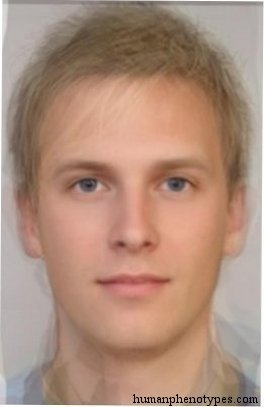
Faces from the encyclopedia that appear in this article. Open any entry for its full description, distribution, and references.
Hallstatt
Central Europe
Nordid proper, resembles the Iron Age remains of the Austrian village of Hallstatt. Most common among Swedes and South Norwegians. Frequent ...
Borreby
Central Europe
Ancient Northern European variety. Named after some of the Neolithic Borreby skulls of Denmark (not all!). Some emphasised resemblance with ...
Dalofaelid
Northern Europe
Coarse, Cromagniform Nordid variety of Central and Northern Europe. Named after the Swedish province of Dalarna and the German region of Wes...
Dinarid (proper)
Southeastern Europe
Central European type typical for mountain and forest regions. Presents the counterpart of Alpinids. The name derives from the Dinaric Alps ...
Test what you learned
Put your eye for regional faces to work in the daily quiz — a composite face, a world map, and your best guess.