Russia Average Face - Phenotype & People
The russia average face is a composite image synthesizing the most frequently recurring facial features among people from Russia. This page presents the composite, then situates it within the country's demographics, geography, history, and culture, so that the image can be read in context rather than as a portrait of any individual.
Average Face Composite
Averaging many faces produces an image that no one person matches exactly, and the russia composite is exactly that kind of construction. Recurring skull outline, nose form, and pigmentation tendencies survive the merge; personal idiosyncrasies cancel out. Treat it as a population-level summary with no real-world twin.
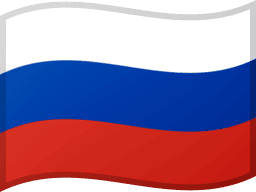
People of Russia
Faces carry the history of the populations that make them. In the sections below, the demographics, geography, history, and culture of Russia unpack what the russia composite statistically compresses into a single image.
Demographics
Russia is a country in Europe with a population of approximately 144 million. Moscow serves as the capital and largest urban center, concentrating political institutions, universities, and much of the urban population. The national population is Russian majority alongside Tatar, Chechen, Bashkir, Chuvash, Yakut, Tuvan, and more than 190 other peoples across eleven time zones, and this composition reflects the strong regional variation in pigmentation, facial morphology, and stature that centuries of state formation, urbanization, and migration produced. Russian plus Tatar, Chechen, Bashkir, Chuvash, and many others dominate public life, education, and media.
The russia average face should be read as a statistical impression of recurring traits across this multi-part population, not as a portrait of a real person or of any one of the groups above.
Geography
Russia spans tundra, taiga, and steppe across eleven time zones — the planet's largest country — with settlement strung along the trans-Siberian corridor while the European plain between Moscow and the Urals holds most of the population. Lying 62 degrees north of the equator in the Northern Hemisphere, Russia falls within a cooler temperate to boreal climate band with cold winters.
Within the average face gallery, no country lies close to Russia — the nearest entry, China, sits about 2,855 kilometers away. Geographic separation like this is part of why the russia composite keeps a profile that its closest gallery neighbors do not share.
Historical Background
Kievan Rus, the Mongol yoke, the rise of Muscovy, the Tsardom and Russian Empire, the 1917 Revolution and Soviet Union, and the 1991 dissolution into the Russian Federation.
Serfdom's abolition, Soviet industrialization, and Gulag-era relocation each moved millions; ethnic Russians settled across the union's republics and many returned after 1991, while Central Asian labor migration now drives Moscow's construction economy.
Each of those movements left demographic deposits, and the russia composite reflects their cumulative statistical outcome rather than any single ancestral group.
Culture
Orthodox Christianity, Tolstoy and Dostoevsky's literature, Tchaikovsky and the Bolshoi ballet, vodka and borscht, and vast landscapes from the taiga to Kamchatka.
Clothing, grooming, and photographic conventions all influence which faces enter a composite and how they are perceived, so this cultural texture is part of the context in which the russia average face should be read.
Play the Country Quiz
The Countries game mode works exactly with material like the Russia composite above: you see an unmarked average face and pin down which of the 48 gallery countries it belongs to. It is a surprisingly effective way to train your sense of regional facial patterns.
Play Guess the Nationality GameRelated Countries
Compare the russia composite with these neighboring gallery entries: the shared features trace regional population history, and the contrasts mark where geography or migration drew the boundaries.
Further Reading
Background articles on how these composite faces are built and what they do and do not show about the people behind them.
What Nationality Do I Look Like? A Legal Status, Not a Face
Nationality is a status that states assign and reassign. A face can resemble a documented regional pattern; it cannot resemble a...
AI Ethnicity Guesser: What the Tools Really Return
An AI ethnicity guesser returns a label from a fixed list rather than a measurement of ancestry. Here is what the models are trained on...