AI Ethnicity Guesser: What the Tools Really Return
An AI ethnicity guesser returns a label from a fixed list rather than a measurement of ancestry. Here is what the models are trained on, why two tools disagree about one photo, and where the signal is genuinely real.
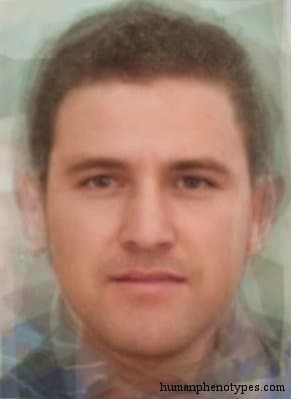
The output is a label from a list
Ask an AI ethnicity guesser to read a photograph and it returns something narrow: a category, plus a number the interface calls confidence. The category is not computed from scratch. It is selected from a fixed list written when the training set was assembled, so the model can only ever answer inside that list's boundaries. FairFace, published by Kärkkäinen and Joo in 2021, is a useful reference point because it is unusually explicit about the arrangement: 108,501 images, balanced across seven groups, with the grouping declared in the paper instead of buried in a pipeline.
Two product families sit under the same label. The first classifies a face, so an image goes in and a category with a probability comes out. The second generates, producing a synthetic face presented as the likely appearance. Those are different operations with different failure modes, because a generated image can look convincing even when the estimate underneath it is weak. Consumer tools blur the two constantly, and the interface rarely states which one produced the picture on screen.
The photograph does more work than the model
Most of the variance between two answers comes from the input rather than the architecture. A phone front camera held at arm's length distorts facial proportions, indoor colour temperature shifts skin tone, and the exposure settings that flatter a portrait also flatten the very variation a classifier reads. A face recognition pipeline typically works on a crop of about 160 pixels square, which discards much of what the original photograph contained. When a tool asks for even lighting and a neutral expression, it is asking the user to remove variance the model cannot handle.
The practical consequence is that one person photographed twice can receive two different answers. That is not evidence of a malfunction. It is ordinary behaviour for a classifier fed inputs whose distribution has shifted, and it explains why benchmark figures quoted in marketing material rarely transfer to a phone photograph taken in a kitchen. An interface reporting a confident percentage is compressing a wide spread of outcomes into a single number, and nothing on the screen tells the reader how wide that spread was.
Labels are a dataset, not a taxonomy
Products offer different granularity, and that alone explains most cross-tool disagreement. One tool may return a continental grouping, another a nationality, a third a pattern name drawn from a literature catalogue. Each answers the question its label set was written to ask. A model trained on seven continental groups cannot return a country, however decisive its output looks, and a model trained on national labels will force an answer from its list onto a face from a region it never saw labelled that way.
Two catalogued entries show why granularity is a design choice rather than a technical limit. East Ethiopid is recorded around the Horn of Africa, described in the source literature as having the narrowest nose of any pattern catalogued in Sub-Saharan Africa. Canarid is recorded in the Canary Islands and the Atlas Mountains, with fair skin and hair that is sometimes red or blonde. Both are specific, both are geographically anchored, and neither survives being compressed into a continental label that covers half a hemisphere.
Where the appearance signal is real
Not every visible trait is noise. Pigmentation follows latitude closely enough to be predictable in aggregate, which is the gradient Jablonski and Chaplin described in 2000 and which SLC24A5, SLC45A2 and the OCA2-HERC2 region largely implement at the molecular level. Latitude is not the only input, though. The Canary Islands sit at roughly the same latitude as the northern edge of the Sahara, and the catalogue nevertheless records fair skin there alongside Berber populations in the Rif and Kabylia. Isolation, altitude and population history all modify the gradient.
- East Ethiopid: Horn of Africa, with a narrow nose and long oval face recorded in inland Somalia and eastern Ethiopia.
- Alföld: the Great Hungarian Plain, a blend the literature attributes to Hun and Magyar entry in the early Middle Ages.
- Desert Australid: the arid Australian interior, recorded among Ngaanyatjarra, Pintupi and Pitjantjatjara groups.
- Canarid: the Canary Islands and Atlas Mountains, with fair skin and hair that is sometimes red or blonde.
What no face model can recover
The traits a camera can measure are the traits selection has pushed hardest. Population geneticists choose ancestry-informative markers largely because those markers are neutral, drifting with migration instead of being shaped by climate. Pigmentation genes are the opposite case, held in place by strong selection for latitude. Asking a face to report ancestry therefore asks the most selected traits in the genome to describe the least selected part of population history, and the answer comes back smoothed toward climate rather than toward descent.
Admixture compounds the problem, because a face is a snapshot of one moment in a long mixing process. This site's catalogue is explicitly a historical document with a baseline near 1500 years ago, and every entry says so. That framing is not a weakness to be corrected by a better model. The weakness would be presenting the snapshot as a stable category, which is exactly what a confident percentage invites a reader to assume.
Choosing between a tool and a catalogue
A generative tool is faster than any reference work and asks nothing of the user. Point a phone at a face, wait a couple of seconds, receive a result with a percentage attached. For entertainment, that speed is the entire product, and content-led sites such as maxxing.me, whose biology pages feed a face analysis tool, show how far an explainer page plus one utility can travel. faceshapedetector.us markets a free phenotype scanner. That name is worth unpacking, because a scanner of that kind returns a label from a training set rather than a sourced catalogue entry.
The catalogue is slower and narrower. Each of the 209 entries carries a region, a description and at least one publication, and the honest position is that none of them identify a living person. A reader who wants an instant answer should use a tool and read the result as a rough guess about a region. A reader who wants to know which author named a pattern, when it was recorded and where it was found will get further with the sourced entries. The two are not competing answers to one question.
Frequently Asked Questions
- What does an AI ethnicity guesser actually output?
- A label chosen from a fixed list, plus a number the interface calls confidence. The list was written when the training data was assembled, so a model trained on seven continental groups can never return a country. Some tools instead generate a synthetic face presented as the likely appearance, which is a different operation with a different failure mode. The output is a classification or a reconstruction, not a measurement of ancestry, and it cannot exceed the label set it was trained to predict.
- Why do two AI ethnicity guessers disagree about the same photo?
- Because they were trained on different label sets and different images, and because a photograph carries less information than either interface implies. Lighting, lens distance and exposure all shift the input before the model runs. The disagreement is structural rather than a sign that one tool is broken. It is also the clearest evidence that the output describes the training data more than it describes the person in the picture.
- Can an AI read ancestry from a face alone?
- No, and the reason is directional. The traits a camera can measure, pigmentation above all, are among the most strongly selected in the genome, while the markers used to trace ancestry are chosen largely because they are neutral. A face reports on climate adaptation. Ancestry is carried by the rest of the genome, including the parts that leave no visible trace. A catalogue of documented patterns can describe a historical distribution; it cannot read one person's history.
Related Phenotypes
Faces from the encyclopedia that appear in this article. Open any entry for its full description, distribution, and references.
Canarid
Southern Europe
Maghrebi type with similarities to Cromagnids and North Europeans - probably in part a result of convergent evolution of pre-Neolithic North...
East Ethiopid
East Africa
Ethiopid proper, showing the most pronounced Ethiopid characters of all. Common around the Horn of Africa, in its purest form in the inland ...
Desert Australid
Australia
Australid desert variety adapted to the arid interior of Australia. Has furnished the general public idea of the typical Australian Aborigin...
Alföld
Central Asia
Western Turanid subtype, named after the Alföld (Great Hungarian Plain). It developed when Huns and Magyars entered the area during the earl...
Test what you learned
Put your eye for regional faces to work in the daily quiz — a composite face, a world map, and your best guess.