Ethnoguesser: What Each Half of the Word Assumes
Ethnoguesser stacks a Greek noun for a people onto a suffix borrowed from a geography game in 2013, and the name promises what neither half can support. One half is old; the other is a domain name.
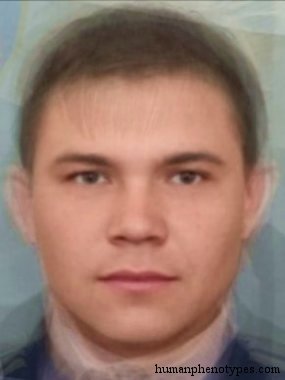
Two halves with two dates
The compound looks ancient and is not. Ethno- reaches English through Greek ethnos by way of the adjective ethnic, which is recorded in the late fifteenth century. The noun that the prefix implies, ethnicity, enters written English only in 1953, when the sociologist David Riesman used it while describing American social structure. The second half is younger still: a spelling coined in 2013 for a browser game, with a vowel removed so that the name would fit a domain.
The dates matter because each half carries its own argument. Ethnos named a body of people; guesser names an act of inference performed on an image. Welded together, the compound asserts that a picture of a face can be resolved into a people. Whether that assertion holds is a question about instruments rather than about vocabulary, and separating the two is the work of the sections below.
Ethnos named a crowd before a category
In Greek, ethnos was a band of people living together, a nation, a tribe, a caste, and the lexicographers also record it for swarms and flocks of animals. Its root sense was people of one's own kind, which is a claim about belonging rather than a measurement. When the Septuagint used ta ethne to render the Hebrew goyim, the word acquired a second career as a name for outsiders, the nations that were not Israel.
English took the second sense first. The noun ethnic is recorded around 1400 meaning a heathen or a pagan, someone who was neither Christian nor Jew, and the adjective follows in the late fifteenth century carrying the same religious charge. The sense of belonging to a race or nation is dated to 1851, a return to the Greek, and the sense of different cultural groups to 1935. A word that spent four centuries meaning not us does not become an instrument of measurement because a quiz borrows it.
Why the twentieth century needed a new noun
Ethnicity arrived late because the work it now does was done by race, and that word was failing. After 1945 the older vocabulary carried a history that made it unusable in ordinary description, and the social sciences needed a term for groups defined by descent and culture that did not claim a biological basis. Riesman's 1953 sentence is the first use the Oxford English Dictionary records. The word is absent from the 1933 edition and reaches the supplement only in 1972.
The neighbouring coinages drift in the same direction. Ethnocentrism, the habit of scaling other groups against one's own, entered English social science through William Graham Sumner's Folkways in 1906, though the Polish sociologist Ludwik Gumplowicz is often credited with the term itself. By 1969 Fredrik Barth could treat ethnicity as a boundary that people maintain rather than a substance they carry, which is close to current usage and very far from the way a composite face is read.
Where the guessr ending came from
The second half of the name is a product name rather than a word. GeoGuessr appeared in May 2013, built by the Swedish developer Anton Wallén, and its title dropped a letter to shorten the domain. The missing vowel is a registration habit, not a spelling reform, and Flickr and Tumblr had done the same years earlier. What matters now is that the ending labels a format, the way the -le suffix labelled daily word puzzles after 2021, so a new game can adopt it with no relation to the original.
That is why the compound reports almost nothing about the thing a visitor has opened. Two projects can both call themselves an ethnoguesser while one shows averaged composites and asks for a region on a map, and the other accepts an uploaded photograph and returns a list of labels. The suffix promises a loop and a mood. It does not promise a method, and it never did.
The catalogue names places, not peoples
The 209 entries catalogued on this site are named after geography more often than after peoples, which deserves notice in a word built on ethnos. A type is usually fixed to a river, a lake, an island or a province, and the name then survives the population that prompted it. Four entries show how consistently this holds, and how little those names resemble the ethnic labels a casual player expects to meet in a round.
- Ladogan, named by Carleton Coon in 1939 for Neolithic crania recovered near Lake Ladoga, survives as a minority element in the Ural region.
- Yenisey, defined by Levin in 1963 for the Yenisei basin in Siberia, where the Ket, numbering roughly a thousand, are its most characteristic population.
- Keralid, identified by Eickstedt between 1929 and 1937 after three years of measuring across India, and anchored to the plains of Malabar.
- Paleo Sardinian, defined by Cipriani in 1934 for a mountain remnant on an island whose population Calò and colleagues described in 2008 as genetically distinctive.
What a guess needs that a name cannot supply
A guess only means something inside a stated set. Ask someone to guess a number and the request is unanswerable until you give the range; ask them to place a composite and the range has already been chosen for them. The catalogue makes that choice inspectable, since an entry states a region, the traits recorded for it, and the neighbouring patterns it grades into, so a reader can see what counted as close before any score appears.
A guess also needs a rule for resolution, and the rule used here is distance on a map to a documented centre. That is a modest claim, and the modesty is deliberate. The word guesser can name a person who guesses or an instrument that guesses, and the two carry different liabilities: a person can be wrong about a place, while an instrument can be wrong about a person.
Where the names have aged
Names fixed in the 1930s describe places as they were observed then. The Ket around the Yenisei numbered about a thousand when the type was defined, a population small enough that one generation of movement changes what a map coordinate refers to. Keralid was assembled from caste groups measured in the 1930s, and those groups have since moved, married across older lines and emigrated in numbers the observers had no reason to expect.
The word has aged in parallel. Ethnicity in current social science describes identification and boundary work rather than a fixed inheritance, a shift Barth made explicit and the literature has not reversed. A quiz that keeps the older, solid sense of the word borrows its confidence without its evidence. The honest reading of the compound is narrower than it sounds: it names a place where a pattern was recorded, not a people that anyone belongs to.
Frequently Asked Questions
- Is ethnoguesser one word or two?
- It appears both ways, and the spelling with a dropped vowel, ethnoguessr, is a domain-name convention rather than a preferred form. The compound is a compression of ethnicity and guesser, a label for a genre of face-based quiz rather than a registered trademark owned by one site. Because several projects use close variants, the spelling does not identify a product. What identifies it is what the page shows and what its answers are built from.
- What does the ethno- part of the word actually mean?
- It comes from Greek ethnos, which named a band of people living together, a nation, a tribe or a caste. English first used the adjective in the late fifteenth century to mean heathen or pagan, and only returned to the classical sense of belonging to a nation in 1851. The abstract noun ethnicity is far newer, first recorded in 1953 in the writing of the sociologist David Riesman, and it entered general use during the 1960s.
- Does the word mean the quiz can identify my ethnicity?
- No, and the compound overstates what the format does. A round asks you to place a composite face on a map, and the score reports how near your answer came to a recorded centre. Ethnicity is a label about groups and descent, while appearance is a set of visible traits produced by a modest number of genes plus developmental noise. The two do not convert into each other, which is why the catalogue states its baseline and stops there.
Related Phenotypes
Faces from the encyclopedia that appear in this article. Open any entry for its full description, distribution, and references.
Ladogan
Eastern Europe
Ancient, mostly Europid type of Northeastern Europe and Western Siberia associated with the ancient Kammkeramik culture. Probably played a r...
Yenisey
Siberia
Sibirid subtype of the Yenisei River basin in Siberia. Shows some Americanoid features. Also seems to be culturally and linguistically linke...
Keralid
South Asia
Indid subtype, with a position intermediate between North Indid and Gracile Indid, mainly found in the plains of Malabar. Typical for Tiyer ...
Paleo Sardinian
Southern Europe
Ancient type, was widespread in Central Europe during the Neolithic, has survived as a minority element in the mountains of the Italian isla...
Test what you learned
Put your eye for regional faces to work in the daily quiz — a composite face, a world map, and your best guess.