How to Know My Ethnicity: Four Records and Their Errors
Ethnicity is not stored in a body, and the four records that could answer the question fail differently: memory drifts, forms change, panels are finite. Here is what each can return, and what a face cannot.
Four records, four error rates
Ethnicity is not stored in a body the way a blood type is. It appears in records, and the records come in four kinds: what relatives remember, what a clerk wrote on a form, what a laboratory measures, and what a catalogue of appearance describes. Each kind fails in a characteristic way. Memory smooths a story and lets dates drift. A form records the vocabulary of the year it was printed. A laboratory returns a comparison against a reference panel. A catalogue returns a historical distribution, not a person. Knowing which record you are holding is most of the work, because the four answer different questions and none of them answers all of it. The order below runs from cheapest to most expensive, which is also, roughly, from least to most conclusive.
Start with the living, and write it down
The cheapest source is a relative with a good memory, and it is the one that expires first. Four questions cover most of what a paper trail later needs: where each grandparent was born, what a grandmother's name was before marriage, which language was spoken at home and by whom, and when each move happened. Ask for places rather than countries, because a village, a parish or a district is what an archive can be searched by. Write down who said what and when, including the disagreements. A family that remembers two different departure years is telling you something about the reliability of its story rather than about the year. Expect the story to have been edited. A phrase like we are from somewhere often compresses three generations and a border change into four words, and it may date from a period when a more specific answer was inconvenient.
What the civil record keeps and loses
The United States census is a useful benchmark because its rules are published. From 1790 to 1840 only the head of household was named, while everyone else was counted in age bands. In 1850 the unit changed from household to individual: every free person was listed by name, with a birthplace. In 1870, after emancipation, formerly enslaved people appear by name. In 1880 the form began asking each person's relationship to the head of household, and women were permitted to serve as enumerators. Then the record breaks. Most of the 1890 schedules were destroyed in a fire at the Department of Commerce on 10 January 1921, leaving fragments for a few states. Access runs on a 72-year rule as well: the 1950 census opened in April 2022 and the 1960 census opens in 2032. A missing decade is ordinary in this work, and it is more often a burned building than a missing family.
What survives is worth knowing, because a burned year is not an empty year. The general population fragments cover ten states and the District of Columbia, a little over 6,160 people out of the 62.9 million counted. A separate 1890 schedule listing Union veterans and their widows survived for many states in the second half of the alphabet, from Kentucky to Wyoming, recording name, rank, company and regiment. Where both are missing, the substitutes are ordinary documents: city directories, voter registrations, state censuses taken in 1885 or 1895, and pension files. None of them is a census, and together they can still place a household at an address in a particular year.
A form records a decision, not a descent
Every census question is a decision taken by a committee in a particular year, and every answer is a decision taken by a clerk and a household. The 1820 schedule asked whether anyone in the household was a foreigner not naturalized. Until the Cable Act of 1922, a married woman's American citizenship followed her husband's, so a form could change a person's legal condition while nothing changed at home. Categories arrive and depart on the same rhythm. What a researcher recovers is therefore a dated entry with a hand behind it, and its value lies in the specific: a name, a birthplace, an address, a year of arrival. It is weak evidence about essence. Read the page for the places and dates it fixes, and treat the category column as a description of the form rather than of the family.
Three DNA tests with three time depths
Consumer DNA is not one test. The autosomal test reads both copies of the twenty-two non-sex chromosomes and returns the percentages and the cousin matches. Its horizon is genealogical. The sex-averaged autosomal map is about 3,346 centimorgans long, a fourth cousin is expected to share roughly 14 of them, and simulation puts the chance of detecting that degree at about 46 percent. A fifth cousin averages 3.5 centimorgans and is found perhaps 15 percent of the time. Segments below about 7 centimorgans are widely discarded, because at that length sequence shared by chance is hard to separate from sequence shared by descent.
The other two tests read single lineages. Mitochondrial DNA passes from mother to child and the Y chromosome from father to son, so each follows one thread out of thousands. In 2013 Poznik and colleagues sequenced 69 men from nine populations and dated the Y-chromosome ancestor to between 120,000 and 156,000 years ago, with the mitochondrial ancestor between 99,000 and 148,000. Those figures are coalescence points rather than migrations, and they move when a deeper lineage turns up, as happened when haplogroup A00 pushed the paternal estimate past 190,000 years. A haplogroup is one line, not a summary of a person.
When the paper trail ends
Some families have no trail to follow. Adoption records are sealed in many jurisdictions, donor-conceived people often have no name to search, and war removes archives wholesale. In those cases the remaining route runs through DNA matches, and the method is reconstruction: build a tree outward from a match, look for the couple who could be the shared ancestor, then confirm with a second match on the same stretch of chromosome. The limits are arithmetic. If a fourth cousin is detected less than half the time, a match list is a sample rather than a census, and the absence of a match proves nothing at all. Contacting a match is also not a neutral act. It can disclose a family secret to someone who never asked, so the usual practice opens with the least information needed and lets the other person set the pace.
What a face cannot add
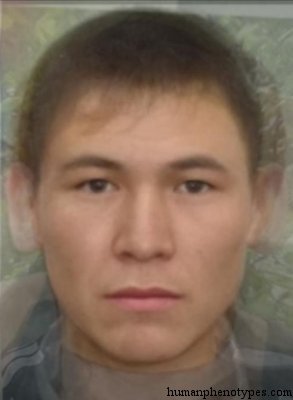
The catalogue on this site is the fourth record, and the one most often mistaken for the others. Its entries describe appearance patterns with historical distributions, anchored to roughly 1500 years ago. Uralid is recorded for the Ob basin among Khanty and Mansi, named by Bunak in 1932, with a note that those groups are now outnumbered by Russians. Alföld is recorded as a blend formed when Huns and Magyars entered the Hungarian plain, which means the entry already contains a mixture rather than a baseline. Eurafricanid replaced an earlier type its authors regarded as admixed and was renamed by Haddon in 1925 from a term Sergi had used more loosely in 1901. Karroid is named for the Karoo desert and describes a distribution reduced to a few thousand speakers. An entry is a document about a region and a period. It is not a measurement of the reader, and no photograph converts one into the other.
Frequently Asked Questions
- Can I find out my ethnicity without a DNA test?
- Yes, up to a point. Civil records, parish registers, ship manifests and naturalization papers can establish where named ancestors were born and when they moved, and that is usually what people mean by their family's origin. What records cannot do is tell you what proportion of your genome came from any region, because a document describes an event rather than an inheritance. Records supply the names and places; a DNA test adds the quantitative layer.
- How far back does an autosomal DNA test reach?
- Usefully, about five to seven generations. The autosomal map is roughly 3,346 centimorgans long, a fourth cousin is expected to share about 14, and detection at that degree is under half. By the fifth cousin the expected share is 3.5 centimorgans and detection is around 15 percent. Segments below roughly 7 centimorgans are usually discarded as unreliable. Mitochondrial and Y-chromosome tests reach much further back, but each follows a single line.
- Does my appearance tell me my ancestry?
- No. Appearance patterns are statistical tendencies in historical samples, and the same pattern can occur in people with unrelated descent. The catalogue on this site records what observers described in a region at a particular period, with sources, and its entries are anchored to roughly 1500 years ago. A resemblance to an entry is not evidence of ancestry from that region. Records and DNA tests address the ancestry question; a face does not.
Related Phenotypes
Faces from the encyclopedia that appear in this article. Open any entry for its full description, distribution, and references.
Uralid
Siberia
West Sibirid subtype, especially common in the basin of the Ob River among Khanty and Mansi people. Sometimes in Altai and Khakassia. Due to...
Alföld
Central Europe
Western Turanid subtype, named after the Alföld (Great Hungarian Plain). It developed when Huns and Magyars entered the area during the earl...
Eurafricanid
Southern Europe
Atlanto Mediterranid proper type. Relatively old, present in early Natufians and European as well as North African megalith builders. Spread...
Karroid
Sub-Saharan Africa
Sanid variety, named after the Karoo desert. Very ancient and distinct with many unique features. Was dominant in Southern Africa some centu...
Test what you learned
Put your eye for regional faces to work in the daily quiz — a composite face, a world map, and your best guess.