Name Origin and Ethnicity: What a Surname Can Record
A surname is an administrative record with a date on it: it can point to a language and a region, and it cannot say anything about how someone looks.
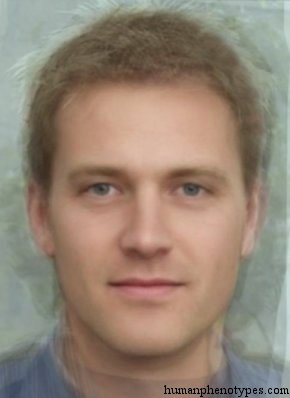
A name is a record with a date
The question behind a search for name origin and ethnicity assumes that a surname carries descent the way a test result does. It carries something narrower: a language, a region, sometimes a trade or a father's given name. It also carries a date, because most of the world's surnames were not inherited for long centuries before a state made inheritance compulsory for reasons of its own, which were usually conscription, taxation and registration rather than ancestry.
That date sets the resolution of everything a surname can say. A name fixed in 1935 tells you what a household chose in front of a clerk; it cannot reach back to a village in 1300. Places that fixed names early have dense, well-studied surname geographies. Places that fixed them late have names that were largely chosen or invented, which is not the same as arbitrary, but is not genealogy either.
Three states, three dates
Turkey is the cleanest case, because the instrument is short and dated. Law number 2525 of 21 June 1934 required every citizen to take a surname, effective from 1 January 1935, with two years allowed for registration. Names had to be Turkish: Armenian -yan, Slavic -ov and -viç, Greek -pulos and -aki, Persian -zade and the Semitic Bin- and İbn- were prohibited, and titles such as efendi, bey and paşa were abolished by a companion law later that year. One district could not contain two households with the same surname.
Japan moved in stages. Commoners were permitted surnames in 1870, required to bear one in 1875, and the civil code of 1898 together with the family registry fixed the name so it could no longer be changed at will; one estimate puts some 89.5% of modern Japanese surnames as place-derived. Korea took the same step through a household register introduced in 1909, and the 2015 census counted 5,582 surnames held in 36,744 clan seats, the bon-gwan. Kim, Lee and Park account for 44.6% of the population, the top ten for 63.9%, and Gimhae Kim alone for about 4.46 million people.
China has more than 6,000 surnames in use. The Ministry of Public Security's annual report put the top hundred at 85.9% of the registered population in 2019, and the five commonest, Wang, Li, Zhang, Liu and Chen, at 30.8% in 2020. In Korea and in China a surname on its own therefore narrows almost nothing. The working unit is the clan seat in one case and the province in the other.
What a surname points at
Four routes account for most surnames anywhere: a place, a trade, a father's name, or a descriptive feature. The catalogue on this site uses the same four moves to name its 209 entries, which is what makes the comparison worth making. Trønder takes its name from Trøndelag in Norway. Baykal takes its name from the lake. Chikuzen is named for a province abolished in 1871 and now part of Fukuoka. Athabaskid is named for a language family and recorded among its speakers from Alaska to British Columbia.
The difference is who does the naming. A surname is chosen by a household or assigned by a clerk; an entry name is assigned by a researcher who needed an index key. Both are pointers rather than essences, and both are constrained by the vocabulary available at the moment of naming. A name that says from Baykal tells you where a clerk or an observer was standing, and not much else.
One haplotype, and why it does not scale
Sykes and Irven tested the link directly in 2000, in a four-page paper in the American Journal of Human Genetics. They wrote to 269 men named Sykes, received 61 replies, and typed 48 of them at four Y-chromosome microsatellites. Almost half carried the same haplotype, 15-23-11-14, which appeared in neither control group: 139 English men and 21 unrelated neighbours. The authors read that as a single founder around 700 years earlier, with non-paternity averaging 1.3% per generation over 23 generations. It is a strong result and a very narrow one.
The method requires rarity. A name held by one person in five of a country, as Kim is at 10.69 million people, cannot descend from one founder within seven centuries; it has thousands of founding lines by construction, and the haplotype comparison has nothing to find. The paper's authors said the pattern would matter only if it reproduced with other names. A common surname is the case where a name carries the least genealogical information and the most social information, which is the reverse of what most people asking the question expect.
What a name cannot say about a face
The inference people usually want runs from a name to an appearance, and it fails at two separate steps. A surname indexes a language and a place, not a genotype. A genotype does not fix a face either, since the visible traits these entries describe rest on modest numbers of variants with wide overlap between regions. The 209 entries here are descriptions of documented appearance patterns drawn from the typological literature, with a baseline roughly fifteen hundred years ago. The Korean case shows how weak surname identity is on its own: Gimhae Kim and Gyeongju Kim share a syllable while descending from different founders in different kingdoms, and the law treated the clan seat, not the surname, as the unit that mattered until the same-clan marriage bar was removed in 2005.
The record keeps being rewritten
Reform shows how administrative the unit is. Spain's Ley 40/1999 of 5 November let parents choose which of a child's two surnames comes first, and 99.53% of families still place the father's first: the rule changed and the habit did not. Japan requires spouses to share a surname, and in about 95% of marriages it is the wife who changes hers. Turkey's Constitutional Court annulled the provision obliging a married woman to bear her husband's surname, in a decision published in April 2023. None of this alters what a name records about descent, and all of it alters what a name records about a household.
How to use a name, in order
The sequence that produces a checkable answer is short. Identify the language the name belongs to before the country it is common in, because a name's morphology is usually older than the border it sits behind. Then find where that surname clusters, using a national register or a published frequency table rather than a search engine's guess. Then look for the records of that place: parish registers, household registers, tax rolls. Each step narrows a region and a period.
Read that way, a surname is one of the few genealogical documents most families still hold, and it is a document about an administration rather than about blood. It is good at finding a parish and bad at describing a person. The questions it answers are where and when; the question it cannot answer is what anyone looks like. A name is a poor substitute for a record and a good index into one, which is a smaller claim than the one implied by any tool that offers to read a face back out of a surname.
Frequently Asked Questions
- Can a surname tell me my ethnicity?
- It can tell you something about a language and a region, and usually a date. Most surnames were made compulsory by a state within the last two centuries, so they record a household's choice in front of a registrar rather than an ancient lineage. That is enough to narrow a search to a part of a country and a period. It is not enough to describe appearance, because a surname does not index a genotype and a genotype does not fix a face.
- Why do so many Koreans share the surname Kim?
- Because surnames became universal late and a few royal names had a head start. A household register introduced in 1909 gave the whole population surnames at once, and the 2015 census found 10.69 million Kims, 21.5% of the country, with Lee at 14.7% and Park at 8.4%. The meaningful unit is not the surname but the clan seat, the bon-gwan: the census counted 36,744 of them, and Gimhae Kim is a different family from Gyeongju Kim.
- Is a surname a reliable guide to ancestry?
- For a rare, regionally concentrated name it can be surprisingly good: a 2000 study of men named Sykes found almost half sharing one Y-chromosome haplotype absent from controls, consistent with a single founder around 700 years back. For a common name the method collapses, because millions of bearers imply thousands of founding lines. A surname is a reliable guide to where a family was registered, and an unreliable guide to what ancestors anyone has.
Related Phenotypes
Faces from the encyclopedia that appear in this article. Open any entry for its full description, distribution, and references.
Trønder
Northern Europe
North European type, combines features of Paleo Atlantid, Hallstatt, and East Nordid. One of the main elements in the ancient Vikings. Their...
Baykal
Siberia
Northern Tungid variety, native to the vast, sparsely populated Taiga and Tundra regions of East Siberia, adapted to survive in the coldest ...
Athabaskid
North America
Northern Pacifid variety, heavily influenced by Sibirid and Eskimid admixture. Developed by relatively late migrations from Asia some millen...
Chikuzen
East Asia
Special Japanese type, influenced by ancient regional elements. Named after the old Chikuzen province that is today part of Fukuoka Prefectu...
Test what you learned
Put your eye for regional faces to work in the daily quiz — a composite face, a world map, and your best guess.